


[B]URLINGTON — In November city voters will be asked whether the Queen City should issue $22 million in bonds to pay for new streets through the current Town Center mall.
The rebuilt roadways would connect Pine and St. Paul streets from Cherry to Bank streets. The two thoroughfares have been blocked since the mall was built in the 1970s. The roads would be constructed as part of a $220 million mixed-use redevelopment.
A simple majority of voters is needed to approve the public spending.
Mayor Miro Weinberger and most members of the entire City Council say that reconnecting the city’s grid is one of the most appealing facets of the development, which is designed to bring more housing, offices, commercial and retail space to downtown Burlington.
The $22 million bond will be issued using tax increment financing, a complex mechanism that isn’t well understood. The TIF has fueled opposition to project that opponents also say is too large and out of step with downtown.
Tax increment financing pays for public infrastructure that spurs private development. It works by allowing a municipality to issue bonds to pay for infrastructure. The bonds are repaid with a portion — or increment — of new, additional property tax revenue based on the increased value of the private development. The private development must occur in a defined area known as a TIF district.
Fred Kenney, executive director of the Vermont Economic Progress Council, which oversees the TIF program, says that no one gets a reduction in property taxes because of tax increment financing.
“The program wouldn’t work if they did. If their taxes were reduced, the property wouldn’t generate the increment” used to repay the bonded debt, Kenney said.
Vermont has had TIF districts since 1985. Originally, cities and towns were only able to use municipal property tax revenue for TIF. When Act 60 was passed a decade later, municipalities were able to use an increment from state education property taxes as well, according to Kenney.
TIF exists in states across the country, and in many municipalities an increment is used for any type of tax revenue collected. Vermont limits TIF to just property tax revenue.
Perhaps the best example of a successful TIF project is Newport, where the funding mechanism was used to extend a sewer line to an office park that supported three new companies. Newport recently completed repayment of the 20-year bond issued to pay for the sewer line, Kenney said.
The sewer line increased property tax revenues for city coffers and the state education fund. Property values in the industrial park increased $2.8 million, and the companies created 100 new jobs, according to Kenney.
Kenney, who has led the Vermont Economic Progress Council for 15 years, said the program in Vermont has been successful. He is not aware of a municipality that had issued a TIF bond without repaying the tax increment. In one instance, Colchester created a TIF district with the expectation of bonding for infrastructure projects, but private development stalled and the bonds were never issued, he said.
While TIF has had a number of successes in Vermont, it’s not without risks, Kenney warned.
“In the end, the voters of the municipality are on the hook for the cost of the infrastructure, even if the increment never happens,” Kenney said, referring to the portion of increased property tax revenue that’s counted on to repay bonds.
If that increase didn’t materialize, the municipality would need to find money to repay the bonds from another source, likely through federal grants or increased taxes and fees, Kenney said.
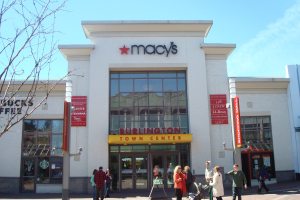
Mayor Weinberger says the predevelopment agreement the city inked with Town Center owner Don Sinex, whose company Devonwood Investors LLC, is handling the redevelopment, includes protections for Burlington that shift much of that risk back to Sinex.
Burlington’s waterfront TIF district — which includes the Town Center property — was created in 1996 and it was grandfathered in when a new application process for TIF districts was created in 2006.
Though no new application is required, Weinberger and city officials will meet with Kenney and VEPC later this month to present the Town Center TIF proposal. VEPC has no veto power over a TIF bond, but it will advise the city on whether it believes the incremental revenue will cover the bonded debt, Kenney said.
The city obtained approval from the Legislature for an extension of the repayment period for the Town Center TIF bond through 2035.
The extension came with the condition that Sinex complete at least $50 million of the mall development before the bond is granted. That trigger is meant to ensure Sinex is well on his way to building something that will generate the tax increment needed to pay down the bond, Kenney said.
Protections for the city’s investment
Even if voters approve the $22 million bond, that doesn’t mean Burlington has to issue the debt.
Weinberger says the city won’t issue the bonds until the new streets are completed to its satisfaction — a determination the mayor said will be made by City Council vote.
“We aren’t going to take on debt and purchase the completed roads from the Town Center until two things happen: They’re completed to our standards, and there are private improvements that will generate sufficient increment to pay down our debt,” Weinberger said.
A section in the city’s agreement with Sinex is intended to further ensure the second condition is met, according to Weinberger.
Once the lion’s share of the project is built, the agreement says Sinex and the city will “agree upon a minimum assessed value” of that portion of the project. Sinex will then not be allowed to appeal the assessment. Property tax payments are based on the assessed value of real estate.
Weinberger said the provision protects taxpayers. If Sinex struggles to find tenants to lease the commercial space or rent the apartments, his property tax bill won’t change because it is set at a level that will allow Burlington to repay the debt, the mayor said.
Assessments are conducted independently by the city assessor, and the mayor and city council don’t have the authority to cut a special deal for the Town Center, Weinberger said.
Sinex is expected to have already built the new streets when his property is being assessed, so the timing of the deal will also give the city leverage to assure that type of negotiation won’t happen, he said.
“If he won’t agree to the minimum (assessed value) we need, we won’t take on the debt,” the mayor said.
Sinex will also have to build the streets to the city’s standards, Weinberger said.
The city has put a cap of $22 million on the infrastructure project, and that’s another important protection for taxpayers, according to the mayor.
“It’s a one way ratchet,” Weinberger said, meaning the cost can only go down.
Currently, the city only has an estimate for the construction costs and the property value of the land the new roads will occupy. That estimate pegs the land’s worth at $2 million, but an appraisal that will determine a final value is underway, the mayor said.
If the land’s value is higher than expected, Weinberger said the city won’t ask voters to approve a larger bond. Instead, it will work with Sinex to find savings elsewhere.
What will Burlington get for $22 million?
The Town Center redevelopment is contemplated in two phases with most of the new construction taking place in the first phase, which covers the square block from Cherry to Bank streets and Pine to St. Paul streets.
Phase one will include concourse and plaza level retail, with three stories of parking above that, topped with office space and residential towers — the ones reaching the controversial 14-story heights. It will also include the concurrent reopening of Pine and St. Paul streets.
As described in the predevelopment agreement, the new streets will be 60 feet wide — broad enough to accommodate two-way traffic — with “a high level of street design,” storm water features, subsurface utilities as well as sidewalks with trees and lighting.
The thoroughfare will be easier to achieve on St. Paul Street than on Pine Street, which currently dead ends at the confluence of the Town Center mall and 100 Bank St. — home to the Burlington Free Press and other offices.
In order to get a 60-foot roadway on Pine Street, at least half the roadway will pass through the bottom of the 100 Bank St. building, according to the mayor.
Though it has separate owners, Sinex has an arrangement that allows the mall’s current parking garage to extend under the 100 Bank St. property. Weinberger said some sort of easement will need to be secured to ensure the roadway can pass through the building.
Engineers working for Sinex are currently designing the Pine Street passthrough, and Weinberger said he expects the designs to be available to the public before voters are asked to approve the $22 million bond in November.
The phase one building is also expected to include a public observation deck that Sinex will pay for.
Under the agreement Sinex would be granted the “ability to close the street on an expedited basis for events, fairs and promotions,” provided he gives the city proper notice.
If Sinex is able to secure the myriad city regulatory approvals he still needs — and voters approve the TIF bond — construction of phase one would begin in January 2017. It would be substantially completed by January 2019, according to an anticipated construction schedule.
That construction schedule is crucial to the viability of Sinex’s project, because his anticipated anchor tenant, the University of Vermont Health Network, needs to lease for office space beginning in January 2019.
Phase two, which includes renovating existing retail space between St. Paul and Church streets, and a new office tower would begin in August 2019 and is expected to be completed 18 months later.
