



[A]nybody around here seen a political campaign?
You know, where candidates for office go around making speeches, their supporters clap and cheer, and the next day you can read about it in the newspapers and see it on television.
Along with commercials telling you to vote for Smith because he’s a wonderful guy who will solve all your problems.
Along with commercials telling you to vote against Smith because he’s a dishonest fraud and besides he once shared a platform with (take your pick): (1) a democratic socialist; (2) a Muslim (3) Donald Trump.
Along with bumper stickers, yard signs, posters pasted on telephone poles, and screaming arguments in the local saloon.
It is an election year. Labor Day, traditionally the start of the campaign season, was the week before last. There are fewer than 50 days until the election.
So where are the candidates? Where are the TV commercials, the yard signs, the bumper stickers and the barroom squabbles?
OK, whoever looks carefully can see a few yard signs. But very, very few. And a few bumper stickers. But look at those bumper stickers again. Most of them are from Bernie Sanders 2016 campaign for president. No commercials yet on television or radio, and no guarantee that anyone but incumbent Republican Gov. Phil Scott will be able to afford them.
And very few actual campaign appearances, so far or planned for the near future. According to Scott’s campaign website, only nine events are scheduled for October (and none for the rest of September), and five of those are debates sponsored by news organizations.
His Democratic opponent, Christine Hallquist, lists 12 events between this weekend and Oct. 24 on her website, and some of those aren’t really campaign events.
For both candidates, their websites apparently don’t list all future events. Still, neither one is campaigning intensively. Neither is anyone else, though Progressive/Democrat Lt. Gov. David Zuckerman and his Republican opponent, House Minority Leader Rep. Don Turner, come close. Both have a campaign event scheduled for almost every day.
Scott and Hallquist did debate at the Tunbridge Fair last week. It was broadcast live on WDEV radio, and the local media did not ignore it. Two of Burlington’s three television news operations covered it, as did Vermont Public Radio, Seven Days and VTDigger. The Burlington Free Press ran a story by the Associated Press.
But the jointly owned Montpelier Times-Argus and Rutland Herald apparently did ignore it (or at least didn’t include it online). And while there was nothing wrong with that AP story, not long ago the largest paper in any state would always assign its own political reporter to analyze the first general election debate between candidates for governor.
But at least in this state, this year, the campaign doesn’t seem to be such a big deal, neither on the stump nor in print (or pixel) and on the air. By all the evidence at hand, state and local political passions in Vermont are running low.
Maybe that’s because national passions are running so high. As is true in the rest of the country, Vermont’s political energy revolves largely around — and in this state in opposition to (70 percent disapprove in the last poll) — President Trump.
Besides, the state races aren’t all that competitive. Yes, independent Sen. Bernie Sanders has a Republican opponent. So does Democratic incumbent Rep. Peter Welch. So do incumbents Attorney General TJ Donovan, Secretary of State Jim Condos and Treasurer Beth Pearce (all Democrats) and Auditor Doug Hoffer (Democrat-Progressive).
If you cannot identify those Republicans, relax. Hardly anybody else can, either. Absent any of these incumbents becoming ensnared in the kind of difficulty that former Louisiana Gov. Edwin Edward once said was the only thing that could defeat him (not repeated on this family-oriented forum but obtainable through internet research), they will all be re-elected.
Right now, even the governor’s race does not appear to be close, though it could be significant that Hallquist performed much better at Tunbridge than she had during earlier debates before the Democratic primary. She briskly answered the questions that were asked instead of wandering from one topic to another. Her answers were crisper and punchier.
But she remains the underdog against a governor whose approval ratings are positive if not as overwhelming as they once were. Because Hallquist is the Democratic nominee in a state that usually elects Democrats, she can’t be counted out. But no governor has been defeated in this state for more than half a century.
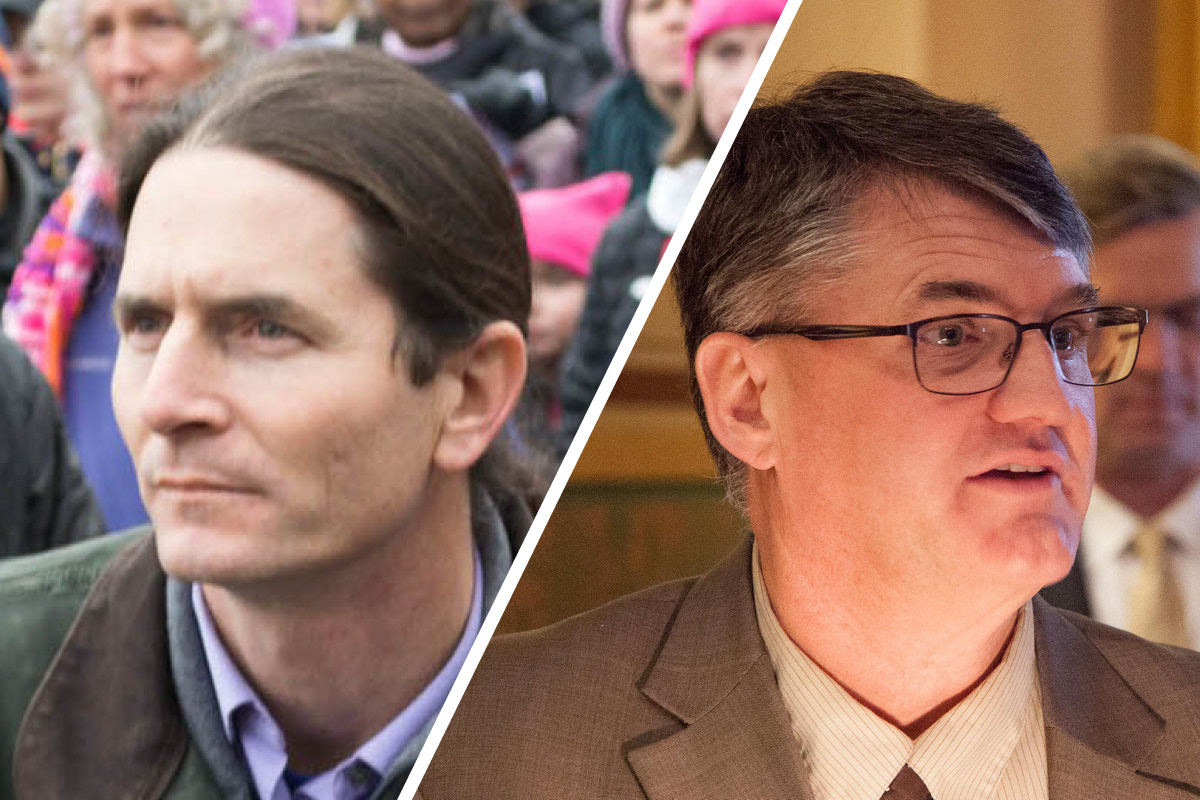
Leaving the race for lieutenant governor as perhaps the most competitive of the year. Zuckerman won by a relatively close (48 to 43 percent) margin two years ago, and in Turner he faces an energetic challenger who earned high marks as leader of the Republican minority in the House of Representatives.
Perhaps that’s why both of them are campaigning more than anyone else.
What is interesting is that this apparently blah Vermont political campaign co-exists with intense interest in politics, here and elsewhere. That intensity explains the high turnout in this year’s primaries all over the country, including in Vermont.
But with few exceptions, the intensity does not reflect enthusiasm for individual candidates, few of whom have inspired huge cheering crowds. Lots of people are going to vote; fewer are going to rallies.
Maybe that’s the wave of the future. Folks don’t go out much anymore. They stay home and communicate (or perhaps fail to communicate) with the rest of the world via social media.
Or maybe it’s just early. Expect at least a small increase in the number of yard signs as October arrives. Candidates could schedule a few more events, possibly attracting more people, some of whom may actually cheer. If TV commercials appear, folks might start paying attention to the details and the candidates. In that case, Vermonters might start discussing the campaign, maybe even engaging in a few ripsnorting arguments in the local saloons.
No fisticuffs please.
