

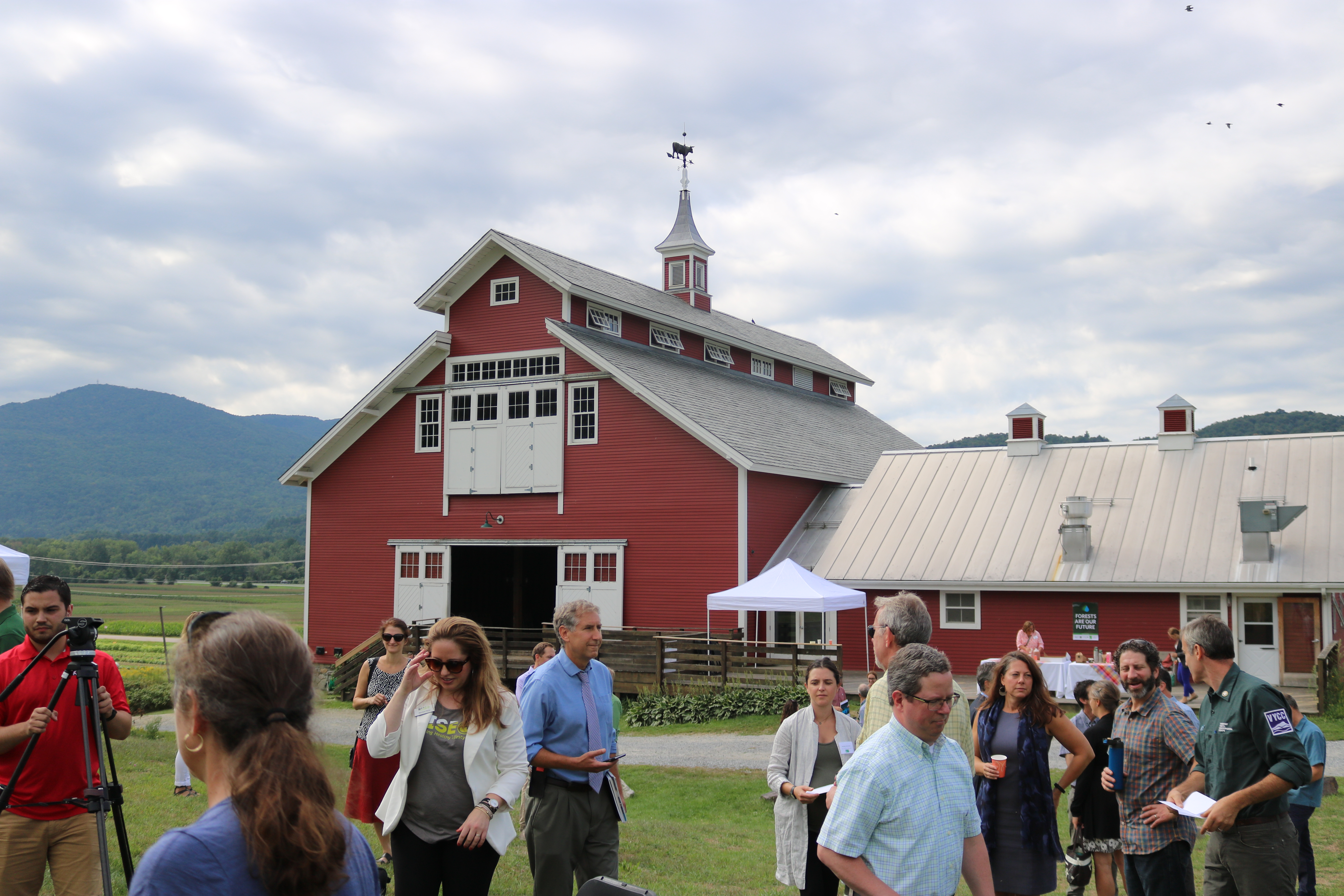
[R]ICHMOND — Heavy hitters in Vermont’s conservation community announced the results Wednesday of a major economic analysis of such efforts: Every state dollar invested in conservation over a 28-year-period yields nine dollars in associated benefits.
“That’s a hell of an investment,” said Win Smith, CEO of Sugarbush and trustee for the Nature Conservancy, at a press conference held outside the Vermont Youth Conservation Corps’ Monitor Barn. “I wish I could get that in my investment portfolio.”
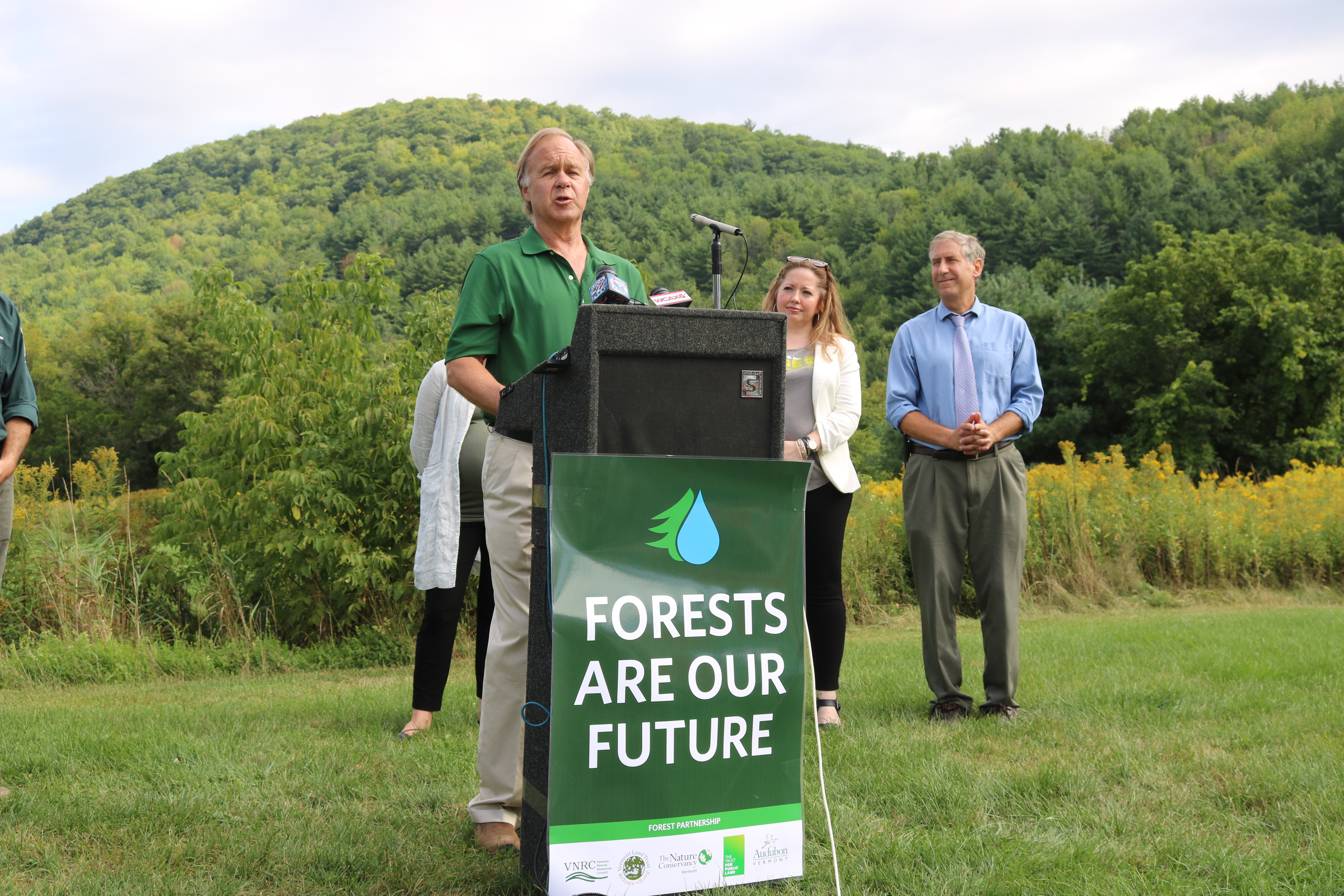
The report, prepared by the Trust for Public Land, was commissioned by members of the state’s Forest Partnership: the Trust for Public Land, Audubon Vermont, Nature Conservancy, Vermont Land Trust and Vermont Natural Resources Council. Economists assigned an approximate value to the 15 types of ecosystems conserved in Vermont based on the “natural goods and services” — such as food, wildlife habitat, water purification and carbon sequestration — that each provides.
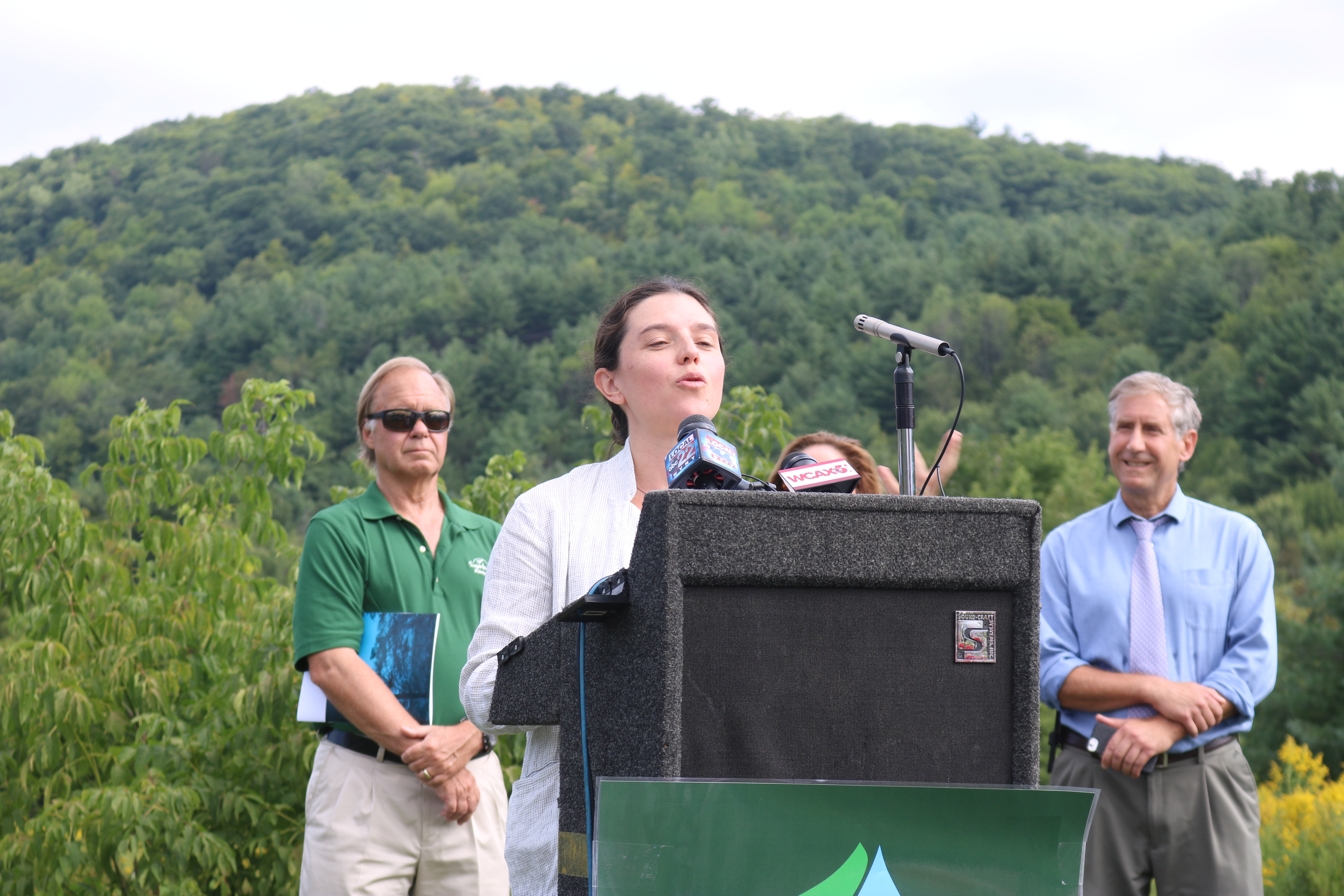
“We felt it was really important to put some numbers behind the successful track record to date that the state has made, and quantify that to help justify continued investment,” Shelby Semmes, Vermont and New Hampshire director of the Trust for Public Land, said in an interview.
Nestled between the iconic restored red barn off Interstate 89 and rolling hills that have been conserved, speakers highlighted the range of benefits provided from conserved land. They spoke of tourism revenue, reduced health care costs, flood prevention and a training ground for youth. Semmes said that outdoor recreation provides 51,000 jobs in Vermont. “It’s a way of life here.”
Charlie Hancock, a consulting forester with North Woods Forestry, said the state is losing forests for the first time since the 1800s because of encroachment from development. This loss means Vermont needs to invest more in forest conservation, he said.
“To put it more bluntly, we need to keep our forests as forests,” he said.
According to the report, deciduous forests provide $180 per acre — second only to wetlands. Forests were about two thirds of the land-cover type analyzed in the report, said Semmes.
Hancock added that the state’s aging population of farmers poses a challenge for the future of agriculture in Vermont. Conservation easements are a way to make farmland more affordable for younger farmers, he said.
Semmes cited appropriations to the Vermont Housing and Conservation Board — a quasi-state entity that funds conservation and affordable housing — as one way potentially to grow state investments in this arena.
That board is “chronically underfunded relative to what’s required in state statute,” said Phil Huffman, director of government relations and policy for the Nature Conservancy, in an interview Wednesday. By statute, the board should receive 50 percent of the state’s property transfer tax revenues, he said, but that rarely happens. During the past legislative session, it received $15.3 million, around $5 million short of that 50 percent mark.
Rep. David Deen, D-Putney, said in an interview Wednesday that the idea of directing taxpayer money toward conservation was initially met with resistance when the housing and conservation board was formed 30 years ago. “We were using public funds to buy a private asset — land — and hold it in public ownership,” he said.

“Now the discussion has changed,” he said. “It’s no longer this private property knee-jerk reaction that public ownership is bad.”
“People can see that, oh yeah, it’s really cool that one of the best hawk-watching spots on the entire East Coast, Putney Mountain … remains open to the public,” Deen said.
The debate has shifted to how much taxpayer money should go toward land protection, he said. “Shortfall projections” for the budget have required the Legislature to make tradeoffs in terms of where to direct revenues from the property tax transfer.
Deen, who is retiring after a long career in the Legislature, hopes new lawmakers will review the report. “They ought to read this to understand how you assign a value to a natural resource.”
