

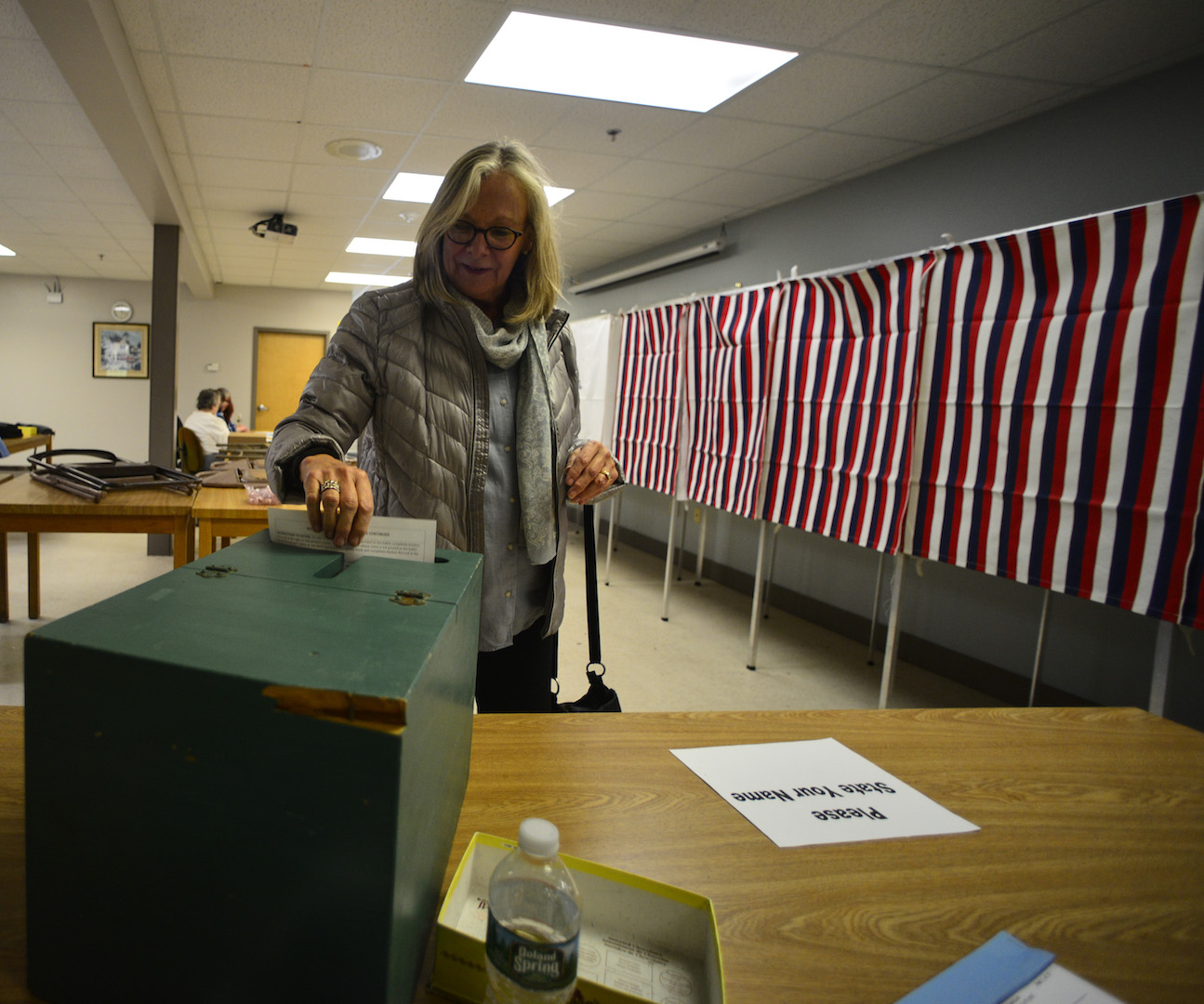
[O]n Tuesday, Vermonters will head to the polls to cast ballots in the 2018 primary elections, determining the future of the state’s federal races as well as this year’s major party state and local contests. But not many voters are expected to show up.
Primaries, particularly in off-years without presidential races, don’t tend to attract significant voter turnout in Vermont, political experts say.
And in years like this, when there are many established incumbents running — including the governor’s race, where Phil Scott faces little threat of an election upset as he nears the end of his first two-year term — it can be even harder to energize voters.
“I don’t think it’s going to be anything on the scale of what we would expect if there were no incumbent or if it were a presidential year,” said Rich Clark, political science professor at Castleton University.
In the last off-year election in 2014, only 9 percent of registered voters cast ballots in the primary, according to data from the Vermont Secretary of State’s Office.
The 2016 primary occurred during a presidential year, but its ballot didn’t include presidential candidates, who are selected on Town Meeting Day. That year turnout was also low: about 46,000, or 11.5 percent of registered voters.
One statistic that already sets this year’s primaries apart from 2014 is the number of voters who have requested early ballots.
As of Aug. 9, the Thursday before the primary, 13,590 voters had requested early ballots, according to data from the Secretary of State’s Office.
That number is more than double what it was in 2014 at 6,034. In the 2016 primary, 20,038 residents had requested absentee ballots by the Thursday before the primary.
But most say that early ballots aren’t necessarily a good indicator of how many voters will actually head to the polls on primary day.

Jim Condos, Vermont’s secretary of state, said his office is in no position to make any predictions about what the state of turnout will be on Tuesday. “We have no idea what the numbers are going to look like,” he said.
Condos said there’s “certainly a lack of competition” in many races, but stressed this wasn’t the case across the board, pointing to highly contested state Senate races in Washington, Chittenden and Rutland counties.
Sen. Bernie Sanders and Rep. Peter Welch, both incumbents, are expected to get through the Democratic primary rather easily and retain their seats in November. Sanders is an independent and being challenged in the Democratic primary by Folasade Adeluola, who just moved to the state in September. Dan Freilich is now alone in taking on Welch following the abrupt withdrawal by Ben Mitchell during a radio debate Thursday.
Scott, a Republican, is seen as a solid frontrunner in his primary despite opposition because of his support of gun legislation during the recent legislative session.
On the Democratic side, the primary contest in the governor’s race is viewed as very competitive, with four candidates vying for the nomination. However, none has held statewide public office, and a VPR-Vermont PBS poll from last month showed the majority of Vermonters don’t know who the candidates are, which is a sign Democratic turnout could be low, Clark said.
Rob Hipskind, the Vermont Democratic Party’s coordinated campaign director, said that while many hadn’t been paying attention to the gubernatorial contest, that’s been changing in recent weeks.
Hipskind said the party has been working to get the word out about the election, and that news items, including stories about Scott’s declining approval rating, will inspire more voters to head to the polls.
“People really haven’t been tuning in to this election, but I think that’s starting to change,” he said.
Hipskind said he wouldn’t be surprised if around 40,000 people show up to vote in this year’s Democratic primary. On the Democratic ticket, James Ehlers, Christine Hallquist, Ethan Sonneborn and Brenda Siegel are running. Sen. John Rodgers, D-Essex/Orleans, is also running as a write-in candidate.

Clark said it would be “hopeful” to expect for more than 15,000 voters on the Republican side. On the Democratic side, he said 20,000 to 25,000 would be likely.
He added that he doesn’t believe Vermonters have been following state election coverage very closely.
“I think it’s been such a tumultuous summer in terms of news,” Clark said, referring to national headlines. “… and Vermont just doesn’t have a lot of exciting races. So people who want the entertainment factor of politics are not looking in-state.”
Whoever ends up with Democratic nomination will face an uphill battle in their bid to unseat Scott.
Historically, Vermont governors at the end of their first two-year terms have little trouble getting re-elected.
Scott’s challenger on the Republican side, Keith Stern, a grocer from Springfield and political novice, is given a slim chance of winning by most analysts.
But he could capture votes from a faction of energized Republican voters upset about Scott’s decision in April to support more restrictive gun laws.
On this week’s Deeper Dig podcast, Condos and others discuss how Vermont’s expansive voting laws could impact turnout in elections:
