

This story by Tommy Gardner was published by the Stowe Reporter on Aug. 9.
[W]hat’s the best way to use $850,000 from a settlement with the former owner of an inactive asbestos mine that straddles the towns of Eden and Lowell?
State and federal officials are looking for opinions.
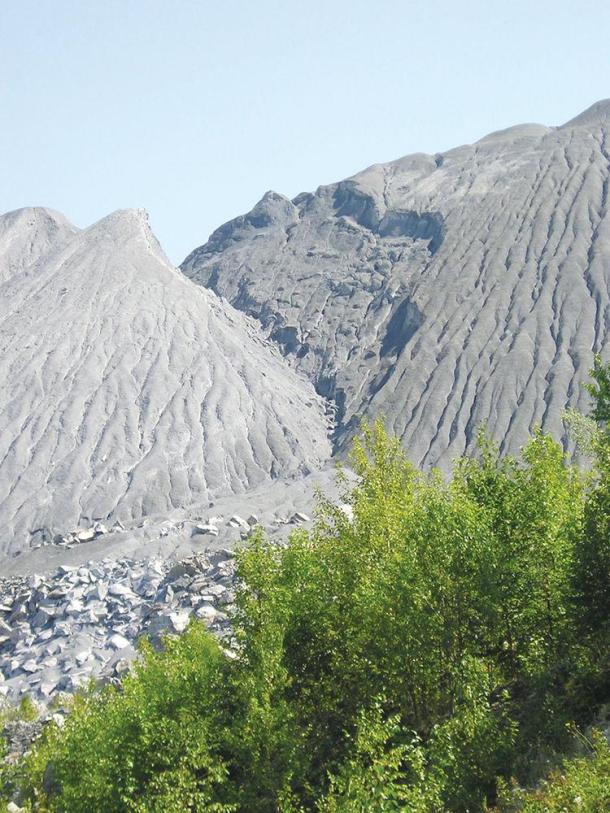
The money is meant to compensate the public for environmental damage caused by the Vermont Asbestos Group mine, which takes up 1,550 acres on Belvidere Mountain and is visible for dozens of miles.
The federal and state officials who control the settlement money require that it be used “to restore, replace, or acquire the equivalent of such natural resources” damaged by the asbestos mine, according to a 25-page “draft restoration plan” issued at the end of June by the U.S. Fish and Wildlife Service and the Vermont Agency of Natural Resources. That report is available at bit.ly/asbestosminefunds.
Those damages come from asbestos “tailings,” the leftover bits from mining that can’t be used and that form the highly visible piles still standing at the mine site. The two largest piles are estimated at 30 million tons.
Eden hosted a public forum Monday to discuss how to use its $375,000 share of the settlement money. Federal and state officials propose using the money to help replace a double culvert on Knowles Flat Road and another culvert on Square Road.
Tracy Morin, Eden’s assistant town clerk, said there’s not much public support for the Square Road project, since it’s on a class 4 road that gets very little traffic during the few months it’s open.
In Lowell, the money would go toward culvert replacement on Irish Hill Road.
The U.S. Fish and Wildlife Department is accepting written comments on its plan through Aug. 17.
To submit comment on the plan, email or mail lauren_bennett@ fws.gov, Lauren Bennett, U.S. Fish and Wildlife Service, 4R Fundy Road, Falmouth, ME 04105. For more information, contact Bennett at 603-227-6426.
Paying for damage
In 2009, G-I Holdings reached a settlement with the U.S. Department of the Interior and the Vermont state government to pay nearly $35 million to help clean up the former asbestos mine it used to own.
That’s just over 10 percent of the estimated $300 million cleanup cost.
That included the $850,000 in compensation for damage to wetlands that have been contaminated by asbestos, paid out over nine years.
It was a booming industry in its heyday, but as asbestos fell out of favor due to its carcinogenic reputation, the mine went bankrupt and eventually shut down. The mine closed in 1993. Later, it was discovered that erosion of the tailings and waste rock was causing runoff of sediment containing asbestos and metals such as nickel and chromium into the wetlands surrounding the mine.
In Eden, the tailings went into Hutchins Brook, part of the Lamoille River watershed.
On the Lowell side, tailings went in the Burgess Branch, in the Missisquoi watershed.
One alternative plan for the settlement money is to fund a wetland protection project on Hutchins Brook. According to the draft plan, more than 12 acres of the wetland was entirely filled in with the tailings, but the western and southern portions of the area wasn’t hurt.
If the alternative plan were chosen, that still-clean area would be protected, in case tailings continue to erode from the mine site.
