

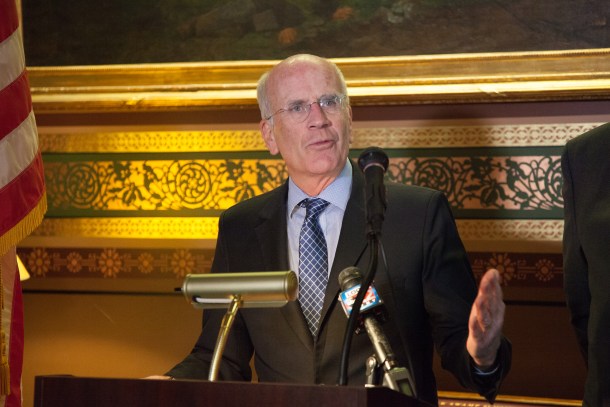
[C]ampaign finance is shaping up to be a key issue for challengers of incumbent Rep. Peter Welch in the Democratic primary for Vermont’s sole U.S. House seat next month.
Both Dan Freilich and Ben Mitchell say that campaign finance and Welch’s acceptance of donations from political committees associated with large corporations are among their top concerns.
However, Welch, who is running for his seventh term has defended his campaign funding, saying he is transparent about his donations and his expenditures. Those donations do not have an impact on his actions, he said.
For Freilich, his desire to run for public office is rooted in part in his experience as a Navy doctor in Maryland, where he was often assigned to travel with members of Congress on official delegation trips.
He said their behavior stood in stark contrast to that of military members whom he treated in his work.
“I got the impression that in general our elected officials have so much yet are willing to sacrifice so little,” he said in an interview last month at his home in Brownsville.
Freilich, who now works as a doctor at the Veterans Administration in White River Junction, has vowed to run his campaign with donations from individuals only. He also believes there should be term limits: Senators should be capped at two terms, House members restricted to five or six terms.
“I have no problem with people wanting to get wealthy and fame and whatever it is that gives them self aggrandizement,” he said. “They should become businessmen or some other professional, but they shouldn’t be public servants, and they in particular should not be progressive Democrat public servants.”
If elected, Freilich pledges to spend almost all his time working on four issues: campaign finance reform, wealth inequality, creating a single payer health care system, and environmental-focused economics.
For Freilich, a report that Welch had a financial stake in firms backing a controversial law related to federal drug enforcement and opioids was very concerning. Welch was among the co-sponsors of a bill that some stakeholders charged hindered authorities in cracking down on diversion of prescription drugs.

Freilich charged that Welch’s campaign contributions influence what the congressman spends his time on. He said that Welch puts his efforts into “relatively unimportant issues.”
“His voting record probably looks fine, probably overall if you were going to simplify it you would call it progressive,” Freilich said. “It’s not what you do that really matters, it’s more important what you’re not doing.”
However, his concerns are with the campaign finance system more broadly.
“I think the biggest problem with Welch taking the money is that he sustains the status quo,” Freilich said.
Freilich raised campaign contributions as an issue when he ran against Democratic Sen. Patrick Leahy in 2010 as well. In the case of both incumbents, he said, he does not see them as being particularly bad actors compared to others in Washington.
“They’re certainly no worse than most of them,” Freilich said. “But they play the game and they’re part of the problem and they’re unwilling to step forward and to be a leader and a role model and to do it differently.”
Ben Mitchell, a Westminster resident who runs a transition program for high school students with disabilities, also sees Welch’s campaign contributions as a significant issue.
“He doesn’t see the way in which the corporate money taints his perspective,” he said in a phone interview.
The article about the DEA and the opioid law motivated Mitchell to run in this particular election, “because I was astonished by that particular development,” he said. He has run in several elections before as a Liberty Union candidate but this is his first time running in a Democratic primary.
Mitchell charged that Welch’s stance on money in politics has shifted over time.
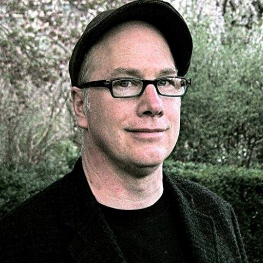
“When he was in Vermont he was a fairly solid left-of-center Democrat and his time in Washington seems to have shifted his perspective about the power of money and what it does and shame on him for that,” Mitchell said.
Mitchell has concerns about how policymaking is playing out in Washington more broadly.
“Rather than defending the people from crimes, more and more the legislators are defending the criminals from people,” he said.
If elected, Mitchell said he would focus on redesigning the special education system, imposing taxes on pharmaceutical companies and using the money to fight the opiate crisis, auditing the Pentagon’s budget and setting up a public banking system.
“Although I won’t get very much media attention and I won’t raise very much money, I’m providing Vermont a choice to say no it’s not like that, it’s different than that,” Mitchell said.
Welch has maintained that his campaign funding has no bearing on his work in the Capitol.
In an interview last month, he said that he abides by all campaign finance laws. The donations he accepts are publicly disclosed, and his expenditures are publicly available. Those donations do not influence his votes or the issues he works on in Congress, he said.
“Every decision I make is based on what’s good for Vermont and what’s good for the country,” Welch said.
Welch said that avoiding PAC money is not a sufficient guarantee to avoid bias. Donations from individuals who are powerful in certain industries could also influence politicians.
“It raises the same questions,” Welch said.
Welch said the system created by the Citizens United Supreme Court decision is an “enormous dilemma.” He has operated in compliance with campaign laws, but he favors campaign finance reform. He believes that public financing must be a part of a reform effort.
However, he said, in the current system he feels it is important to be prepared in case a race becomes a target of a large donor willing to put a lot of money into a district to win a race.
“They can come into any district with an avalanche of money, including Vermont,” Welch said.
He also uses his funds to help support other Democrats in other districts.
Both candidates opposing Welch in the upcoming primary say they would be willing to drop out if Welch stopped taking corporate PAC donations. But Welch stood by his practice.
“They can run the campaign any way they want, and I’d be glad to debate them on this issue and all issues,” Welch said.
Middlebury College political science professor emeritus Eric Davis said that raising questions about Welch’s donations could be an effective message for his opponents.
Davis noted that renouncing PAC money has increasingly become a trend among potential Democratic 2020 presidential contenders. Sen. Bernie Sanders, I-Vt., has long had a practice of avoiding PAC financing.
However, he does not consider Welch to be vulnerable in the race.
“I think the challenge that these two people are going to face is getting public attention to their campaigns,” Davis said.
