


[A]fter vetoing an earlier version of the proposal and facing criticism over an executive order he issued to replace it, Gov. Phil Scott on Thursday signed into law a bill aimed at eradicating systemic racism in state government.
The new law creates a five-member Racial Equity Advisory Panel and a cabinet-level Executive Director of Racial Equity tasked with identifying and combating systemic racism in state institutions.
But to win the governor’s signature, lawmakers eliminated a provision Scott opposed in the previous bill that would have constrained his ability to fire the person hired for the executive director role.
The bill no longer includes language that would have prevented governors from terminating the director without the consent of the five-member body, which Scott argued undercut his constitutional authority over executive staffing.
Although crafters of the bill and the Office of Legislative Council said his legal argument didn’t hold water, senators reintroduced the bill, S.5, without the controversial provision during the special legislative session so that the governor would sign their version of the proposal.
Some supporters of the bill and racial justice groups said the governor’s executive order, which he issued last month, fell well short of the legislation now slated to take effect next year.
“It was absolutely watered down,” Rep. John Gannon, D-Wilmington, said of the executive order.
Scott’s order would have still established a panel and new cabinet position, but unlike the new law did not include a timeline for when the new body would be created, or provide any funding for it.
Many also criticized the order because it would have enabled the governor to appoint all five members of the panel.
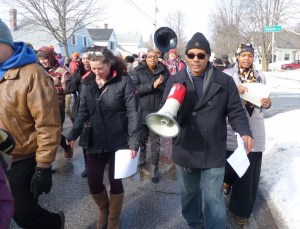
“Does the governor really think we’re going to make progress by loading the panel with folks who tell him things that he wants to hear?” said Mark Hughes, the executive director of Justice for All, a group focused on addressing racial inequities in Vermont.
Rebecca Kelley, a spokesperson for the governor, said the reason for having all appointments made by the governor in his proposal is because he does not have the authority to charge other branches of government with making appointments to the panel.
“In fact, when we – at the request of some legislators – tried to do so in an [executive order] last year, we heard objections from legislative leadership for this exact reason.”
Kelley said the only reason Scott vetoed the previous bill was because of the provision he deemed unconstitutional.
In issuing the executive order, Scott sought to “echo and mirror” the systemic racism bill. He also expanded its scope, tasking the panel and cabinet position with also combating ethnic and cultural disparities.
“It expanded to cover a range of diversity issues,” Kelley said.
But this aspect of the executive order drew more opposition from supporters of the bill, who wanted the new law to focus exclusively on racial disparities.
“I think that’s a digression from what we’re trying to address and gets away from the root of the problem,” Hughes said.
Gannon echoed these comments.
“People of color are pulled over more and searched more than whites. People of color in the state workforce are more likely to be terminated and get paid less,” he said. “That’s why we really want to keep it focused there.”
The Scott administration is still contemplating what to do about the executive order. Kelley said there were two possible paths forward, including rescinding it or replacing it with a separate order.
“We felt the executive order added some additional, important charges – including employee training requirements, enhanced diversity recruiting efforts and additional responsibilities for the officer to liaise and support other critical stakeholders in fostering racial equity,” she said.
The new law, which will take effect in January 2019, will also lead to the development of state employee training requirements, specifically on systemic racism and “the institutionalized nature of race-based bias.”
Even if both the law and executive order were on the books at the same time, Kelley said she doesn’t believe there would be a legal conflict because the order doesn’t have an effective date.
Hughes said the bill the governor just signed is a step in the right direction. But he said there are additional policy proposals aimed at improving racial equity he and others were hoping lawmakers would pass this session.
These include provisions that would require the state to collect and distribute data about police use of force during traffic stops and require law enforcement agencies to adopt use-of-force, de-escalation and cross-cultural awareness policies.
But these proposals didn’t make it to the finish line.
“There’s a lot left on the table here,” Hughes said.

