


[I]n 2016, as the number of fatal drug overdoses spiked, Vermont officials enacted a law calling for new limits on opioid prescriptions.
Two and a half years later, the law and its new prescribing rules are having the desired effect: New statistics show that the amount of opioids dispensed in the state has dropped by 28 percent.
But some say that an unintended consequence of the new regulatory approach to reducing the use of opioids – which has extended across the nation — is that doctors are abandoning legitimate prescribing practices. And the situation could worsen in the coming years as more patients become “pain refugees,” cut off from care because they have been taking high doses of opioids.
That could funnel more people into the state’s already-overburdened “hub and spoke” system of medically assisted treatment for addiction.
“I think there’s a real lack of knowledge, a lack of training and fear,” said Dr. John Brooklyn, medical director of the Chittenden Clinic Hub in Burlington. “I also think that the next wave of people we’re going to get into the hubs and spokes are people who’ve been on chronic pain meds, whose doctors think that they shouldn’t prescribe anymore, and they’re going to get cast aside.”
When it comes to prescription opioids and addiction, there’s widespread agreement on two points: Doctors had for years been sending patients home with too many powerful painkillers, and that contributed to the opioid-addiction epidemic currently gripping Vermont and the rest of the United States.
At a recent opiate conference in Burlington, Dr. Stefan Kertesz, an Alabama-based physician and researcher, summed it up this way: “Opioids were vastly overprescribed from 2000 to 2012. Doing so, in my view, caused harm.”
Kertesz added that reducing reliance on prescription opioids “is desirable, broadly speaking.”
Vermont officials agree. Act 173 of 2016 featured a number of provisions designed to combat opioid abuse, and it laid the groundwork for new rules governing the way doctors prescribe those drugs.
Those rules, which took effect in July 2017, included guidelines for how many morphine milligram equivalents – a value that measures an opioid’s potency – should be prescribed based on a patient’s pain and age.
The rules also call for more patient education about the effects of opioids, initial consideration of non-opioid treatment, and periodic re-evaluation of a patient’s dosage.
Vermont Department of Health officials say new data show that the 2016 law has worked. Total morphine milligram equivalents dispensed in Vermont dropped from 110.1 million in the first quarter of 2016 to just under 79 million in the first quarter of this year.
“We have seen a steady decline,” said Hannah Hauser, program manager for the Vermont Prescription Monitoring System. “We’ve also seen a pretty dramatic decline since the rule went into effect.”
In a recent presentation to the House Human Services Committee, Hauser said the goal is to lower not just the state’s quarterly prescription-opioid count but also the number of morphine milligram equivalents dispensed per prescription and per day.
Brooklyn, who works as a primary care doctor in Burlington in addition to his role with the Chittenden Clinic, said Vermont is better off with the new prescribing rules in place. He focused particularly on the “hard stops” required for reassessment of a patient’s ongoing need for high opiate doses.
“The shorter duration of time you’re on opiates, the less likely you are to develop dependency,” Brooklyn said. “So I think that they have had a good effect in many ways.”
But there’s concern that the “ongoing pendulum swing” in opioid prescribing may be going too far.
At a conference on opiates organized by the Howard Center in May, Kertesz argued that “forced opioid reductions are now quasi-mandated” but “violate ethical and evidentiary norms of medical practice.”
Kertesz, a professor at the University of Alabama at Birmingham School of Medicine, has written and lectured nationally on the topic. He reviewed Vermont’s new prescribing rules and said that, in general, they “happen to align with what I would teach medical residents and doctors to do.”
The problem, he said, is how the regulations can impact doctors. “It conveys a message that physicians can expect to lose their careers in the event that, on technical grounds, they are found not to have scrupulously adhered to every single letter of a particular prosecutor’s interpretation of that law,” he said.
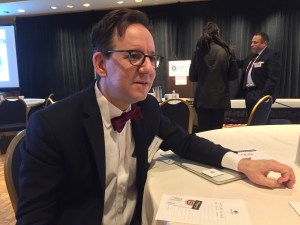
Kertesz said numerous states have enacted new prescribing statutes. Added to those are opioid restrictions and policies imposed by federal officials, insurers, pharmacies, medical boards and others, creating “a cacophony of regulators and voices.”
“It becomes almost impossible to keep track of so many conflicting imperatives, and almost none of these regulators and voices acknowledge the legacy patients that I’m so concerned about,” Kertesz said.
Legacy patients are those who have a legitimate need for opioids. While opioids are not effective or advisable for everyone, Kertesz said about 25 to 33 percent of patients can stay on the drugs for the long term at a consistent dose.
He questioned the efficacy and safety of forcing those patients to stop taking opioids. There’s no evidence that the decline in prescribing has produced a decline in overdoses, Kertesz argued, and there is increased risk of suicide in patients who have been removed from or tapered off of opioids.
There’s also a risk of driving patients into addiction treatment due to withdrawal symptoms. Brooklyn told the story of a woman who showed up recently at the St. Albans hub treatment center after her long-term opioid prescriptions were cut off.
“This woman shows up, and she’s an elderly person – barely can walk,” he said. “I’m thinking to myself, if I don’t throw her a lifeline right now, who knows what she’ll do. So we started her in treatment.”
Such a scenario indicates a failure in the doctor-patient relationship, Brooklyn said. Suddenly cutting off a long-term opioid prescription, he said, is the equivalent of “pushing someone off a cliff without a parachute.”
“If you read the Vermont guidelines, there’s nothing in there that says you have to immediately stop prescribing for your patients,” Brooklyn said.
The debate over opioid prescribing is a sensitive one. On the same day that Kertesz and Brooklyn spoke, Burlington Mayor Miro Weinberger – who has been vocal about the opioid crisis – told conference attendees that “we should be slow to believe that the pendulum has swung too far” on prescription limits.
“I still hear too many anecdotal stories of patients who have to argue with their doctors not to be prescribed opioids,” Weinberger said. “I think we’ve got to be really data-focused about that.”
Burlington police Chief Brandon del Pozo argued that the current prescription regulations are the direct result of the medical profession’s past practices.
“It shows that the people aren’t fully ready to trust pharmaceutical companies and doctors to make these decisions about opioid prescribing without regulation and guidance,” del Pozo said.
Kertesz acknowledged that point. But he said tying doctors’ hands is not a long-term answer to the opioid epidemic.
The past practice of overprescribing opioids and the current push to curtail such prescriptions “are mirror-images of each other,” Kertesz said. “They embody a thirst for simple solutions. They enable a failure to build systems of care for complex, vulnerable populations. Populations like those which the Howard Center is trying to serve.”
