

This story was updated at 6:09 p.m. on April 25.
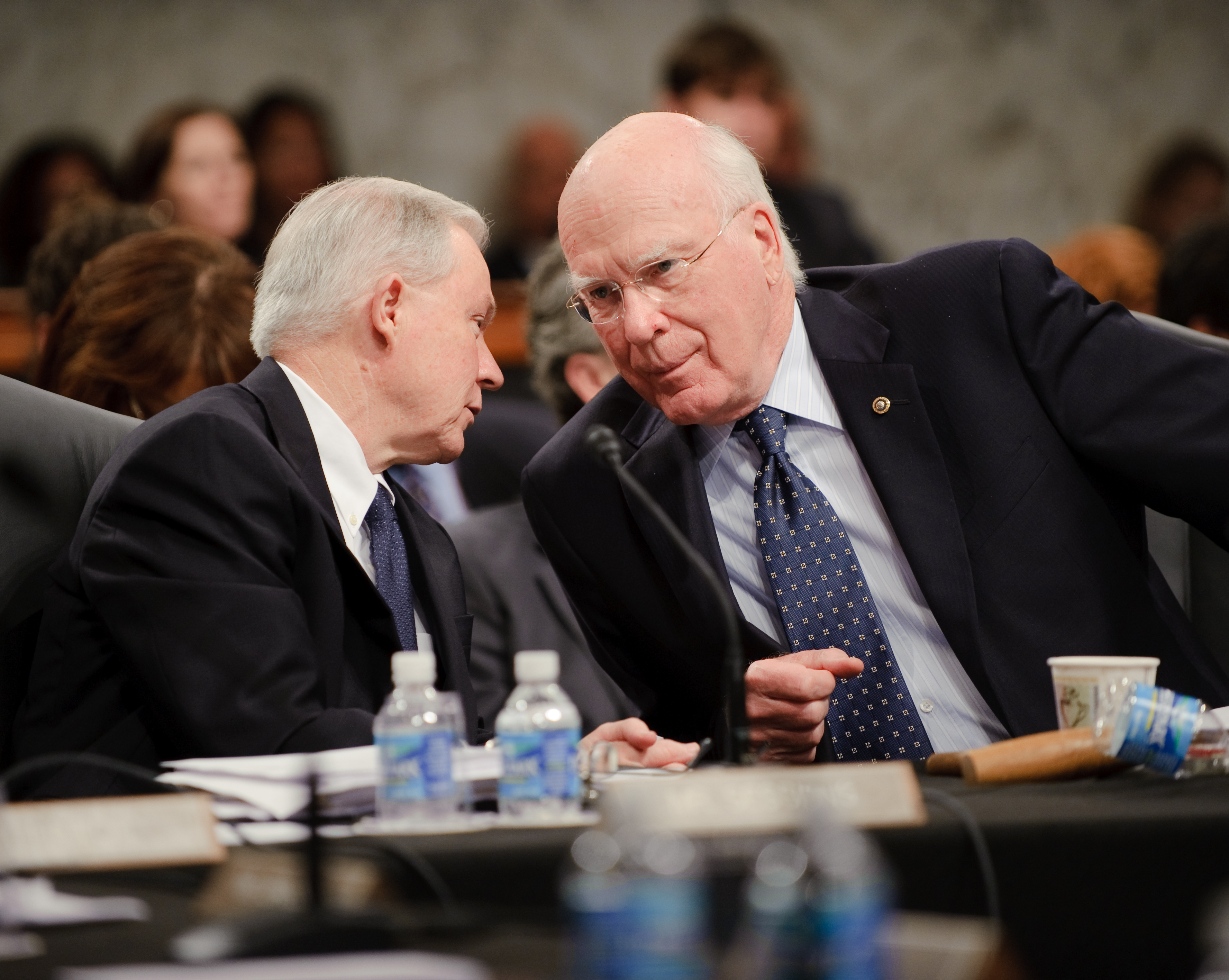
[W]ASHINGTON — Attorney General Jeff Sessions refused to confirm whether he has recused himself from a probe of President Donald Trump’s personal attorney under questioning from Sen. Patrick Leahy Wednesday.
Leahy pressed Sessions about his involvement in the investigation into Trump’s longtime lawyer, Michael Cohen.
“I think the best answer from me, having given it some thought, is to say that I should not announce that,” Sessions said.
Cohen’s financial dealings are reportedly under scrutiny by federal prosecutors. The FBI raided Cohen’s office and hotel room in New York earlier this month, seizing boxes of documents and electronic devices.
Robert Mueller, who is leading the special counsel probe into Russian interference in the 2016 election, referred the matter involving Cohen for investigation to federal prosecutors in New York.
Last March, Sessions announced he was recusing himself from investigations into “any matters related in any way to the campaigns” for president.
Leahy asserts that the Cohen probe is likely related to the 2016 presidential campaign. Ahead of the 2016 election, Cohen, who was involved in Trump’s campaign, allegedly paid an adult film actress $130,000 as part of a nondisclosure agreement related to a 2006 affair with Trump.
Bloomberg reported Tuesday that Sessions has not recused himself from the case. That could allow him to be briefed on the investigation, and potentially make decisions affecting it, according to the report. Trump, a vocal critic of the raid on Cohen, could ask Sessions about the case.
However, the attorney general was evasive when Leahy asked him about his relationship to the case Wednesday.
“I am honoring the recusal in every case and every manner that comes before the Department of Justice,” Sessions said. “I committed to that in my confirmation hearing, and I have honored that and will continue to honor that.”
“Does that include Cohen?” Leahy said.
“It is the policy of the Department of Justice that those who’ve recused themselves not state the details of it … or confirm the existence of an investigation or the scope or nature of that investigation,” Sessions said.
He went on to say it would be “inappropriate” to publicly say his involvement in the case.
Under further questioning, Sessions said that he has sought advice on the matter.
“I can assure you I’ve not violated my recusal,” he said to Leahy.
Leahy’s line of questioning followed on a letter he sent to the attorney general Friday, asking Sessions whether he had been briefed on or made decisions affecting the investigation into Cohen, and whether he discussed the investigation with the president or White House.
Sessions had not responded to Leahy’s letter, according to a Leahy spokesperson.
Leahy said Tuesday it is “difficult to see any reasonable basis” for Sessions not to recuse himself from the Cohen investigation when it “reportedly involves matters directly related to the campaign.”
“The Attorney General owes the Senate, and the country, an explanation,” he said at that time.
Bloomberg reported Tuesday that Sessions will not recuse himself from the probe into Cohen.
Asked about Sessions’ involvement in the Cohen investigation, DOJ spokesperson Sarah Isgur Flores said Sessions “has been clear” that his recusal pertains to matters related to the presidential campaign.
The department declines to discuss recusals from specific probes, she said, “because doing so could confirm the existence of ongoing investigations or the scope or nature of those investigations.”
Asked about Leahy’s assertion that the Cohen investigation is related to the campaign, and therefore should fall within Sessions’ recusal, Flores responded: “We are not confirming the scope of the investigation and Senator Leahy does not know the scope of the investigation.”
