

Editor’s note: Jon Margolis is VTDigger’s political columnist.
[E]arly next month a new United States senator will be seated.
On the basis of all known evidence, this new senator will oppose abortion rights, compulsory paid medical or family leave for workers, or federal funding for Planned Parenthood.
On these and other matters of special concern to women, the new senator’s views differ from those of Sens. Patrick Leahy and Bernie Sanders and Rep. Peter Welch, the three Vermonters in the United States Congress.
So why should it matter to Vermonters that the new senator, Cindy Hyde-Smith, is a woman?
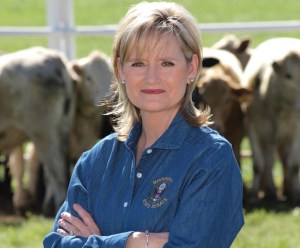
It shouldn’t, except for the fact that her ascension to the Senate leaves only Vermont as the state that never sent a woman to either house of Congress.
Worth noting as the minor historical footnote it is. But neither is it the embarrassment that some have called it. In fact, if there is any political significance to Hyde-Smith’s appointment, it is what it reveals about how inconsequential gender is these days.
Think of it. A conservative Republican governor in one of the most conservative states in the country takes the risk of appointing woman he knows will be challenged by another Republican in an election.
Challenged because she’s a woman? No. Challenged because of intramural – and to no small extent inter-personal – animosities besetting the Mississippi Republican party, starting with Gov. Phil Bryant’s less than amicable relationship with State Sen. Chris McDaniel, Hyde-Smith’s likely opponent (or one of them) in November.
The governor, then, who presumably understands the politics of his state, has determined that being a woman is not a disadvantage when it comes to winning an election.
In Mississippi.
If it isn’t a disadvantage there (and wasn’t in West Virginia, where a women was elected to the Senate in 2016) then it isn’t a disadvantage anywhere. In politics, women have achieved parity. That helps explain why more women than ever (more than 500 at last count) are running for the House and Senate this year; they see a chance to win.
Not that there aren’t still some grumpy old guys (and a few grouchy women) who won’t vote for a woman candidate. There are. But not many, and they are counterbalanced by the determined women (and a few male supporters) who will vote for any woman candidate just because she’s a woman.
So why aren’t half of all elected officials women?
For lots of reasons, starting with the fact that parity does not guarantee success. Some of the women who have run for office were not very good candidates. One woman would be President of the United States right now if only she had been a good candidate.
Probably a bigger reason is that women have not achieved parity everywhere. They are less likely to be wealthy and powerful. They are more likely to be stuck with mundane domestic chores. Running for office is something of a luxury, easier for those with time, money, and energy to spare. Men have more of all three.
Still, quite a lot of women have managed to cobble together the time, money, and energy – not to mention political talent – to get themselves elected. They now comprise 18 percent of the U.S. House, 22 percent of the Senate, and 40 percent of the Vermont State Legislature (60 in the House, 11 in the Senate).
Is this enough? Well, go argue over that. But if there is a women’s sensibility that differs from the non-women’s sensibility in a politically meaningful way (debatable, but plausible), even that 18 percent in the U.S. House is probably enough to guarantee that this sensibility is heard.
Heard does not necessarily mean heeded. But that’s politics. There are no guarantees that anything will be heeded.
Feminist political operatives keep complaining that women face greater obstacles in running for office, and that not enough of them win. Why shouldn’t they? The leaders of every other organized pressure group keep complaining, too. It’s good for direct mail fund-raising and apparently for the soul.
Political gender parity does not mean Hyde-Smith is certain to win her race. But Mississippians are saying that this is not because she’s a woman. It’s because until just a few years ago she was a Democrat, and McDaniel is likely to argue that she isn’t conservative enough.
McDaniel is the ultra-conservative firebrand with some ties to neo-Confederate organizations who challenged Sen. Thad Cochran for the Republican nomination in 2014. It was the resignation of Cochran, now 80 and in poor health (and who for more than four decades practiced politics as a dignified gentleman who listened courteously to all his constituents), that created the opening Bryant filled by appointing Hyde-Smith.
The Nov. 5 special election is not a primary. Candidates from both parties will run and if no one gets a majority, there will be a run-off. Republicans worry that if three or more Republicans run, the run-off could be between McDaniel and a Democrat, and the Democrat might even win.
That Democrat would be former Rep. Mike Espy, who – extrapolating from a whole bunch of polling – would get the votes of about 70 percent of the women voters of Vermont, including the ones who lamented Vermont becoming the only state never to haves had a woman in Congress, even if he were running against a woman.
Just as most Vermont women would vote for any of the three non-women who now represent them in Washington over a woman who opposed abortion rights and funding for Planned Parenthood. Not being fools, most Vermont women understand that it is far more important to have a representative who shares their views than one who shares their gender.
And as a footnote, if Mike Espy were to become a senator, he would be one of only two African-Americans (along with Tim Scott of South Carolina) in the Senate, and the only Democrat. Perhaps another sensibility that should be heard.

