


[Y]oung Writers Project, an independent nonprofit based in Burlington, engages young people to write and use digital media to express themselves with clarity and power, and to gain confidence and skills for school, the workplace and life.

Check out the most recent issue of The Voice, Young Writers Project’s monthly digital magazine. Click here.
Each week, VTDigger features a writing submission – an essay, poem, fiction or nonfiction – accompanied by a photo or illustration from Young Writers Project.
YWP publishes about 1,000 students’ work each year here, in newspapers across Vermont, on Vermont Public Radio and in YWP’s monthly digital magazine, The Voice. Since 2006, it has offered young people a place to write, share their photos, art, audio and video, and to explore and connect online at youngwritersproject.org. For more information, please contact Anna Forsythe at anna@youngwritersproject.org.
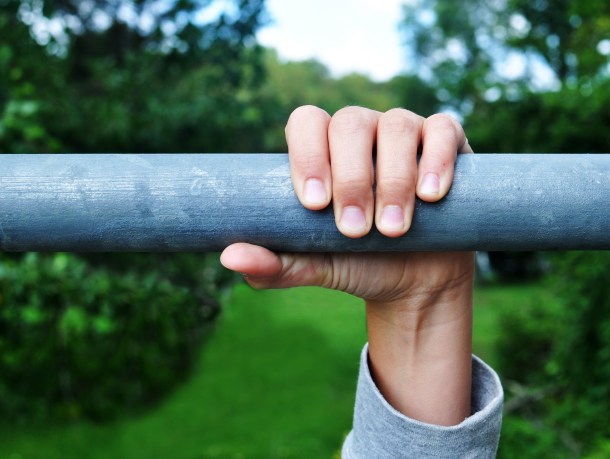
When it comes to gun violence in our nation’s schools, growing apathy of the public is inevitable, but unacceptable. This is the message Rutland student Isabel Blankenbaker forces her readers to confront in this nongraphic but hard-hitting poem that hints at last month’s Parkland tragedy. She ruminates on her own numerous experiences preparing for the possibility of a shooter in the classroom setting, and the effects these drills have on her mental health and sense of safety. As she relays some of the insensitive phrases often spoken in the aftermath of mass shootings, there’s a bitter taste left in the reader’s mouth – yet not one that Blankenbaker’s sheer conviction for change does not successfully overpower.
Drill
By Isabel Blankenbaker
[P]ay attention to how you act,
for we develop habits in our youth,”
an old teacher often claimed.
“Even if it’s not healthy,
I still eat everything on my plate,
because that’s what I’m used to.
I don’t feel right if I don’t, because
that’s how I was taught to behave
and now the habit’s ingrained.”
“So I ask you to practice
that habit of a positive mindset.
Just try and look at the world
in a good light because
compassion, cruelty –
organization, messiness –
responsibility, tomfoolery –
all of these are habits.”
As I would later learn,
so are paranoia and precaution.
I enter a building and note the exits.
I enter a classroom and sit farthest from the door.
I enter a hallway, must remember to look behind me.
Habits drilled into me by drills
as we sit in classrooms, silent and still,
praying we never face the very thing we’re preparing for.
“Draw the shades and lock the door.
If you can’t find room here,
take a seat under the windows or a desk.
Just make sure you’re covered and out of sight.”
This was the advice given to me
during my elementary school’s “Code Red.”
My class sat, huddled under a coat rack,
waiting for the principal to rattle the door.
Six years later and I’m 14,
slouched against a wall
just below the arm of a chair.
At this point I have heeded
such instructions many times.
I suppose at this point I’m pretty good
at these sorts of drills.
I know how to keep quiet,
and how to find a hiding spot
where no one can see me
from window or door.
But still not feeling secure,
I draw my knees to my chest.
I rest my hands on the back of my neck,
attempting to cover up the critical points
where a bullet could enter.
One thought races through my mind,
replaying again and again:
“It could be me one day.”
Paranoia, instilled in me with drills like these,
has become my habit.
And it is through this light that
I view the gun control conversation.
Or, rather, lack thereof.
You say, “Now is not the time to talk.”
I hear, “And the next time won’t be either.”
You say, “Our sincerest thoughts and prayers.”
I hear, “We are too afraid to make change.”
You say, “But what about Second Amendment rights?”
I hear, “We don’t care about your lives.”
You say, “We have sympathy for those affected by this tragedy.”
I hear, “Not enough to make sure others won’t suffer.”
That is how I’ve been taught to think
by the drills you put in place
to prevent us from calling for change.
Paranoia is just like any other mindset or habit,
in that I don’t know if I’ll ever truly be rid of it.
But I’ll make damned sure that the next generation
doesn’t wince when they hear a binder hit the floor.
