

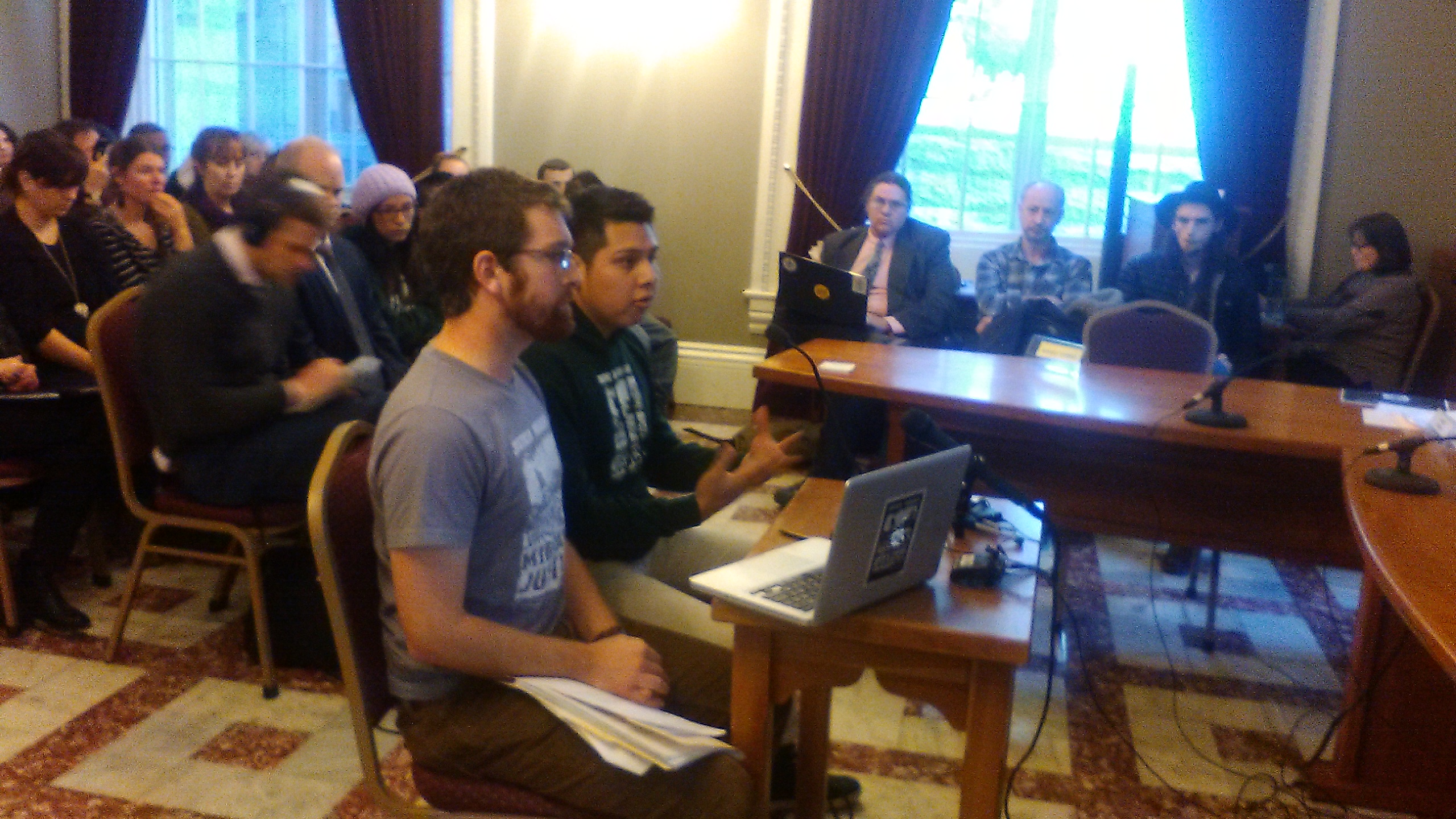
The chair of a state Senate panel says it may make sense to delay implementation of an anti-bias policy for law enforcement, which is to go into effect March 1.
Advocates say it doesn’t go far enough to protect undocumented immigrants.
Sen. Jeanette White, D-Windham, head of the Senate Government Operations Committee, said it may be prudent to put off the implementation date for the policy.
“I think there are some language issues here that we can probably work out,” White said.c“We’d like to give it enough time to make sure we get it right. That’s my personal feeling. We’d rather get it right than implement it earlier.”
The Senate discussion took place against the backdrop of news that the Department of Justice has demanded records from the city of Burlington about a policing policy designed to discourage law enforcement from asking individuals questions about their immigration status. The feds have threatened to revoke funding for law enforcement agencies that provide sanctuary to undocumented immigrants.
White spoke during a meeting in which the committee took testimony on a fair and impartial policing policy adopted late last year by the Vermont Criminal Justice Training Council.
Legislation passed last session called for the development of that policy to ensure the state was in compliance with federal law. The legislation also called for law enforcement agencies in the state to adopt it by March 1, or submit their own that passes muster with the state attorney general’s office.
Advocacy groups for undocumented immigrants, including the human rights group Migrant Justice and the Vermont chapter of the American Civil Liberties Union, urged members of the Senate Government Operations Committee to consider pushing back that implementation date.
They said they wanted more time to talk to the Vermont Attorney General’s office about a handful of changes they would like to see made to provide needed protections for undocumented immigrants.
White said legislation is the only way to delay implementation. She added that there was no significance to the March 1 implementation date. “It’s not tied to anything.”
Will Lambek, a Migrant Justice organizer, said he was heartened by White’s remarks.
“We were very pleased, an unexpected result,” he said. “Hearing the chair of the committee say it’s better to do it right rather than do it quick, that’s exactly what we wanted to hear.”
Richard Gauthier, executive director of the Vermont Criminal Justice Training Council, told Senate committee members that the policy represents a balancing act between compliance with federal law and providing protections sought by the advocacy groups.
“We’ve come as close as we think we can,” Gauthier said.
If the policy is out of compliance, law enforcement agencies across the state risk losing federal funding, he said.
He said council members did their best to work with the advocacy groups to address their concerns in drafting the policy.
Gauthier added he has advised law enforcement agencies to wait until March 1 to adopt the policy as a precaution in case any changes are made to it before then.
Leaders of the advocacy groups Wednesday said with more time they may have a chance to iron out some remaining differences with law enforcement.
Assistant Attorney General David Scherr, representing the Vermont Attorney General’s office on the council, told the committee he wasn’t sure more time would help resolve disagreements. “Both sides worked really hard to see where the other side was coming from and to accommodate wherever we could,” Scherr said.
In one example, advocacy groups had asked for a policy under which Vermont law enforcement would not share information about crime victims or witnesses with federal immigration authorities unless the individual consented.
Scherr said the attorney’s general’s office saw that language as a “clear violation” of federal law.
“It would allow victims and witnesses a veto of when information could be shared” with federal authorities, Scherr said. “The law is clear and this Legislature was clear that we were to follow federal law.”
The council did, however, take concerns raised by the advocacy groups into consideration when drafting the policy regarding the issue, Scherr told the committee.
“We recognized that we couldn’t put in, sort of, the prohibition that many people wanted,” he added. “What we did instead was a give a clear message to law enforcement reminding them what their priorities are: which is local law enforcement, protecting victims and witnesses, and that they have no ability to enforce civil immigration law themselves and it’s not really their job.”
The council’s version states, law enforcement agencies “should communicate that they are there to provide assistance and to ensure safety, and not to deport victims/witnesses.”
The council’s policy also states that when considering whether to contact federal authorities, police agencies in the state “should remain mindful that their enforcement duties do not include civil immigration enforcement” and that law enforcement’s mission in the state is “to serve all Vermonters, including immigrant communities, and to ensure the trust and cooperation of all victims/witnesses.”
Lambek, of Migrant Justice, said it’s important to have clear boundaries spelled out within the policy.
He cited an incident in August where a Franklin County sheriff’s deputy sought assistance from U.S. Border Patrol after a traffic stop of two unauthorized immigrant farmworkers. The father and son, both farmworkers, ended up spending six months in jail, and have since been deported, Lambek said.
Migrant Justice and the ACLU of Vermont, through a public records request, obtained body camera footage from the sheriff’s department. A federal agent is captured in the footage using the term “wet,” a slur for undocumented farmworkers.
Jay Diaz, a staff attorney with Vermont ACLU, told the Senate committee it’s important that undocumented immigrants who are victims and witnesses of crime are not afraid to go to local law enforcement when needed for fear of facing deportation.
Failing do so, he said, “makes us all feel less safe.”
