


Editor’s note: Jon Margolis is VTDigger’s political columnist.
Among the joys of political discourse is that useful lessons may be found even in situations which are … well, let’s just say less than useful.
A fit description, at least for the nonce, of S.196, a bill which would “require a resident 18 years of age or older who operates a bicycle on the highways of this State to register his or her bicycle.”
The registration would cost $28.
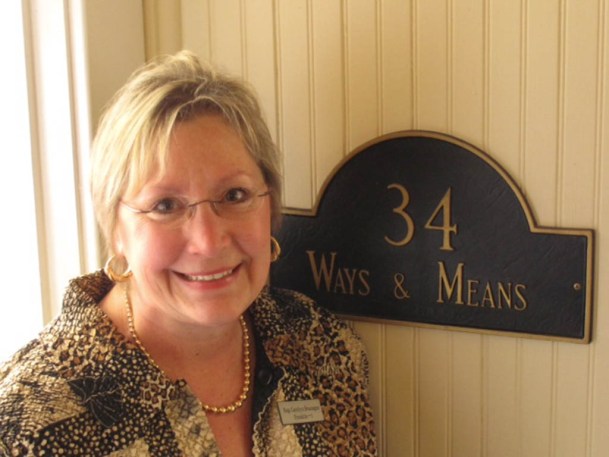
Even its sponsor, Sen. Carolyn Branagan, R-Franklin, acknowledges the bill has no chance of passing, but was designed to “start a discussion.”
This is not what renders it less than useful. Legislation is often introduced to start discussions, sometimes useful discussions.
In this case, the discussion begins amid confusion. Branagan cites unsafe biking by vacationers from out of state as the impetus for the bill. But it would apply only to Vermont residents. She says bicyclists don’t appear to know that they should “get out of the road” to make way for cars.
The law does not require them to do that.
So the substance of this legislation may safely be ignored. But that does not mean there are no valuable lessons to be drawn from its introduction. In fact, there are two.
First, both the filing of the bill and the reaction to it illustrate how tribal so much of today’s political discussion has become. These are not “tribes” as conventionally defined. America in the 21st century may be the first society in the history of the world in which substantial numbers of people define themselves less by ethnicity, religion or class than by their preferred outdoor recreation. Their identity is to biking, skiing, snowmobiling, hunting, spelunking or kayaking; their loyalties to those who share their passion.
Here the two tribes are the bike people and the car people.
Or more precisely (because almost everybody drives) they are the bike people and the car people who rarely if ever bike and who get grouchy about bikes and bikers, perhaps because they think some of the bike people look down on them.
Some of them do.
Branagan says she introduced the bill on behalf of a friend who complained about the bike riders near her summer camp who “are on vacation and act like they’re on vacation, and so she’s concerned about their safety.”
Perhaps she is. But she also seems annoyed by them, zipping along the streets around her vacation home, acting just as though they belong there.
In response to the bill’s introduction, members of the bicycle tribe defended their own, and disparaged motorists.
“I’ve seen no cyclist … with both hands off the handlebars using a cellphone,” said one, who perhaps has not looked hard enough. Careless biking is reasonably common in these precincts. Another, citing no evidence, proclaimed that the cost of administering a bike registration system would cost more than the $28 fee would raise.
Really? With today’s information technology, couldn’t someone devise a software program that would process each registration at 28 cents, if not 2.8 cents?
The bicycle tribe has the stronger argument here simply because it’s the bike rider, not the motorist, who is more likely to be hurt or killed should the two collide. The driver of the car is the one who should defer to the cyclist, no matter how miffed at the cyclist the driver may be.
That does not mean the drivers are never justified in being miffed.
Another bike advocate brought up the social justice argument: Many low-income people rely on their bikes, and the $28 fee would render the bike unaffordable.
Perhaps, but bicyclers should be wary of introducing the subject of price. It lays bare the fact that bike-riders are freeloaders.
Because they pay no fee, they do not contribute to the cost of creating, operating or maintaining the road system on which they ride. Oh, they are general taxpayers. But while gasoline excise taxes, auto registration fees and traffic fines paid by motorists help build the roads, erect the stop signs, power the traffic lights, and pay the salaries of the state troopers, the bike rider takes advantage of this infrastructure without putting up another penny. They don’t even pay extra for the bike lanes reserved for them.
Not that bike riders are alone here. Canoe paddlers and kayakers don’t pay anything to use the public waterways, including the put-in and take-out places, often with parking facilities, maintained by the state.
Then there are pedestrians, who are not charged a plugged nickel to help pay for the miles of sidewalks they use, and who also benefit from traffic lights, stop signs, and other safety features. Free-loaders all. It’s almost enough to make one pity the motor vehicle owners whose excise tax payments and registration fees help finance roads, bridges and traffic systems.
Except it turns out that motorists are even more subsidized than all the bicyclists, canoers and pedestrians put together. The money motorists cough up at the gas pump and the DMV falls many tens of billions of dollars short of what it takes to keep cars and trucks going from here to there.
Here is the second valuable lesson taught by the minor turmoil inspired by S.196: Everything and everybody is government subsidized, from birth to death and from morning to night. At least everybody who eats food (and does not produce all of it him-/her-self), owns a home that is or ever was mortgaged, has health insurance or drives a car.
Or rides a bike, making it not entirely absurd to discuss charging a fee for the privilege. Some municipalities (Honolulu, Salt Lake City, Hershey, Pennsylvania) do, or recently did. Vermont is unlikely to follow their example any time soon, and $28 seems kind of steep. But perhaps Vermonters should thank Sen. Branagan for the reminder that there is no free lunch – or free bike trip – because somebody, somewhere, is paying for it.

