


[I]n a sudden about-face, UVM Health Network has decided to move its captive insurance company, which has been based in Bermuda since the 1980s, to Vermont this coming year.
The UVM hospital group, which includes six hospitals in Vermont and New York, plans to establish the for profit Bermuda-based company in Vermont as a nonprofit in 2018.
For the first time, the VMC Indemnity Company will be overseen by a Vermont regulator, the Department of Financial Regulation. Hospital officials said the activities of the company, which had total assets of $68 million in 2017, would not be subject to scrutiny by the Green Mountain Care Board, which regulates hospitals in Vermont.
The board of directors of VMC Indemnity Company unanimously voted to approve the plan on Thursday. The decision came six weeks after VTDigger raised questions with hospital executives about why the UVM Health Network subsidiary has been operating in Bermuda when Vermont has a well-regarded captive insurance program for self-insurance that is used by hospitals in other states around the country. More than 1,100 companies have registered captives in Vermont since 1987.
Don Gilbert, the chair of the UVM Health Network Board of Trustees, declined to comment on the decision to move the captive back to Vermont and referred all questions, including what prompted the decision, to CEO and president John Brumsted. “You should talk to John. He’s managing that,” Gilbert said of the move.
Brumsted said in an interview Friday that the hospital group recently asked a consultant to analyze the cost of moving the Bermuda company to Vermont. Brumsted declined to give VTDigger a copy of the analysis provided to the board on Thursday. The information, he said, is proprietary. The last time an analysis was conducted was in 2012.
“The board has looked at that alternative critically each time,” Brumsted said. “We did the analysis and the balance was there to not move it. I was left with the impression that it was costly and it seemed to be working really well and in the sea of things changing, it didn’t seem we needed to focus on that.”
“There were many factors that had us go back,” he said. “Part of it was your [VTDigger’s] questioning, and also questions from our board of trustees and people in the business community. The analysis did come back that it was favorable to move the captive to Vermont and there didn’t seem to be any barriers. It wasn’t a landslide, it was favorable and didn’t seem as costly as we’d been informed in the past.”
On an annual basis, VMC Indemnity will pay about $50,000 in premium taxes to the state of Vermont.
Gov. Phil Scott, in a press released issued by UVM Health Network, lauded the move. “Our captive insurance industry is a shining example of what can be accomplished when we work together to provide and grow good jobs here in Vermont,” Scott said in a statement. “We’re pleased the UVM Health Network is moving their captive insurance plan home to Vermont, and hope this sends the message loud and clear to more organizations that this is a great place to do business, and the best place to domicile captives.”
One-time transfer costs for legal and other fees are estimated at $35,000 to $50,000. Brumsted describes the expenses as “real money in people’s eyes,” but it’s “a wash” in the big scheme of things.
The expenses now incurred by VMC Indemnity include biannual pilgrimages by trustees of the insurance company to luxury hotels and resorts at a cost of “15,000 to $20,000” a year, Brumsted said. The network CEO didn’t make exact figures available, but said “it might be $25,000.” Actual expenses for this year and prior years were not made immediately available to VTDigger.
Because the captive is not subject to scrutiny by the Green Mountain Care Board, the hospital group has only disclosed bottom line numbers for the insurance company. When asked if any of the profits from VMC Indemnity had been transferred to Vermont or New York hospitals, Brumsted he’d have to get back to VTDigger with that information.
“There is a small amount of captive dollars that cover risk management activities and patient safety activities such as simulation labs where people practice procedures and trained to do procedures safely,” Brumsted said. “We have made dollars available for employees and network organizations to request small grants to develop ideas and patient safety and quality improvements.”
“In grand scheme of the operating dollars, even to operate one of our smallest entities is tiny material dollars,” he said.
In September, Todd Keating, the chief financial officer for the Burlington hospital, told regulators that $7.5 million in cash from UVM Medical Center had been transferred to Champlain Valley Physicians Hospital to cover malpractice insurance costs with VMC Indemnity.
A shifting rationale
The decision represents a reversal from comments the hospital’s chief executive officer and senior attorney made to VTDigger in September and November.
During those interviews, Brumsted and Spencer Knapp, senior vice president and general counsel for the Burlington hospital, said moving the captive insurance company from Bermuda to Vermont would be costly and unnecessary.
In a Nov. 6 interview, Brumsted said there was no reason to switch domiciles. Moving the captive would require “an in-depth study.”
“We would have to spend money to get that done and at this point there doesn’t seem to be a real rationale for us with the sea of things that are changing. It’s working very, very well,” Brumsted said.
Brumsted said moving the captive would be a poor use of time considering its success.
“The bottom line, we have looked at this in the past and I wouldn’t say it’s totally out of the realm of the possible that we’d look at it again,” Brumsted said. “I can tell you right now as the leader of the organization, I’m not looking for ways to change things that are very successful and have a long track record. We have so much change on our plate right now that that seems like not a way to use our managerial bandwidth.”
Senior Vice President and General Counsel Spencer Knapp said in the November interview that a move would be “complicated and expensive” and “not easy to do” and the cost would be “not insignificant.” He acknowledged the incongruity of the hospital having a captive insurance located overseas when Vermont is the national leader in the industry.
“Well, it is complicated and expensive. And it’s a decision we’ve looked at. It is complicated from a tax perspective. We’re not paying any taxes in the operation in Bermuda. It is complicated from a regulatory perspective because we are set up as an insurance company under Bermuda law. We comply with their laws. If we unwind, we have to take down what’s in Bermuda, which has a cost. I can’t remember what it is, but it’s not insignificant. And so that’s the impediment. I think it’s a perfectly fair question that I’ve asked myself over the years repeatedly because this is the largest domicile in the country,” Knapp said.
Knapp added: “But the problem was, we were set up there before Vermont was in shape. So we got our whole infrastructure in place. And it’s fair to say, why couldn’t we just take it down? It’s not easy to do.”
The assets of the captive insurance company in Bermuda would have to be essentially cashed out and could not just be transferred into a new Vermont account.
VMC Indemnity has been profitable for UVM Health Network, according to financial statements from 2016. Cash transferred to Bermuda as premiums or management fees are listed on the UVM Health Network balance sheet as insurance expenses.
The company had $24 million in capital assets last year; the minimum requirement, under rules set by Bermuda was $3.4 million for 2016. Statutes governing offshore insurance companies also require insurers to maintain minimum liquid asset levels. In 2016, that threshold was $25 million. VMC Indemnity had $58 million in cash at the time. A balance sheet shows the company had $68 million in total assets and $37 million in liabilities in 2017.
Brumsted said in an interview on Friday said the captive has saved the hospital group money on medical malpractice insurance. Instead of paying premiums every year to a third-party insurer, which he compared to paying rent, the self-insurance program in Bermuda allows the hospital group to build equity. All academic medical centers in the United States use the self-insurance model, he said. VMC Indemnity finances are managed by Integro in Bermuda.
“With a captive, it’s like paying a mortgage, [instead of paying rent], create the potential to have a reserves and have those reserves smooth out what premium costs are going to be and put a lid on premium costs over time,” Brumsted said.
Profits from VMC Indemnity have been “invested in making the care delivery system safer,” he said on Friday.
Previously, in a September interview, Brumsted told VTDigger that VMC Indemnity does not produce “real profit.”
“It does have years where the premiums eclipse what the medical loss is,” he said. “There have definitely been years where the premiums are under water relative to the losses. As you look over the past five or six years which we did recently, it’s doing its job. Over those five years it’s about break even, but there have been ins and outs and because the question was should we account for this back at each of the participating organizations and the answer was a resounding no, because, then it puts that volatility back into the organization. That’s not why you would have this kind of vehicle.”
VMC indemnity now provides medical malpractice and liability insurance to doctors at UVM Medical Center, Central Vermont Medical Center and Champlain Valley Physicians Hospital. Brumsted says he wants to bring the other members of the network, including Porter Medical Center, into the program as well.
Luxury resort stays come to an end
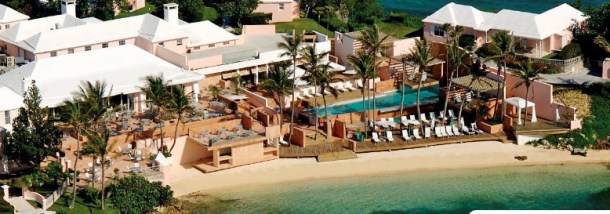
The move also means board members of the captive, including hospital officials, will no longer visit Bermuda and Montreal for board meetings. The network’s insurance company is not considered a United States company, requiring the board business to be conducted outside the country, according to hospital officials.
In Bermuda, board members have stayed at 4-star hotels including Elbow Beach, Cambridge Beaches and the Hamilton Princess Hotel. The stays are typically for long weekends and feature lavish dinner parties.
“We generally shop around and we go not at the height of the season. For a while we were going in the March-April timeframe, and now we’ve been going in the October hurricane season timeframe, which kind of caught us up the last time,” Brumsted said.
Spouses who were invited to Bermuda must pay their own plane fare, Brumsted said. Some board members take extra time at their own expense.
“If it fits in with their time to take a break with their spouse and they get a plane flight down and back so they take some time in between,” Brumsted said. “A lot of people now go down and back in 36, 48 hours when we do that. Almost everybody, when we go to Montreal, goes up the afternoon before. We start with a dinner with everybody there, a board meeting the next morning and then everybody heads back to Vermont.”
In Montreal, the board members frequently stay at Hotel Vogue, a 4-star hotel, according to the CEO, who has served on the board, he said, almost since its inception.
A short history of UVM Medical Center’s captive
Having a captive insurance company “smooths out the ups and downs, the vagaries of claims and payments,” Brumsted said in September.
Keeping the business in-house also improves accountability, Brumsted said, and an opportunity to improve care, which is why he said it was important for clinicians to on the board, including Dr. Stephen Leffler, the head of population health and quality for the network, the president of the doctors’ practice, Dr. Claude Deschamps, Dr. Howard Shapiro, the chief clinical integration officer and Dr. Wouter Rietsema, chief of quality and information at Champlain Valley Physicians Hospital in Plattsburgh, NY, a member of the UVM Health Network.
“If people are complaining about care or if there are medical errors, this is a great early warning system that provides an opportunity to really understand how we can do better. And so I’ve been a proponent of having clinical leaders on the Board,” Brumsted said.
He added: “My approach has been a little bit different in that I really view this as a way to understand how we really can drive process improvement. And interestingly, and it probably wouldn’t be a surprise, it really gets the clinicians’ attention. If you have one of their colleagues that has had a malpractice issue around something that we can do better, it really gets people’s attention to want to implement change.”
The captive insurance company was set up by the doctors at the University Health Center and also included large independent multi-specialty practices that were “getting the crap beat out of them” by the volatility of malpractice insurance costs.
“One of the things that they did to buttress that was to set up a captive insurance company that would cover liability in mostly medical malpractice and the idea there was that you would combine that with risk management and you would pay your premium into the captive that you essentially owned,” Brumsted explained.
At the time, there was “no on-shore way to do this,” Brumsted said.
“There were very limited places,” Brumsted said. “I think Bermuda was one. The Cayman Islands was one. And so, that’s why it was set up, to improve the financial predictability of these organizations,” he said.
Later, the captive became a subsidiary of Fletcher Allen when it was formed in the early 1990s he said.
Fletcher Allen was a combination of the Medical Center Hospital of Vermont, the Fanny Allen Hospital, the University of Vermont College of Medicine, and the University Health Center physicians’ practice. That later became the University of Vermont Medical Center. In 2012, the Burlington hospital became the largest subsidiary in the UVM Health Network.
CORRECTIONS: The VMC Indemnity board voted to move the company to Vermont, not the UVM Health Network Board, as originally reported. Brumsted gave regulators with the Green Mountain Care Board a spreadsheet showing how money had been transferred from UVM Medical Center to several hospitals in New York that are now affiliated with the UVM Health Network.
