

(This story is by Jasper Craven, VTDigger’s former political reporter. To read more of his work, click here.
In the spring of 2014, a scandal at a Veterans Affairs hospital in Phoenix rocked the federal agency that Sen. Bernie Sanders, I-Vt., had long defended and now as chair of a key committee was tasked with overseeing.
Hospital employees were logging inaccurate scheduling data as part of a widespread effort to cover up wait times for care that averaged 115 days.
Reports suggested dozens died waiting for care in Phoenix, while other VA hospitals were also allegedly cooking the books. After aggregating government investigations and media reports, Sen. Tom Coburn, R-Okla., alleged that 1,000 veterans had died in the previous 10 years because of poor VA care.
Sanders, then the chairman of the Senate Veterans Affairs Committee, suddenly was under a national spotlight. He quickly worked to calm the storm, scheduling committee hearings and seeking a legislative fix.
But Sanders — a longtime advocate for universal health care — also was doggedly defensive of the VA, pointing to surveys showing deep support among veterans for agency care and vouching for then-VA Secretary Eric Shinseki, who ultimately resigned.
“The truth is that the VA is a huge institution. It does a whole lot of very important work,” Sanders told C-SPAN in May 2014. “In many ways, Shinseki has done a very good job.”
Sanders negotiated with Republicans in both chambers during the summer of 2014. He found a key Senate ally in Republican John McCain of Arizona, who supported Sanders’ hefty allocation to the Department of Veterans Affairs to hire doctors and expand access to facilities. In turn, Sanders agreed to give authority to the VA secretary to fire senior officials.
Although talks broke down a number of times amid partisan entrenchment, a normally gridlocked Congress passed a bill in late July.
At a ceremony Aug. 7, 2014, President Barack Obama signed the Veterans’ Access, Choice and Accountability Act, with Sanders standing over his shoulder.
“Do you remember how to sign these things?” Sanders joked to Obama as the president pulled out his pen.
“Barely,” Obama replied. “You know, I don’t get enough practice. I want more.”

Both parties hailed the law as a rare ray of proactive government reform.
It infused the VA with $16.3 billion to expand care and oversight of the agency. The final package allocated $10 billion to pay for private care and $5 billion for the VA to hire more doctors and staff. An additional $1.3 billion was used to lease space at 27 facilities in 18 states to expand coverage options. The VA cares for 9 million veterans nationwide.
The legislation also allowed veterans to seek treatment outside the VA if they faced wait times longer than 30 days or lived more than 40 miles from a VA facility.
Sanders remained irked that Republicans hadn’t adopted his more generous funding package. Still, he often hailed the law as “the most comprehensive VA health care bill in this country” during his 2016 presidential run.
But the Choice Act — one of Sanders’ most significant legislative victories during the Obama administration — was troubled from the start.
The law created new problems for veterans across the country while doing little to ease longstanding concerns inside the agency. According to a series of blistering reports from the VA Office of Inspector General, required hospital audits have not been completed, staffing continues to be inadequate, and wait times have not been meaningfully addressed.
For Vermont veterans, the Choice Act has helped alleviate wait times and hire more physicians. But administrative challenges remain at local VA clinics. Federal watchdogs have found past examples of scheduling manipulation at the White River Junction hospital, the main VA facility in Vermont, and some veterans say they have suffered because of long wait times.
Administrative failures
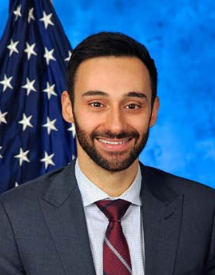
Dr. Baligh Yehia is an official at the Veterans Health Administration, where he is deputy undersecretary for health for community care. He said the Choice Act was sloppily written. Rushed through Congress in a matter of weeks, certain statutes were too broad, while others were too prescriptive, he said.
“The law required us to roll out a national program in 90 days,” Yehia said. “I understand we were in a crisis situation, but the timeline meant we were a little bit challenged from the start.”
A key goal of the law — to reduce wait times — was not meaningfully addressed.
Instead, following a rushed bidding process, two federal contractors fumbled the process of transferring medical records from the VA to private providers. In the first year of the program the two companies, Health Net Federal Services and Tri West, notched a 13 percent success rate in scheduling out-of-network appointments.
When contractors did successfully schedule appointments, they often bungled the details. The Office of Inspector General found a number of egregious scheduling mistakes. Among them: A veteran in Idaho with a herniated disk was given an appointment with a primary care doctor in New York. Another veteran in south Texas was set up for wrist surgery with a specialist who was not trained to perform the procedure.
A 2015 report from the Veterans of Foreign Wars found similar scheduling irregularities, including cases where veterans “who need to receive the recently developed cure for hepatitis C have been sent to hepatologists who cannot provide them the lifesaving medications they need.”
The VFW identified 15 core problems with the Choice Act, many of which related to administrative failures.
Additional issues arose when the scheduling contractors were not held to strict payment standards by the VA, resulting in many veterans being billed directly for some or all of their care. In some cases, those bills hurt veterans’ credit reports, and collection agencies came knocking.
Veterans also faced new responsibilities over coordinating care under the Choice Act, a burden doctors worried about.
“(Veterans Health Administration) clinicians we spoke with were concerned that mental health or elderly patients would struggle to navigate a system in which they were responsible for managing their own care,” the inspector general found.
Health Net and TriWest were told to schedule appointments for veterans within 30 days. But despite contractual obligations, the inspector general found that 82 percent of veterans who sought care through the Choice Act did not receive an appointment within the promised time frame.
Instead, veterans who accessed care under the law waited between 31 and 389 days for an appointment, with the average wait time hovering at 84 days.
According to the inspector general, some private providers were also hesitant to participate under Choice because of additional administrative burdens and reimbursement rates that were up to 5 percent lower than Medicare rates. This, in turn, meant fewer private hospitals where veterans could seek care.
The number of veterans seeking care in the private sector increased more than 10 percent nationally under Choice. The number would likely have been higher had the VA’s scheduling data not inaccurately deemed some veterans ineligible for private care, according to the inspector general.
The agency’s scheduling system is woefully archaic and, according to a 2014 federal report, has created “a counterproductive and error-prone working environment that has frustrated staff members for years.”
Yehia expressed frustration that the Choice Act required the VA to take on the additional task of coordinating out-of-network care, effectively forcing the federal agency into the role of insurance provider. Yehia and other VA experts wished the Choice Act instead allowed for internal improvement of VA infrastructure.
Yehia said the VA made more than 70 contract modifications with the two private vendors because the implementation was “not working right.” One simple yet critical problem: The first iteration of the Choice Act prohibited contractors from directly contacting veterans to help schedule care.
“We amended the law four times in partnership in Congress over the course of a year,” Yehia said. “That’s a lot, and shows there were a lot of kinks.”
The Choice Act also authorized the hiring of new doctors and staffers. But a 2017 National Public Radio investigation found that the extra dollars didn’t meaningfully address long wait times and staffing shortages. While 12,000 officials were hired, NPR documented a sluggish hiring process where doctors often weren’t sent to hospitals with the greatest need.
“The VA’s process is so slow that about 13 percent of candidates drop out during the months-long lag time after they are hired,” the NPR report reads.
Joe Davis, a spokesperson for the Veterans of Foreign Wars, said the federal government needs to “totally reassess” its hiring process.
“Professionals cannot financially wait on average nine months for someone in HR to deem them worthy of a government job,” Davis said. “Patience is one thing; patience of an old school government bureaucracy is quite another.”
Veterans advocates contend the Choice Act created many new administrative problems, and some have questioned the core eligibility requirements for private care set out in the law.
“Instead of focusing on set mileage or days, (the Institute of Medicine) found that industry best practices focus on clinical need and the interaction between clinicians and their patients,” Carlos Fuentes, the director of the VFW’s National Legislative Service, said before the Senate in June. “That is why Congress should not dictate eligibility for community care with arbitrary or federally regulated access standards, such as 30 days or 40 miles.”
An earlier push by Sanders
Sanders hasn’t publicly acknowledged shortcomings with the law. A set of detailed questions VTDigger submitted to his Senate office was answered with a broad statement by a spokesperson saying Sanders has always advocated for comprehensive health care for veterans.
And although Sanders received critical media coverage from various outlets for being passive on the Veterans Affairs committee, he had introduced a sweeping VA overhaul bill two months before the Phoenix scandal broke.
In February 2014, Sanders introduced S.1982, the Comprehensive Veterans Health and Benefits and Military Retirement Pay Restoration Act. The $5 billion bill attracted 29 Democrats and no Republicans as co-sponsors.
Some of Sanders’ proposals, such as improvements to the processing of military sexual trauma claims and major new facility leases, were added to the Choice Act. Other Sanders proposals, including ones boosting access to chiropractic, dental, mental health, preventive and reproductive care, were not adopted in the final bill.
In the face of criticism over Choice, Sanders has frequently pivoted to the Republicans’ unwillingness to get on board with his generous VA bills, which he has been introducing for years despite tepid support in Congress.
“Republicans talk a good game about veterans,” Sanders told a New Hampshire crowd during his 2016 presidential bid. “But when it came to put money on the line to protect our veterans, frankly, they were not there.”
A fight over accountability
As Sanders persuaded Republicans to allow a generous cash infusion in 2014, he too compromised on the issue of stringent new accountability measures in the wake of Phoenix. But he didn’t cave easily.
The New York Times found that the Vermont senator’s unyielding faith in government made him slow to demand accountability. Inspector general reports dating back a decade have documented long wait times, yet Sanders saw reform efforts as politically motivated action to undermine the VA.
In a tense Senate floor exchange in May 2014, Sanders and Sen. Marco Rubio battled over the Florida Republican’s plan to loosen the rules for firing VA administrators.
“You are more likely to receive a bonus or promotion than you are to have been fired because of mismanagement and dereliction of duty,” Rubio said on the floor. “And that is completely unacceptable.”
“I do not want to see the VA politicized,” Sanders shot back. “It is one thing to say — which I agree with — that if a hospital administrator is incompetent, the secretary should be able to get rid of that administrator without a whole lot of paperwork. I agree with that. It is another thing to say that if a new administration comes in — whether it’s a Democratic or Republican — that somebody sitting in the secretary’s office can say, ‘I want to get rid of 20 or 30 or 50 hospital administrators because we have other people we want in there.’”
“I worry about that,” Sanders said.
Sanders tanked Rubio’s bill, House Resolution 4031, which would have allowed the VA secretary to fire incompetent or corrupt officials without any recourse. The Vermont senator wanted to grant officials a 21-day period to appeal a firing decision.
Sanders managed to kill Rubio’s proposal, though the final Choice Act did provide new authority for the agency to fire top executives based on poor performance or misconduct.
In May of this year, Rubio introduced similar legislation, which passed the Republican-controlled Senate on a voice vote. (A Sanders spokesperson did not respond to repeated questions over whether Sanders supported the bill.) The bill, called the Accountability and Whistleblower Protection Act of 2017, was signed by President Donald Trump in late June.
Yet it’s unclear if even the moderate accountability measures passed in 2014 are constitutional, let alone the increased authority granted in the 2017 law.
Shortly after the 2014 Choice Act passed, the VA fired Sharon Helman, who served as director of the Phoenix hospital at the heart of the 2014 scandal.
Helman appealed the decision to the Merit Systems Protection Board, which ultimately upheld her dismissal.
Helman then brought her case to court and, in early May, the U.S. Court of Appeals for the Federal Circuit ruled the VA’s firing process unconstitutional. The ruling apparently has not influenced the Trump administration, which has fired more than 1,000 VA officials this year, according to agency data. An additional 344 have been suspended, and 56 have been demoted.
It’s unclear if any of the fired officials worked at one of the five Vermont VA facilities, and state VA officials declined to address recent accountability actions.
The VA in Vermont
The Choice Act has been utilized most frequently in rural areas like Vermont, where VA centers are often few and far between. Of the 2,356 veterans who sought care in private hospitals under the law over the last year, roughly a third were Vermont veterans.
The state’s only comprehensive medical care center is in White River Junction. Vermont also has four smaller VA clinics in Bennington, Brattleboro, Burlington and Rutland.

The White River Junction hospital generally outperforms other VA centers across the country on wait times. It hosts the National Center for Post-Traumatic Stress Disorder, and its doctors are working on research on everything from colon health to HIV. After the 2014 Phoenix scandal erupted, it was White River’s director at the time, Deborah Amdur, who was assigned the task of reforming the troubled Arizona hospital.
Yet while a June inspector general report found White River Junction wait times today beat the national average, at less than 10 days, a separate 2016 report found a history of Vermont administrators’ pushing employees to manipulate wait time data while Amdur was in charge of the Vermont facility. A former employee told federal inspectors that at least six veterans died between 2010 and 2012 waiting for care at the White River hospital.
One medical assistant said she felt intimidated to log incorrect scheduling information, with a threat of a poor performance review looming over her. Another assistant told federal inspectors, “I never felt it was the right thing to do.”
Such pressure stemmed from a 2011 federal rule change shortening the wait time goal to 14 days for both primary and specialty care appointments. This made for sloppier treatment across the country, and in Vermont.
A chief of a medical specialty service at White River Junction told federal inspectors that appointments were often just 15 or 20 minutes long in an effort to see more patients daily.
“She explained that such short examination times did not permit total body exams, and consequently, some cancer had been missed,” the inspector general report reads.
Current administrators say wait time manipulation ended years ago, yet recent reports of veterans facing long wait times have led to fresh allegations at the White River hospital.
Joe Anglin, the White River Junction VA’s former public affairs officer, said the facility routinely manipulated wait-time data during his brief tenure there in 2016, telling VTDigger that the hospital “is in dire straits of needing to be fixed.”
“I asked key people, ‘Are we still manipulating wait time data?’ And to a person, they all looked at me and affirmed, ‘Yes,’” Anglin said. “People would make an appointment, and we couldn’t make it within the 14-day window. So we would book the appointment but not enter it into the system.”
While the June inspector general report on White River Junction reported that wait times were below the national average, it said that provided scheduling data had not been independently verified.
Anglin also alleges that Alfred Montoya Jr., a previous director of the White River Junction hospital, “intentionally altered and falsified a document” relating to the circumstances surrounding the death of Vietnam veteran Don Theriault, who died in 2012 while waiting for an appointment in White River Junction, according to a March report from New Hampshire Public Radio.
The hospital has denied any wrongdoing, but a VA social worker questioned at the time whether Theriault’s death “could have been prevented if someone had just given the client an appointment.”
Anglin contacted the inspector general’s office to report the incident and told VTDigger that he was disciplined because he blew the whistle. (Anglin filed a 103-page wrongful termination complaint against Montoya in November 2016 with the Merit System Protection Board.)
“If what I did forces the VA to be held to account, then my suffering will be worth it,” Anglin said. “This is no joking matter. People like Montoya are playing with the lives of our veterans, and their self-serving interests are the root of the cause.”

In an interview with VTDigger, Montoya declined to address Anglin’s allegations, instead focusing on his hospital’s achievements.
“We score pretty high in the White River Junction area,” Montoya said. “Ninety percent of veterans say we deliver care in a timely manner.”
Montoya left White River Junction temporarily in July to serve as interim medical director of the VA medical center in Manchester, New Hampshire, after two top officials were fired in the wake of a damning report from the Boston Globe Spotlight Team. The Globe found the Manchester hospital had a “substantial likelihood of legal violations, gross mismanagement, abuse of authority, and a danger to public health.”
Some Vermont veterans receive some or all of their care from Manchester, but Vermont VA officials said they haven’t heard of any Vermont veterans who suffered poor care at the New Hampshire facility.
But a July report from the Valley News found that another Vietnam veteran, Ed Miville, saw his Parkinson’s disease symptoms worsen as he waited to see a doctor in White River Junction.
“I was unable to sleep, had great difficulty initiating movement, suffered multiple freezing episodes, falls, and unreliable balance,” Miville wrote in a letter to his local newspaper.
(He was ultimately seen after about a month.)
Matthew Mulcahy, the acting director at White River Junction, called Anglin’s allegations false.
“For us, there’s no motivation to manipulate wait times,” he said. “Getting the wait times as accurate as possible is important to us because if we have an access problem we want to raise our hands and say that. That’s what gets us the resources to meet the guidelines and fulfill our mission, which is why we are all here.”
The inspector general’s most recent report for White River Junction lauded the close collaboration in Vermont between Dartmouth-Hitchcock Medical Center and the University of Vermont Medical Center, which has improved veteran access to care. In recent months, Burlington’s outpatient clinic has added physicians specializing in psychiatry, sleep medicine and dermatology, among others.
While these strategic partnerships have helped attract talent, Vermont’s rural VA system has struggled to attract certain specialists. According to the federal government’s hiring website, the White River Junction facility is currently in need of nurses, a urologist and a vascular surgeon.
The White River Junction report, which included observations from a December site visit to Vermont, recommended improvements to patient care in 24 areas. Inspectors also found five cases in which doctors didn’t perform the proper tests before providing veterans with an anticoagulant medication that can be dangerous if misprescribed. (As of this writing, White River administrators say 60 percent of the recommended fixes have been completed, and all are on track to be tackled within the timeline submitted to the inspector general.)
Despite persistent problems and pushback from veterans organizations, Congress is gearing up to draft sweeping legislation to further reform the VA in the mold of the Choice program. Few concrete details of the bill have emerged, besides that easier access to private care is a priority.
But for top veterans organizations who have seen the major challenges of the Choice Act over the past three years, continuity is unacceptable.
“While many veterans initially clamored for ‘more Choice’ as a solution to scheduling problems within the VA health care system, once this program was implemented, most have not found it to be a solution,” said Jeff Steele, assistant director of the national legislative division of the American Legion, in Senate testimony in June. “Instead, they have found it to create as many problems as it solves.”
