


[S]outh Burlington high school senior Kiran Waqar was teaching in Pakistan this summer when she asked a fifth-grader about his enthusiasm for school.
His answer, she said, helped her to realize how meaningful an education can mean to children around the globe.
Waqar added later: “It’s also about being a better citizen, being a global citizen.”
Back in Burlington, Waqar organized an event this week putting the spotlight on ensuring access to education for children, particularly girls, around the world.
On International Day of the Girl, an annual event recognized by the United Nations, prominent education access advocate Selamawit Bekele joined others in Burlington to discuss the power of the classroom for young people around the world.
Now a gender and youth activist, Bekele grew up and later worked as a teacher in Ethiopia. The issue of barriers to education has personal significance for her.
“It’s close to home for me,” she said at the Wednesday event.
Extreme poverty bars some girls from attending school in Ethiopia, she said. Their families may not be able to afford school fees or supplies. There are also cultural expectations of girls that may conflict with going to school.
“She’s going to be a mother, she’s going to be a wife,” Bekele said. “They don’t see a bigger picture for her.”
Access to school can make a huge difference in the course of young women’s lives, she said. She illustrated the impact of disparities in education with a story of two young women in Ethiopia — one who was married as a young teenager and dropped out of school, the other who at a similar age started an organization that helps girls access education by distributing school supplies.
But barriers to education for girls in one part of the world are different from other places, she said.
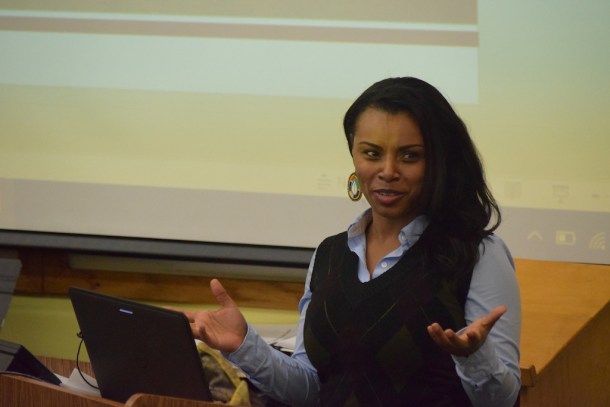
“Issues are broad and it differs in every single country,” Bekele said. “The issue they’re having in Pakistan is different from like what they’re having in Ethiopia.”
Both Bekele and Waqar said education is a “social vaccine.” In conflict zones, for instance, education can reduce the likelihood that a young person will join a rebel group.
“It really is a solution for so many different things, and that is true in Vermont and in so many other countries,” Waqar said.
Though access to education may seem far away to many students in Chittenden County, Waqar said that the recent strife over teachers’ contracts gave families in the district a taste of the uncertainty that can come when access to education is unstable.
South Burlington teachers were on the cusp of a strike earlier this month, which was averted by a last-minute contract deal.
Waqar said the instability sparked concerns among students about the impact a strike would have on their classwork, test preparation and college applications.
“It really did put that into focus, what the impact of one day has on Vermont,” Waqar said.
Ken Patterson, of the organization RESULTS, acknowledged that proposed cuts to the federal budget have cast some uncertainty about the United States’ commitments to global education initiatives going forward.
The Trump administration proposed to slash the State Department budget by a third. But Patterson said he is not concerned, because so far in the appropriations process lawmakers have resisted the proposed cuts to diplomatic and other initiatives.
A staffer for Sen. Patrick Leahy, D-Vt., vice chair of the Senate Appropriations Committee, said that the House and Senate are poised to include $800 million for basic education in the bill that sets overseas spending levels.
Leahy has been a strong advocate for foreign education initiatives. In September, Leahy said he was moved after a private meeting with the Nobel Prize-winning activist Malala Yousafzai to discuss girls’ access to education.
Patterson said he and other advocates would like to see the United States and the administration commit to a multinational effort that builds educational programs around the world. Though it is not clear that the administration is devoted to the mission, he said, he feels legislators are.
“We do have concerns about it, but Congress has really been the firewall,” he said.

