


(“Then Again” is Mark Bushnell’s column about Vermont history.)
[I]f not for hemp, St. Johnsbury wouldn’t be what it is today – a small town with the feel of a small city and cultural resources to match. Credit for the town’s early business boom and its enduring grandeur usually falls to members of the Fairbanks family. That seems only fair. After all, their inventive genius and business acumen reshaped the town that they moved to as young men in the early 1800s. But that creativity might never have manifested itself if not for hemp.
Vermonters believed that the plant, which was prized for its tough fibers, might bring prosperity to the state. Processed hemp was in big demand in coastal areas, where it was used to make sailcloth and rigging for ships. Seeing a ready market, many Vermont farmers launched into hemp production in about 1829.
Among those seeing hemp’s potential were brothers Erastus and Thaddeus Fairbanks. The young men weren’t farmers, however; they saw that their chance to profit from this new crop craze was to process hemp.
The two were already running a foundry, E & T Fairbanks and Co., which made cast iron plows and stoves that Thaddeus designed. Now they joined with others to form the St. Johnsbury Hemp Co. In creating a way to process hemp, Thaddeus devised another invention that would become the backbone of St. Johnsbury’s economy for generations.
The brothers bought hemp by the pound, so they needed to know how much hemp farmers were delivering. Thaddeus developed an elaborate way of using chains and a lever to hoist the full wagons to weigh them. Once the wagons were emptied, he would weigh them again, calculate the difference in weight and pay the farmers accordingly.
But the process was as slow, cumbersome and unreliable as it sounds. Thaddeus sought a better way. He found it when he created a large scale onto which farmers could drive their wagons. In doing so, he may have created the first platform scale. Some say he just borrowed the idea.
Either way, the Fairbanks ran with the idea. Actually, Thaddeus rode with it, heading by horse to Washington to apply for a patent. Then, patent in hand, the brothers added a product line to their foundry business.
The company had started small, employing 12 people in 1824. Once it started selling scales, however, its payroll began to climb. Fairbanks employed 30 people in 1830. Ten years later, the company would employ 90. By 1850, that number would reach 225. By 1880, the number would reach roughly 600. The company’s payroll would peak in about 1900 at more than 800 employees.
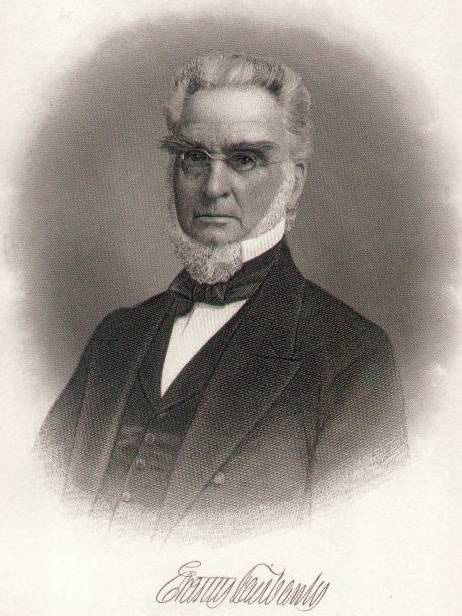
The growth is all the more remarkable because it came at a time when many Vermonters were heading west in search of opportunity. But somehow the Fairbanks company managed to retain employees and add new ones to meet its expanding needs. Historian Allen Rice Yale Jr. studied just how they did it as part of his dissertation at the University of Connecticut.
The Fairbankses didn’t try to do it on the cheap. They invested heavily. They paid their workers as well as or better than owners of other New England industries. Good pay created loyal workers. Looking at records for 1880, Yale found that nearly 40 percent of workers had been with the company at least 10 years, and more than 11 percent had been there for at least 20. And during an era of sometimes violent labor unrest, employees never went on strike.
“When many portions of the country are discontented, and labor strikes were frequent and disastrous, why did not these men become imbued with the same spirit?” asked the editor of the local newspaper, the St. Johnsbury Caledonian. “Here, then,” he explained, “is the secret of this lifelong relationship – the mutual good will and interest each bears to the other; one labors honestly and faithfully, the other appreciates, and pays liberally for it.”
Things are seldom so simple. Tensions no doubt existed between workers and management, but they managed to work them out. E & T Fairbanks and Co. not only retained workers, it also recruited them as the workforce expanded. Those workers came increasingly from other countries, Yale found. By 1900, half of Fairbanks workers came from overseas — from Canada, Ireland, England, Germany, Scotland and beyond.

Part of what drew workers might have been St. Johnsbury’s surprisingly rich cultural institutions, which the Fairbankses funded. To encourage self-improvement among its workers, the Fairbankses created an 800-volume library at the foundry in 1855. Workers were well educated enough to take advantage of it. In 1900, Yale found, 97 percent of them were literate.
That education came, in part, from the St. Johnsbury Academy, which the Fairbanks brothers founded in 1842 for personal reasons: They wanted a place for their children to get a good education without leaving home. The school also provided skilled workers for the company.
During the late 1800s, the Fairbankses were busy adding other institutions to the town that would be the envy of many larger communities. In 1871, Horace Fairbanks, who like his father, Erastus, would be elected governor, founded the town library, naming it the St. Johnsbury Atheneum. Two years later, he added an art gallery that featured works by some of the era’s best artists. He had the gallery space built to accommodate a massive canvas, “Domes of the Yosemite,” by Albert Bierstadt.
Not to be outdone, Horace’s brother Franklin presented the town with the Fairbanks Museum in 1891 and stocked it with his eclectic natural history collection and other sundry items that struck his fancy.
The reasons for the family’s largesse were multifaceted. In an era when a federal income tax was only intermittently imposed, the Fairbankses had money to burn. Their holdings amounted to 25 percent of the entire community’s wealth. By founding cultural institutions in their town, they were imitating the actions of other wealthy members of their generation. They were playing their part.
Also, since the town and the company were inextricably linked, anything that benefited the town also benefited the company, and anything that benefited the company benefited the Fairbankses. Creating a sort of mini-city helped the Fairbankses lure and retain skilled workers to what otherwise would have seemed a remote community.
This generosity also may have helped family members justify their supremacy in St. Johnsbury society. After all, they had helped created that society.
The town itself grew with the company. In 1830, about the time the firm started making scales, the town’s population stood at fewer than 1,600 residents. It was the fourth largest town in Caledonia County, behind Danville, Lyndon and Barnet, and just ahead of Waterford. St. Johnsbury’s population would soar to nearly 2,800 in 1850 and reach 7,000 by 1900.
Today, Fairbankses no longer reign supreme in town. Over the years, family members drifted away from the town, and ownership of their company changed hands several times. Though the company’s headquarters have moved to Kansas City, it now manufactures high-end electronic scales in the town that owes its grandeur to a family that figured out a better way to weigh.


