

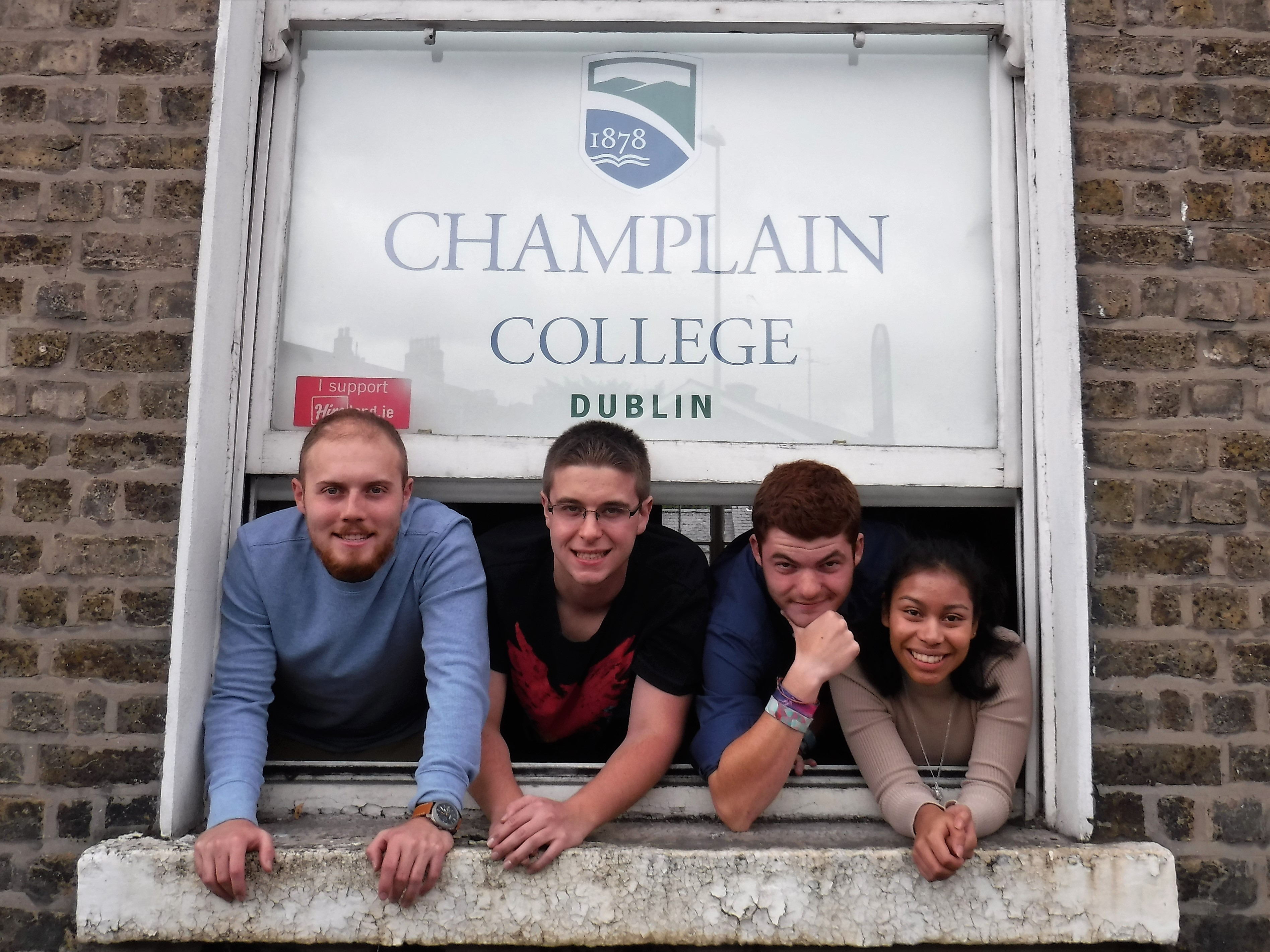
[D]UBLIN, Ireland — Ask Vermont student Charles Cox what brought him from the Green Mountains to the Emerald Isle and he could quip about an airplane. Instead, he remembers a bus ride when, feeling faint and breathless en route to a school rugby game last year, he landed in a hospital.
“I was diagnosed with a brain tumor,” the 20-year-old recalls.
Cox says one thought propelled him through the next 30 days of radiation and six months of chemotherapy.
“I said, ‘I want to travel the world.’”
That’s why, as classes resume this fall, the Champlain College sophomore is happily, healthily studying at Champlain College — not the Burlington campus, but its surprising outpost 3,000 miles away in Dublin.
A half-dozen American schools operate study abroad programs in this Irish capital city, founded as a Viking settlement in the ninth century and flourishing as a political, cultural and economic center today. But Champlain is one of the few institutions that, rather than subcontract with an Irish university, staffs its own freestanding facility.
“It’s really exceptional for Champlain to be doing something like this,” says Dr. Stephen Robinson, director of its Dublin academic center. “Every other school that’s here is a big household name — Notre Dame, Boston College … For one our size, it takes a lot of guts.”
Students need some pluck, too. Forget about Barry Huston’s boyhood vacation to Florida and the 20-year-old from St. Albans says, “this is my first time out of Vermont.”
“I had no desire to travel and was happy to be where I was,” Huston explains. “Then I learned about this and thought, ‘I need to do that.’”
Champlain’s program is well-suited for such fledgling students. Participants can travel overseas for one semester rather than a full year, not worry about prior mastery of a second language and pay the same tuition as that in Burlington.
“Sometimes study abroad programs attract wealthy families who already have taken European vacations, but a lot of Champlain students have never been on a plane before,” Robinson says. “This may be the biggest thing they’ve done in their first 21 years, so it’s best to provide a supportive environment for them to thrive.”

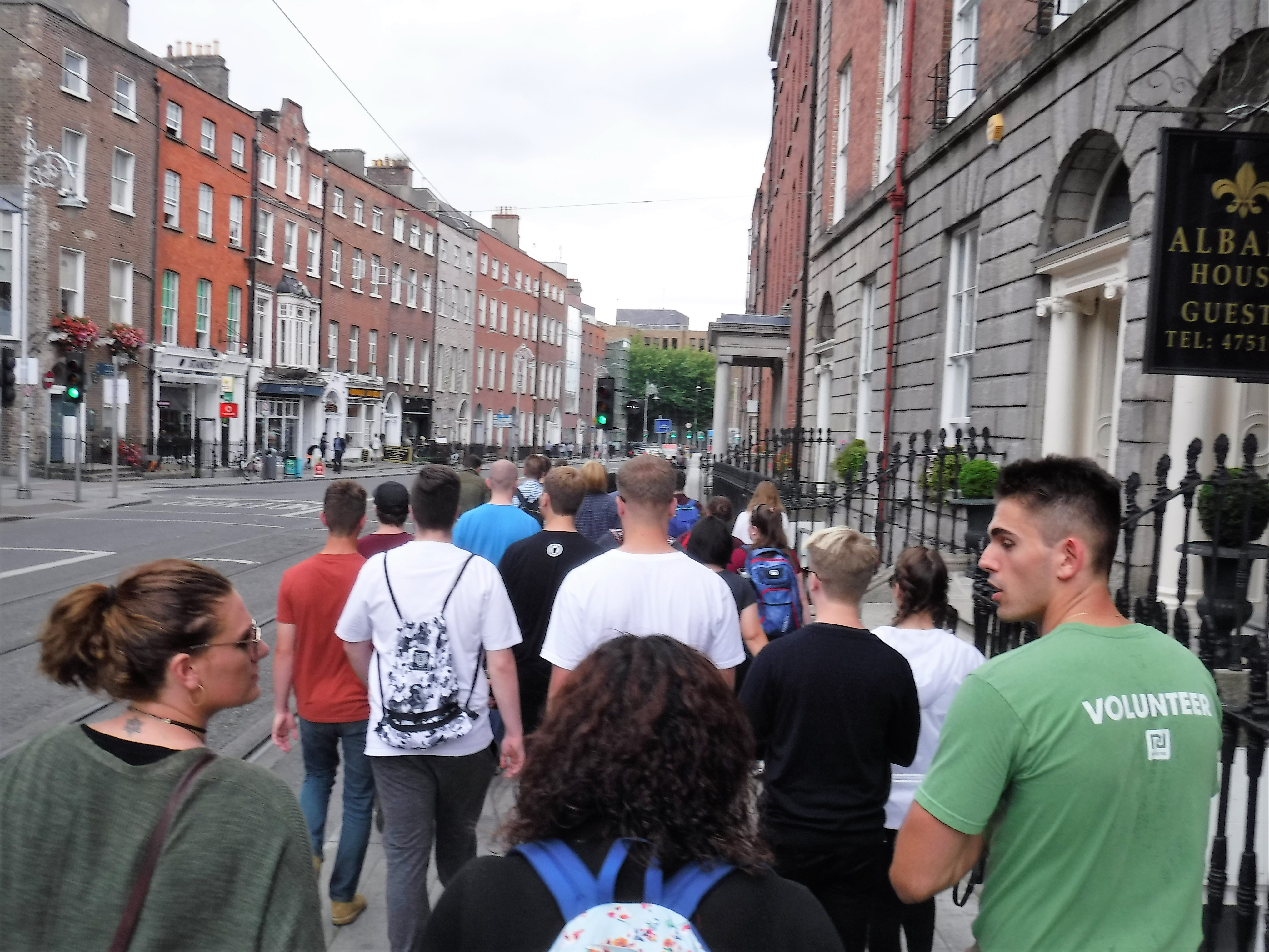
Dublin, young Vermonters discover, has its challenges. One can walk from the school’s academic center in a historic Georgian district to its student apartments in a more modern neighborhood. But cross the street and you’ll find double-decker buses speeding by in the left lane, as is custom here, rather than the right.
“It’s often the small things that surprise them,” student life manager Ciaran O’Rourke says.
Adds Robinson: “There’s this image out there of Ireland as green fields and sheep and rolling hills. This is a city, and it’s got all its pluses and negatives.”
That said, Champlain plays up the advantages. Students in “The Dublin Literary Experience” can learn traffic etiquette as they stroll to George Bernard Shaw’s birthplace, Oscar Wilde’s house, all the landmarks noted in James Joyce’s novel “Ulysses,” the National Library of Ireland that houses William Butler Yeats manuscripts or simply take a seat at nearby Trinity College, whose notable alumni include Samuel Beckett, Edmund Burke, Bram Stoker and Jonathan Swift.
Nearly 20 percent of students explore internships and placements at local businesses and nonprofit organizations.
“We take great pride in using the city of Dublin as our classroom,” Robinson says.

The rest of the island comes in handy, too. Environmental science classes explore rural peat bogs and waterways, while history courses venture everywhere from the 5,000-year-old Stone Age temple of Newgrange to the recent war zones in the now peaceful city of Belfast, Northern Ireland.
“We’re given a huge amount of freedom to look at what’s topical and fits in with the Champlain curriculum,” Robinson says.
Whatever or wherever, it’s working. An average of 10 percent of all U.S. undergraduate students study abroad, according to the independent nonprofit Institute of International Education. In comparison, about 20 percent of Champlain’s 2,000 students will spend at least a semester in Dublin, while about 50 percent will take advantage of international opportunities that also include a companion campus in Montreal.
Matthew Wolf, a 21-year-old business major from Burlington, enrolled to expand his horizons.
“I’ve never left the country,” he says. “This has been a place I’ve always wanted to go to and experience.”
Cara Johnson, 20, has traveled to Ireland before (“I remember being 6 and dancing in a bar with old ladies”) but still finds reason to return.
“I’m an early education major and have seen different types of classrooms in Vermont,” she says. “I thought it would be interesting to have a placement in a Dublin school.”

Champlain’s Irish program, which averages about 50 participants each semester, puts students within easy flight range of most European capitals, so they can explore even farther. Cox, for example, dreams of celebrating Oktoberfest in Germany and catching the northern lights of the aurora borealis in Norway.
“I want to see France, Spain, Iceland,” Huston adds for his part. “Anywhere and everywhere I can get.”
Then again, some destinations can’t be measured in distance.
“The journeys we see the most,” assistant director Lilly Johnsson says, “are on a personal level.”
Staffers point to alumni who have come back to Ireland or greater Europe for graduate study or work, as well as others who return to the United States with greater perspective. All told, nearly 800 students have participated so far in a program set to celebrate its 10th anniversary next spring.
“It’s a great starting point for study abroad and something on a resume that stands out,” Robinson says. “I like helping students step out of their comfort zone, immerse themselves in a different community, learn about a different culture, and hopefully go home with a new worldview.”

