

[A] small hospital in Ticonderoga, New York, will become part of the University of Vermont Health Network.
The network expects the New York Department of Health, the New York attorney general, and the U.S. Department of Housing and Urban Development to give final approval for the merger with the Ticonderoga hospital late this fall.
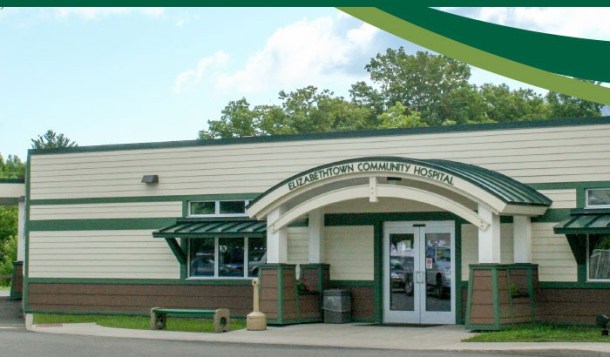
UVM Health Network officials say they are not acquiring the Moses-Ludington Hospital. They say the Ticonderoga facility is merging with Elizabethtown Community Hospital, which is an affiliate of the Vermont hospital chain.
Moses-Ludington has been struggling financially in recent years. The Ticonderoga hospital’s fiscal woes are in part due to a large mortgage with the U.S. Department of Housing and Urban Development, according to John Remillard, the CEO of both Moses Ludington and Elizabethtown Community Hospital.
Between fiscal year 2012 and fiscal year 2015, Moses Ludington’s liabilities have exceeded assets by between $4.4 million and $5.5 million, according to information reported on the hospital’s 990 tax forms.
Remillard said Moses Ludington has also seen decreasing reimbursements from insurance companies in recent years, has had difficulty recruiting doctors to work in the rural area, and sees a relatively high percentage of Medicare and Medicaid patients. The government insurers reimburse at a significantly lower rate than commercial insurance companies.
The Elizabethtown Community Hospital and Moses-Ludington Hospital have been sharing administrative staff, including a chief executive officer, a chief financial officer, a chief information officer, and other vice presidents and managers, according to Jane Hooper, the spokesperson for Elizabethtown Community Hospital.
The UVM Health Network began integrating operations with Moses-Ludington a few years ago, Remillard said, when the Ticonderoga hospital decided it couldn’t go it alone.
As part of the financial restructuring, Moses-Ludington’s parent company, Inter-Lakes Health, will sell its nursing home to another company, he said. Both of the new owners will pay rent to the old company to use Moses-Ludington’s facilities, and the rent will be used to pay off the mortgage to the U.S. Department of Housing and Urban Development, Remillard said.
“All of those created a lot of challenges three or four years ago,” Remillard said. “Had they not made these changes I think future health care in that region really would be questionable.”
Ticonderoga has a population of about 5,000 people year-round, but the population is higher in the summer because of second homeowners. Most of the other health care providers in the region work for Hudson Headwaters Health Network, a system of community health centers, Remillard said.
Remillard said he is confident the New York State Department of Health will approve the merger between the hospitals. He said the department has already given Moses Ludington $9.1 million to renovate its facility.
“The Health Department, they carry a lot of weight in these transactions, and they’ve already said this is the best plan for ensuring health care for the community, and they’ve stepped up to the plate,” Remillard said.
Remillard said the renovation will be paid for by the New York State Department of Health, not the UVM Health Network.
Hooper said the changes are “very exciting” for patients. She said they will be able to go into “essentially a newly rebuilt facility to access pretty basic health care services that every community should be able to access easily.”
Knowledge of Ticonderoga acquisition in Vermont
News of the upcoming Moses-Ludington merger contradicts comments that Todd Keating, the chief financial officer of the UVM Health Network, made on Aug. 31.
When asked if the network would expand to include New York hospitals, Keating said no plans were imminent. “I would say right now, we’re good where we are. We don’t have anything going on with discussions anywhere, which is good because we’re really building the infrastructure to be more of a network.”
Michael Carrese, the spokesperson for the UVM Medical Center, said Friday that the Ticonderoga situation is “old news,” citing a story in the Press-Republican about the renovation plans.
“This in no way belongs in the category of ‘having discussions’ with prospective affiliates,” Carrese said Friday.
The story published in December 2016 does not mention the UVM Health Network’s merger with Moses-Ludington.
Carrese said on Tuesday that “There is no new hospital joining the UVM Health Network. A current member, Elizabethtown Community Hospital, will assume responsibility of outpatient services on the (Moses Ludington) campus in Ticonderoga. The Ticonderoga site will be an outpatient department of Elizabethtown Community Hospital.”
He added that the network “is not acquiring Moses Ludington Hospital.”
Vermont officials were blindsided by the merger.
Mike Fisher, the chief health care advocate for Vermont Legal Aid, said he and his staff didn’t know anything about the deal. Fisher said the UVM Health Network does not generally talk about New York operations as part of the hospital budget process with the Green Mountain Care Board.
Kevin Mullin, the chair of the Green Mountain Care Board, which regulates hospital budgets and certain capital investments in Vermont, said Tuesday that officials for the UVM Health Network told him about their plan for the Moses-Ludington merger on Monday.
Transfers from Vermont to New York
Mullin said the network officials met with him on Monday after he asked another official on Thursday whether the Vermont hospitals in the network are subsidizing the New York hospitals in the UVM Medical Center’s fiscal year 2018 budget.

At that meeting, the official, Marc Stanislas, said there were no financial transfers made to New York hospitals in the fiscal year 2018 budget, but that he could not speak to what would happen in fiscal year 2019 or fiscal year 2020.
During the same Aug. 31 interview, Keating said that the network has government approval “on both sides of Lake Champlain in New York and Vermont” to transfer money between states, even though the states don’t want the transfers to happen.
“We have the Department of Health in New York telling us, ‘We don’t want New York dollars going to Vermont,” and in Vermont, “We don’t want Vermont dollars going to New York.’”
In an email Sept. 7, Keating said the UVM Medical Center “has made a variety of cash transfers to our NY hospital affiliates. Some of these were transactional in nature and directly tied to the affiliation agreements, and some involved short-term loan transactions that are to be repaid.”
Mullin said Tuesday he is not aware of the Green Mountain Care Board giving approval to the UVM Medical Center to transfer money across state lines. However, he said officials at the UVM Medical Center are telling him that Vermonters see a net benefit from the volume of patients coming to the hospital from New York.
“What they have told me is that there will be no monies that are hemorrhaging from Vermont to go over to pick up New York,” Mullin said. He said the argument about Vermonters benefitting is “pretty compelling,” but the board is still looking into whether there’s a net benefit.
Al Gobeille, the former chair of the Green Mountain Care Board and now the secretary of the Agency of Human Services, said he always looked at the UVM Medical Center as a regional hospital. He said around 15 percent of the hospital’s revenue from patient care comes from New York.
“If you’re going to regulate them you have to learn quickly that they’re not just a Vermont hospital, and … that’s true for many of our hospitals,” Gobeille said. He pointed to Dartmouth-Hitchcock Medical Center in Lebanon, New Hampshire, where about 40 percent of the patients come from Vermont.
Mullin said the board will ensure Vermont money is not going to New York as part of the board’s ruling on the UVM Medical Center’s fiscal year 2018 budget, which is expected Thursday.

