


[A] $1 million project to alleviate flooding in Barre served as the backdrop Thursday for a push by Gov. Phil Scott for clean water initiatives.
The governor reiterated his pledge to move forward with the requirements to improve water quality in Lake Champlain. He said he hoped that multiyear, multimillion-dollar effort could be funded without raising taxes or fees, but he would not rule out that possibility.
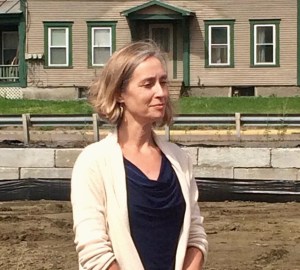
The area in Barre where the work occurred has flooded three times in recent years and sits at the head of the Winooski River watershed. A bridge was removed and other efforts made to prevent debris from causing a brook to back up and flood the neighborhood.
In addition to a $600,000 bond floated by the city of Barre, $400,000 in federal money was used to purchase what will be a total of five homes. Those homes will be demolished, which City Manager Steven Mackenzie said was a critical part of the project, with the upside of avoiding future flooding but also carrying a downside of decreasing the amount of taxable property. Officials also created a larger flood plain area for overflow from the brook.
Mayor Thomas Lauzon celebrated the “resiliency” of the Reid Street neighborhood filled with “hardworking, salt-of-the-earth people who hung in there” after being flooded three times while he’s been in office. Scott and Environmental Conservation Commissioner Emily Boedecker not only applauded the residents but pointed to the project as an example of creating more resilience in communities prone to flooding.
Scott said communities needed to make improvements to deal with the effects of global climate change, including drainage projects to deal with more intense rainstorms that cause road erosion, leading to sediment buildup in waterways.
The Legislature next year may consider ways to pay for the state’s share of the Lake Champlain cleanup that has been ordered by the federal government. State Treasurer Beth Pearce has estimated the state needs to raise about $50 million a year and has proposed a variety of funding sources. The Lake Champlain effort to reduce phosphorus could alone cost well over $2 billion, by some estimates.
Scott said he wants to pay for the state’s share of the lake cleanup from more money coming into state government “organically” through economic growth. He said a group of advisers is coming up with the administration’s recommendations for funding.
Asked if he would rule out raising taxes, Scott said: “We’re not ruling anything out at this point. Our goal is to find resources from within. I still believe that there are opportunities to do so, and we want to continue with the good work we’ve already started. We’re not going to look back. We’re not going to stop. We’re going to make sure we fulfill our obligation.”
One way the governor wants to finance the lake cleanup is revenue from hosting a power transmission line that a developer has proposed running underneath the lake.
The Clean Power Link would bring in roughly $7.5 million annually for the next 40 years. Administration officials have floated the idea of seeking a loan backed by future payments from the cable to pay for pollution reduction efforts in the lake during the next two decades.
Boedecker highlighted the state government’s “all-in” mantra that businesses, farmers and individuals need to work together to reduce phosphorus pollution and pay for the cleanup. The “all in,” she said, included efforts by nonprofit groups like Friends of the Winooski River and the Vermont Youth Conservation Corps, which have volunteered in cleanup efforts and projects to help drainage.
City officials also displayed a recently purchased street-cleaning machine designed to remove sediment from the streets and not have it reach the waterways.
“This project, to me, it hits the trifecta,” said Ann Smith, executive director of Friends of the Winooski River. “It protects water quality, it protects public and private infrastructure, and it will reduce demands on the Public Works Department.”
Boedecker said there was reason for celebration but emphasized more needed to be done. Raising public awareness is key, she said.
“Once you start to notice where your water flows, once you start to notice the ditches on the side of the road, you can’t help but see not only the good work that has been done but also the work that we need to do together by leaning in, by being all in for clean water,” Boedecker said.
