

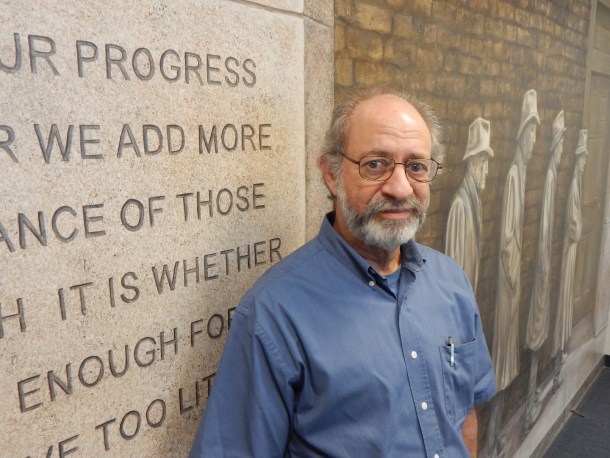
WESTMINSTER – Over the past eight years, hundreds of “households in crisis” have received free home repairs from Southeastern Vermont Community Action.
But that program is at a crossroads.
With a major funding source running out, the Westminster-based nonprofit is seeking a significant increase in federal grant money in order to extend and expand its emergency home repair program in Windham and Windsor counties.
The organization is seeing increased demand for such repairs even as funding sources have decreased, so Executive Director Steve Geller says the need is critical.
“The continued existence of the program is by no means a certainty,” Geller said. “If we don’t get adequate funding from one or more sources, it could jeopardize our ability to sustain it.”
Southeastern Vermont Community Action has been around for more than 50 years and provides a wide variety of services to low-income residents.
Those include fuel, clothing and food assistance as well as support for affordable housing and homelessness prevention. SEVCA, as it is known, also is involved in Head Start and economic development programs, and it operates thrift stores in Bellows Falls, Springfield and White River Junction.
In the organization’s most recent annual report, Geller said 2015-16 “was unusual in some respects” because SEVCA staff noticed decreasing demand for some services like crisis fuel assistance. He attributed that to a milder winter, lower heating costs and an economy that continues to improve.
At the same time, Geller said the need for other services remained high. Those included emergency housing and heating system repairs.
Housing-related services are a big part of the organization’s mission. The emergency home repair program, in fact, was founded as an outgrowth of its weatherization and energy audit services.
“Oftentimes, we would go out to do the energy audit … and find that we had to walk away because there were too many repair issues,” Geller said.
The emergency repair initiative, he said, “was a perfect coordination, because now the home repair staff can go in and do the work that’s needed, and weatherization can follow them.”
The no-cost repair program is focused on immediate health and safety risks as well as code violations and energy waste. Projects are awarded to licensed contractors who can address pressing problems with roofs, electrical service, plumbing, water heaters, stairs, septic systems and furnaces, among other areas.
There’s been no shortage of demand for the program.

Recent SEVCA reports show that, from October 2010 to September 2016, 167 households received emergency repair work. Over the last three years covered by those reports, repairs were valued at a total of nearly $300,000.
A patchwork of funding sources has supported that work. U.S. Department of Agriculture money has played a big role, though the annual allocation for SEVCA’s repair program was cut from $50,000 to $25,000 several years ago.
The organization also received $100,000 from the Holt Fund to support emergency home repairs. But that three-year grant ran out at the end of June and can’t be renewed, Geller said.
Even with the Holt money, there’s a wait for emergency repairs.
“The demand is continuing to rise,” Geller said. “We’ve now got about 30 households on the waiting list. We just can’t get to them fast enough.”
“How do you address an emergency if you’re waiting a year?” he asked.
So the nonprofit has given notice of its intent to apply for $75,000 in USDA grant funding to bolster the program. The request is for the federal fiscal year starting Oct. 1, and Geller said his organization has “other small sources of funding that can tide us over for the summer.”
If the request is approved, the USDA would be tripling the organization’s current grant allocation for emergency home repairs. Geller acknowledged that the request comes at a time when President Donald Trump has proposed deep cuts in social services.
“There’s no question that it’s not the most optimistic time to be depending on federal funding to keep us afloat,” Geller said. “But as long as the funds are there and there’s a process to apply for them, we’ve got to give it a shot.”
Concerns about losing federal funding spurred a gathering last month in Brattleboro where representatives of SEVCA and other social services organizations talked about the needs they’re seeing and the impact of proposed budget cuts.
It’s a theme U.S. Rep. Peter Welch, D-Vt., has been hearing all too often.
While Trump has labeled his budget plan “A New Foundation for American Greatness,” Welch said the proposal funds defense spending and tax cuts at the expense of critical social programs.
“The Trump budget literally turns its back on rural America and the needs of good citizens,” Welch said in an interview recently. “What I find so cruel about it is that the amount of money that’s spent on these programs is very small, but it’s the money that local people need to help their neighbors.”
Welch doesn’t believe the Trump budget will pass as written, and he says there is “significant bipartisan support” to maintain social service programs. But given the depth of the cuts the president is proposing, Welch said it will take a lot of hard work just to keep such programs level-funded in the next federal budget.
Despite the gloomy forecast for federal funding, Welch said he’s not advocating that social service organizations like SEVCA scale back their budgets.
“I can’t give that kind of advice, because they’re dealing with the day-to-day realities of folks calling up and needing help,” he said.
