

Extreme cold temperatures are expected across the state of Vermont starting Friday night and continuing into Sunday, according to the National Weather Service, which forecasted windchills to drop to as low as minus 40 degrees in some areas.
Two arctic fronts are anticipated to roll across Vermont in coming days. The first on Thursday could see possible snow squalls, while the second on Friday is forecast to plummet temperatures, according to Scott Whittier, a warning coordination meteorologist at the National Weather Service office in Burlington.
Forecasts predict subzero temperatures everywhere in the state, with some communities not cresting out of the negative temperatures at all on Saturday, according to Whittier. The arctic front is predicted to drop temperatures to their lowest point of the season so far.
“On Friday night and Saturday, the winds will be howling,” Whittier said.
Whittier said people should limit their exposure outside as much as possible, and recommended that residents check their heating systems and allow faucets to drip to mitigate possible frozen and burst pipes.
The Vermont Department of Public Safety’s Emergency Management division recommended on its Facebook page that residents ensure they have enough fuel, like oil, propane or wood, to heat their home before temperatures drop, adding that running out during the weekend could be costly. More safety recommendations can be found on the emergency management division’s website.
The weather service said it was too early to issue an extreme cold warning or cold warning advisory, but Whittier said the Burlington office will most likely take that step once more data is available.
Homelessness organizations and municipalities across the state have already begun mobilizing to open emergency shelters and warming centers for unhoused people who are at risk.
In Burlington, the expected temperatures of minus 10 degrees prompted Mayor Emma Mulvaney-Stanak to open an emergency shelter at the Miller Center at 130 Gosse Court, according to a press release. Officials estimate over 200 people are sleeping unsheltered in the region, according to the city and Champlain Valley Office of Economic Opportunity, with many of the preexisting shelters and state-operated motel programs at capacity.
Through a state grant, the Vermont Interfaith Action, a statewide network of faith communities, coordinates emergency shelters throughout the state and can make around 200 beds available across the state once the minus 10 degree threshold is reached, according to VIA’s executive director Melissa Battah.

“This weekend clearly will require activation,” she said.
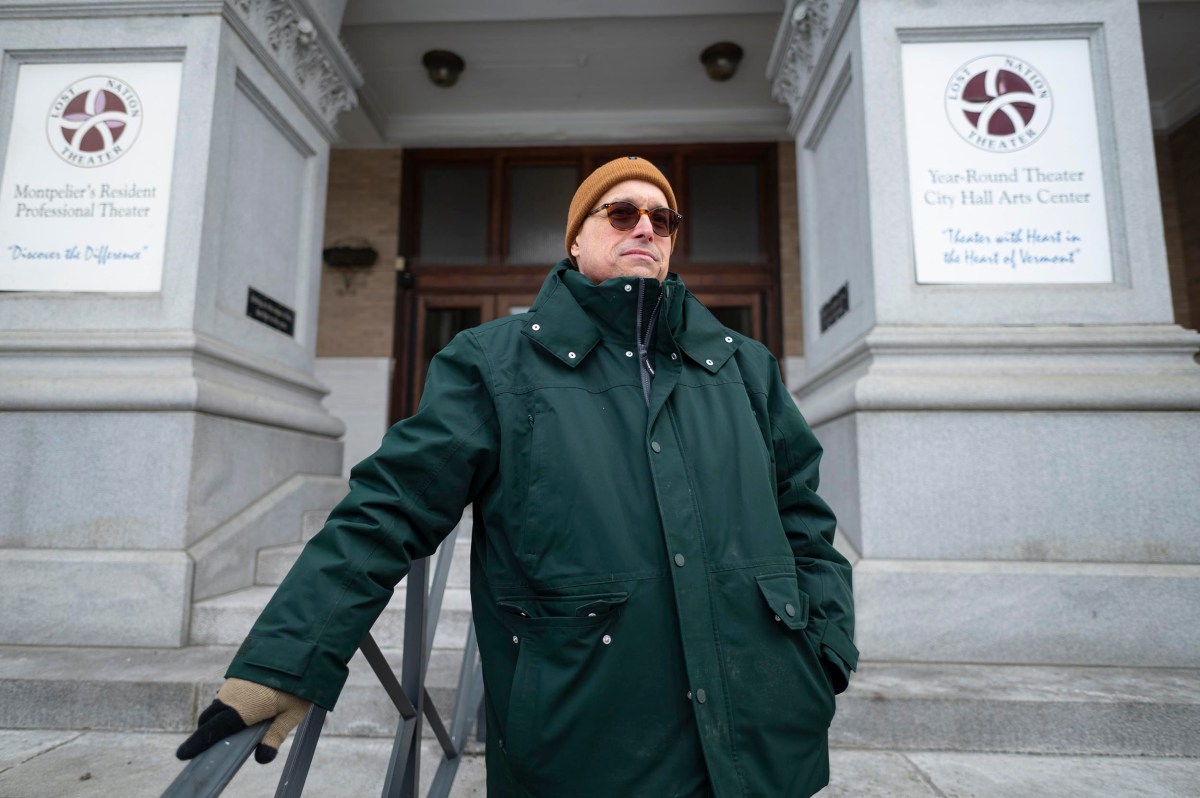
In Montpelier, an emergency cold weather shelter in the basement of the City Hall building is expected to open Friday, according to the Montpelier Emergency Cold Weather Shelter website.
Jay Voorhees, pastor of Trinity United Methodist Church and member of the board of the Montpelier Emergency Cold Weather Shelter, said severe injury and death due to cold will be a definite risk this weekend. Last month in Barre, an unhoused man sleeping outside in minus 17 degree weather died due to cold exposure.
“I think folks think that, ‘Oh, I can do this, I’m from Vermont, I know how to survive in the cold,’” Voorhees said. “But when it gets below 10, honestly when it gets below freezing, but when it gets below 10 and in the single digits … it becomes much more dangerous.”
Voorhees has already begun reaching out to community members to make sure there are enough volunteers to staff the emergency shelter overnight.
Tess Taylor, Barre’s homelessness and housing liaison, said people may not be aware of the effects of the cold on their body until it is too late, especially if they are under the influence of drugs or alcohol. According to Taylor, the Barre City Police Department will be patrolling for people that do not have shelter.
“It’s clear that for someone living outside, a cold night is not just uncomfortable,” said Daniel Barlow, the executive director of the People’s Health & Wellness Clinic in Barre, a free clinic that regularly serves unhoused people.
“It’s a medical emergency.”
