


[W]INDHAM – Given the strong statewide push for school mergers, the town of Windham is an outlier in just about every way.
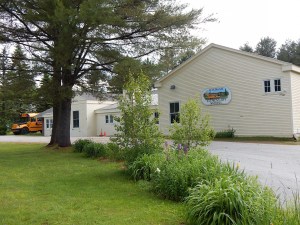
The mountaintop community’s elementary has just 14 students from kindergarten through grade six, yet still maintains an independent board and budget for a two-classroom school house. The district even runs its own bus and hires its own driver.
But school officials aren’t about to change that if they can help it. With the town having already rejected an Act 46 merger proposal, board members are preparing to lobby Vermont officials to leave Windham alone when a state education plan is issued in late 2018.
Their core argument is that Windham students get an excellent education because the district is so small, and the town can afford to keep it that way.
“The opportunities these kids have are second to none,” said Carolyn Partridge, Windham School Board chairwoman.
But Partridge also is a state legislator, so she knows the realities of school governance in Vermont. Asked about the odds that Windham can remain independent, she responded, “I have no idea.”
Act 46, approved by the state Legislature in 2015, presses for larger, consolidated school districts in an attempt to lower costs and equalize educational opportunities as Vermont’s school enrollment continues to drop.
One side of that merger involved the five towns that make up the Leland & Gray school union – Brookline, Jamaica, Newfane, Townshend and Windham. Only Windham turned it down, and since the town was considered “advisable” to the merger plan, the formation of the new West River Modified Union Education District has proceeded.
The district held its first organizational meeting June 26. Residents ran through initial business like selecting a moderator, clerk and treasurer, and they set compensation for a board that includes a Windham representative for grades 7-12.
The West River district doesn’t start “full educational operations” until July 1, 2019. Windham Central Superintendent Bill Anton said that gives residents and board members time to create a new, much larger school district.
“If we had to operate July 1, 2018, we’d be building a budget right now, instead of having time to figure out what it is we want to build,” Anton said.
But in Windham, school leaders are interested in building on what they already have.
The Windham board and the town’s Act 46 Study Committee are not currently pursuing any other merger options. Partridge said the plan is to submit an alternative proposal to the state in which Windham Elementary School would remain a self-governing entity.
Such a scenario is allowed under Act 46. At a recent meeting in Brattleboro, a Vermont Agency of Education official said districts that don’t plan to merge must give the state a “written explanation of how it is that what you’re proposing is the best thing for your students and your taxpayers” under the law.
If the state Board of Education doesn’t agree, districts can be forced to merge. But Partridge, who has served on the Windham board for about two decades, believes the district can make a convincing case.
“The reason I continue to serve is, I think the best investment we make in our future … is to educate our kids and make sure they get a great education,” Partridge said. “And I think part of that education needs to include parental involvement; involvement in extracurricular sports and activities; and as much enrichment as you can possibly get.”
In terms of education and enrichment, she argues that Windham’s size is an asset. One reason is that the two-classroom setup – one for K-3 and the other for grades 4-6 – allows for flexibility.
“If you’re a third-grader excelling in the primary room, you can move to the secondary room if the teacher can handle it and the quality of education is being maintained,” Partridge said.
The ready mix of students and adults of all ages is another big benefit, says parent Beth McDonald, who had a child in this year’s Windham Elementary graduating class.
“They’re really like a huge family,” McDonald said.
It’s fairly easy to pack that “family” into the school bus – or even into several cars – to regularly visit a farm, a pottery studio or a playhouse and get hands-on, real-world experience.
Parents and community members also visit the school; for instance, there are frequent artist residencies.
“A lot of these activities are the result of having a school board that’s really in touch with our community,” Partridge said. “And I think that’s the pitch we’re going to have to make to the state.”
The board’s involvement extends to the minutiae of transportation, as Windham officials meet every August to plan each bus stop.

“We’re talking about little kids here,” she said.
In the Act 46 merger plan that Windham voters rejected in March, there were no plans to close Windham Elementary and send its students elsewhere. But some fear that a larger, multi-town board won’t allocate enough funding to maintain the school, making it easier to close at some point in the future.
If that happens, Partridge said, “there’s no going back.”
While Windham’s student body is small, state figures show that the district’s enrollment has remained steady for nearly a decade. School officials believe that trend will continue, and Partridge said there are three incoming students to replace the three who graduated this year.
She also points out that Windham’s per-pupil spending is below the state’s penalty threshold. Windham’s budget is bolstered by a $40,000 small-school grant from the state, and Partridge said she’s going to argue that such support should continue based on the district’s geographic isolation and educational achievements.
At the same time, she points out that schools in Windham Central Supervisory Union – including Windham – already have been sharing classroom resources for years.
So, other than saving on the $750 salary for each of Windham’s school board members, Partridge argues that “there is not that much to be gained from consolidating governance.”
McDonald believes, however, that there would be much to lose. She notes the resistance of some Vermonters to allowing “big box stores” to set up shop in the state.
“And yet we are big-boxing our children and our school systems, but for what?” she asked. “Where do they go from here if there is no sense of place, community?”
