


Selectboard members think those hurdles will soon be cleared, however, after a recent meeting with the town’s forestry consultant, Bruce Richardson. He has been researching deeds to properties in the area because the board wants to seek bids to harvest timber.
In a preliminary report considered substantially complete, Richardson said he had found access routes the town apparently holds on both the north and south ends of the roughly 735 acres.
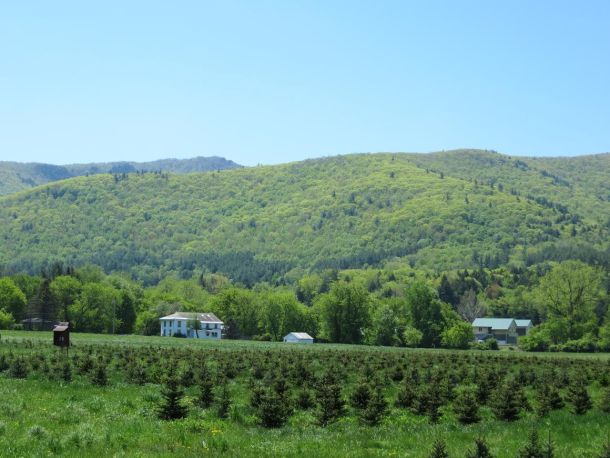
The property generally follows the north-south Taconic ridgeline just east of the New York border, and extends easterly downslope to near the Hoosic River. The land also provides access to the interstate Taconic Crest hiking trail.
“We feel we do have access,” said board Chairman Nelson Brownell, adding that a review of the deeds by legal counsel might still be required.
Richardson found “there is no question” of two points of access on the northern end of the property, Brownell said, although one of those roads has eroded in recent years and is not currently passable for vehicles.
At the southern edge of the land there are references in deeds to rights of way in the area of a gravel operation, Brownell said.
He said board members will first speak to the adjacent property owners about agreements for both hiking trail and logging road access. But officials now believe Pownal has always had rights of way that could be enforced through legal action if necessary, Brownell said.
The land was previously owned by the Pownal Tanning Co., which in 1937 inherited a former textile mill complex between the Hoosic River and Route 346.
The business owners apparently acquired the forestlands in segments over the years, in part because the factory maintained a mountainside reservoir that supplied a now-defunct water system extending to the mill.
The tannery went out of business in 1988, and the mill site and about 28 acres of surrounding land were declared a federal Superfund site and cleaned up during a $7 million multiyear project.
The town acquired the former factory site after an agreement that held it harmless for any lingering environmental issues. The town created a riverside park there with the intention of providing trail and road links to the mountainside parcels.
The town purchased the mountainside property in 2002 with funding assistance.
The land is especially suited for recreation trails because it runs along and at one point crosses the Taconic Crest Trail, a 37-mile hiking trail that extends south from Petersburgh, New York, into Vermont, and then into Berkshire County in Massachusetts.
However, questions have lingered about the town’s legal access, and there were several failed attempts to reach agreements on rights of way, officials said.
In 2004 a recreation plan was prepared to create multiple trails from the riverside park, but Recreation Committee members reported four years later that the only possible access ways did not appear feasible.
Woods Road, leading up to the reservoir site, had eroded and was no longer passable by vehicles. Another possible access to the south did not appear to be available. Attempts to negotiate a right of way across a former farm pasture also fell through.
Ownership to at least two of the key adjacent properties also has changed over the years, complicating the negotiations, Brownell said.
When the property was acquired, the town entered into a deed restriction agreement with the Vermont Land Trust and the Vermont Housing and Conservation Board, which supplied grant funding to help meet the reported $210,000 purchase price.
The deed restrictions state in part: “The principal objectives … are to conserve recreational opportunities for the benefit of the public and to establish and maintain productive forestry resources on the protected property.”
The conservation restriction notes that the property contains 707 acres of managed forest and 2,000 feet of frontage on the Hoosic River.
Permitted activities on the land include hiking, cross-country skiing, hunting, fishing and other nonmotorized uses.
The use of all-terrain vehicles, snowmobiles, bicycles and horses can be allowed “provided adequate provision for the regulation of such uses is made in the (required) Management Plan and is consistent” with the purposes of the restriction.
