


The case pits whitewater kayakers against the Agency of Natural Resources, which is in turn defending itself against Morrisville’s power generation utility, the target of challenges levied by environmental organizations.
The case isn’t expected to come before a judge until early next year.
Morrisville Water and Light is seeking to relicense power generators at the base of the village-owned dam that holds back Green River Reservoir and to continue producing the same amount of power it has in previous years.
For that to happen, ANR would have to tell the Federal Energy Regulatory Commission that Morrisville won’t harm water quality in the process.
ANR has not done so. Instead, the agency in August told federal regulators that Morrisville does hurt water quality through the way it currently manages the reservoir. The agency is now defending that finding in court.
“We believe the water quality certification we issued complies with the law and is reflective of the science and the site-specific studies conducted as part of the review for these hydroelectric facilities,” said ANR general counsel Jen Duggan.
Morrisville in September appealed ANR’s decision to the environmental division of Vermont Superior Court, where several parties joined in, and where the case currently awaits judgment.
The Vermont Natural Resources Council is aligned with Trout Unlimited in the case, and both of them argue in court filings that the law requires ANR only to evaluate whether the dam’s operation hurts water quality.
ANR scientists have found that the village kills off aquatic plants near the reservoir’s shore by draining it too deeply in the process of generating electricity through the winter.
Morrisville Water and Light says water quality is only part of the issue. The village utility argues that ANR must take other considerations into account, such as the economic impact Morrisville would suffer through higher electric rates if forced to change its operation of the dam.
The restricted drawdowns of the reservoir that ANR officials say would let Morrisville produce electricity without harming water quality would cut the generating capacity by a third, Morrisville officials have said.
But the federal Clean Water Act specifically prohibits other considerations, such as economic and social impacts of decisions affecting clean water, ANR lawyers say in filings with the court.
The VNRC and Trout Unlimited both argue that the agency’s initial determination of harm to water quality should stand.

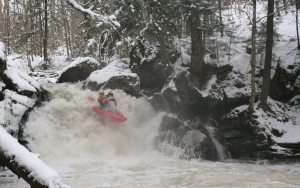
But the Clean Water Act also requires that existing uses of water bodies be preserved, which is where American Whitewater comes in. Currently, Morrisville’s water releases from Green River Reservoir create great conditions on a challenging stream that whitewater kayakers prize. Reducing drawdowns on the reservoir would impair boaters’ use of the stream below, they say in documents filed with the court, and they contend that that’s forbidden by statute.
Most of the parties in the case also are asking that the court toss out the case, on various grounds.
American Whitewater says the ANR missed a deadline in 2014 and so the certification is void as well.
The agency argues that the questions raised by the case are for the federal government to consider, not Vermont’s environmental court. Trout Unlimited and the Vermont Natural Resources Council agree.
Should the ANR prevail and reduce the dam’s power generation capacity, Morrisville can’t profitably run it and would halt operations, village officials have said. In that case, safety would require the village to tear down the dam, officials claim.
Even on their own, the proposed drawdown restrictions would result in unacceptably high water levels in the reservoir, which would again incline the village to tear down the dam, officials say.
Litigants in the case filed their last briefs with the court March 29. Attorneys will conduct discovery for the case in October, and by December the parties will need to have everything prepared for the case to proceed, Duggan said. The trial is likely early in 2018, she said.

