


(“Then Again” is Mark Bushnell’s column about Vermont history.)
[H]etty Green was a woman of extremes. She was the richest woman on Earth at the time of her death in 1916; she was also arguably the stingiest. Those two qualities combined to earn her another title: the most hated woman in Vermont, or at least the most gossiped about.
Green’s neighbors couldn’t accept such tightfistedness in a person so wealthy, so they dubbed her “The Pride and Pain of Bellows Falls.” But they were being kind compared with people in New York City, where Green regularly conducted business. There she was known as “The Witch of Wall Street.”
Vermont can’t take full credit or blame for Hetty Green. She arrived here already rich – though she would grow far richer still – and she already hated parting with her money. But it was in Vermont that she chose to raise her family and that she chose to be buried.
Whoever said money can’t buy happiness must have known Hetty Green. Despite her wealth, her life reads more as tragedy than fantasy.
Her biographies are mostly story upon story about her shocking cheapness – like when on her 21st birthday she supposedly berated her family for putting candles on her cake. Wasteful, you know. She is said to have wiped off the candles and returned them to the store for a refund. Or the story of how she disguised herself to have her son’s knee injury treated at a charity hospital. When doctors realized who she was, they wanted to charge her full price, so she took her son away without being treated. Five years later, he had to have his leg amputated, though some say that was the result of a later injury.
These stories are the stuff of legend, and like most legends, some of the details might actually be true. What is definitely known is that Green was one of the greatest investors of all time. American Heritage Magazine ranked her as the 36th richest American ever. She turned a sizable inheritance into a massive fortune by investing wisely and cautiously, and by living frugally.
I don’t believe much in stocks,” she once explained. “I never buy industrials. Railroads and real estate are the things I like. Before deciding on an investment I seek out every kind of information about it. There is no secret in fortune making. All you have to do is buy cheap and sell dear, act with thrift and shrewdness and be persistent.”
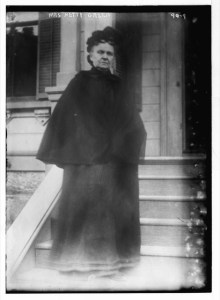
Money was always the center of her existence. Born Henrietta Howland Robinson in 1834, she was the only surviving child of a wealthy Quaker whaling family from New Bedford, Massachusetts. Her baby brother had died in infancy, so, some believe, Hetty tried to fill his role, which meant preparing to take over the family’s finances.
Since her mother was ill, Hetty was raised mostly by her father and grandfather. Unlike other girls at the time, who would have learned the “womanly arts” of home economics, she lived in the manly world of business. The Robinson family owned a whaling fleet and invested heavily in trade with China. From the age of 6, Hetty read the financial pages daily to her grandfather, who couldn’t read them himself because of his failing eyes. During school vacations, she trailed her father as he conducted business.
She opened her first bank account at age 8. At age 13, she became a bookkeeper for the family business. “By the time I was 15,” she wrote, “I knew more about these things than many a man that makes a living out of them.”
That knowledge would come in handy. When she was 30, Green suddenly became extremely wealthy. Her father died and left her nearly $6 million. But since she was a woman, and since women at the time were not considered capable of handling money, she was given control of only $1 million. The rest was left in trust. She would get the interest the trust produced, but had no say in how it was invested.
Two weeks after her father died, she became richer still, or so she thought. Her aunt Sylvia Ann died, and Green expected to inherit her entire $2 million estate. No one knew Sylvia Ann’s will better than Green — she’d helped write it. After years of badgering, Green had persuaded Sylvia Ann that she would be destitute without her money.
But at the reading of the will, Green sat in shock and anger as she learned that Sylvia Ann had written a new will. In it, her aunt left half her money to orphans and widows, and to the city of New Bedford to build a water system. Green would receive the other half, but only in trust. So upon her death, future generations would get the $1 million. She spent years in court, arguing that the earlier will was valid and fighting allegations that she’d forged her aunt’s signature on the document.
Green had long resisted marriage, fearing she’d never find a suitable husband — one who wasn’t after her money and whose business acumen was equal to her own. Her husband, whom she wed when she was 33, was her father’s former business partner, a favorite son of Bellows Falls, who had made millions trading tobacco, tea and silk in Asia.
Her mother-in-law’s maid was crestfallen to learn that this wealthy woman dressed more shabbily than she did. Green dressed in well-worn clothes because she regretted the cost of mending and replacing them. Also, the threadbare appearance helped disguise her. She always feared that if she dressed well, doctors and lawyers would charge her more and fortune hunters would try to kidnap her.
Green’s introduction into Bellows Falls society was a rough one. Whose fault that was is open to debate. When she hit town, tensions flared. Local businesspeople complained that she made unreasonable demands on them and then refused to pay a fair price. In her eyes, however, everyone in town was after her money and was overcharging her.
She went to great lengths to hide her wealth, and even advised a friend in Bellows Falls to wear her shabbiest clothes when visiting a doctor. “You will get the same treatment,” Green said, “but it will cost you less.”
Sometimes she tried not to pay at all. Bellows Falls lawyer F.B. Pingree said, “She was a damned nuisance. There was a long period during which she called at my office every day ostensibly to gossip, but for the real purpose of getting free advice.” Once he figured out her ruse, Pingree barred Green from his office.
Local legend also claims that she told her laundress that she would only pay to have the bottom 2 inches of her dress washed, because that’s all that got dirty. And stories persist that she bought broken cookies in bulk and once spent hours searching for a missing 2-cent stamp.
Green spent her last years in New York City. But she wanted to be buried in Bellows Falls beside her husband, Edward, whom she had divorced years earlier when his free-spending ways and shaky investments bankrupted him. Wags said she chose the Immanuel Church’s cemetery because she could be buried there for free.
When she died, she was worth $100 million, or roughly $17 billion today. She didn’t saddle her children with trusts but gave the money directly to them. To her, this money was their right. “My father taught me never to owe anyone anything,” she once said, “not even a kindness.”
Apparently, the lesson was lost on her children, who gave generously during their lifetimes. Her son, Ned, helped Dartmouth College establish an experimental radio station in 1922 and with his sister, Sylvia, donated enough money to create Hetty Green Hall at Wellesley College. Sylvia helped establish Rockingham Memorial Hospital, which later became the Health Center at Bellows Falls. So, evidently, society sometimes benefits when children rebel against their parents.
