


[W]ith the end of the session looming May 6, marijuana legalization is set to come to the House floor.
The House Human Services Committee voted out H.170, which would allow adult possession of small amounts of marijuana, with 5 in favor, 4 opposed and 2 absent Friday afternoon.
The legislation was expected to come up for a vote in the House in March, but amid uncertainty whether there were the votes to pass, it was sent to Human Services.
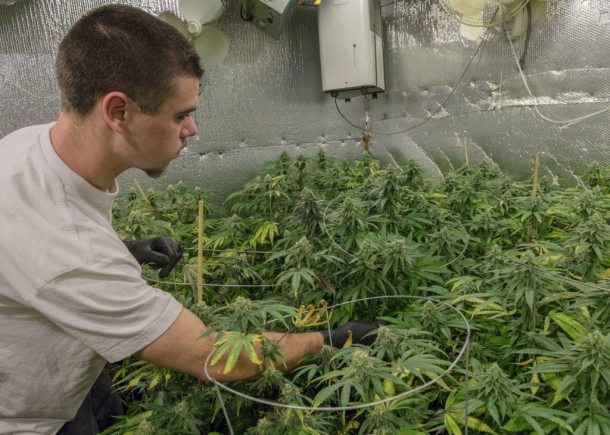
The bill would allow adults to possess up to one ounce of marijuana and would make it legal to grow up to two mature marijuana plants and five immature plants at home.
It would not create a structure for regulated and taxed sales of marijuana, as has been implemented in several states, including Colorado.
The Human Services Committee was tasked with reviewing the efforts currently in place to address drug use education and prevention of young people. The panel unanimously adopted an amendment that will restrict marijuana use in areas near schools and other public facilities, similar to tobacco restrictions now.
Human Services Chair Rep. Ann Pugh, D-South Burlington, was among the “no” votes in the committee.
Pugh said there are many legitimate concerns about marijuana, and noted that data from states where marijuana has been legalized is mixed. However, she noted, there are many marijuana users already in Vermont.
“One could vote for this and that would make sense, and one could vote no and that would make sense,” Pugh said. “For me I am squarely in the middle.”
Pugh said she would not stop a bill from moving forward if it had the support of the majority of the members.
“Just because I’m the chair, I’m not god,” she said. “I run a committee where everyone has a voice.”
In testimony, the committee learned about requirements the state already has in place for drug use prevention education, she said. They also heard that drug use prevention efforts might not always have “prevention” in the name, she said. She was struck by statistics that showed that children who had a dinner with their parents once a week were less likely to use drugs than those who did not.
Rep. Sandy Haas, P-Rochester, vice chair of the committee, voted in favor of the bill. She said it is preferable to allow Vermonters who are already using marijuana to grow at home instead of going to a drug dealer to buy a product that could potentially be adulterated.
“I would like us to do everything we can to disable the black market in Vermont,” Haas said.
The bill is a “Vermont scale step” toward addressing legalization, she said. She drew a comparison to the medical marijuana program, which began by allowing people to possess small amounts at home before growing to the current dispensary system, which is on track to expand this year.
“That’s the way we do things in Vermont,” Haas said.
Rep. Oliver Olsen, I-South Londonderry, also voted in favor.
“Personally, I feel that the current system of prohibition has not been effective,” he said.
He said there are important questions as to whether the current policy toward marijuana is a good use of resources.
However, others on the committee are staunchly opposed to the proposal.
Rep. Topper McFaun, R-Barre, said that the panel did not fully address the issues of prevention that the committee was supposed to work on. “Politically, it was brought in there to go to sleep for a while,” he said.
He has concerns that legalization will negatively impact children and families. He raised questions about road safety, as well.
“I took an oath when I came in here to do no harm,” McFaun said. “This, I believe, the statistics are there, it does harm.”
The bill is expected to come out for a vote before the full House next week.
