


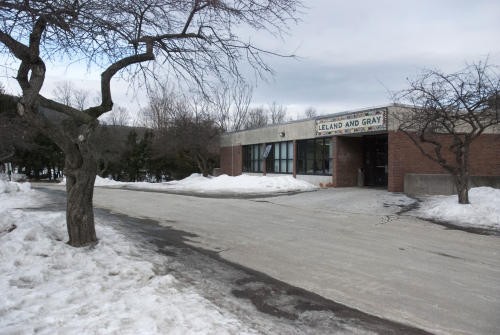
The school board has scheduled a public meeting at 7 p.m. Wednesday to answer questions about the matter.
School officials say the radon is “not an immediate health concern,” while also admitting the district first received word of a possible problem eight years ago.
In 2009, the state recommended further testing after a screening found elevated radon. For some reason, officials say, the issue was not addressed until it recently resurfaced and more tests were conducted last month.
“We acknowledge that the more accurate testing should have occurred in 2009. We apologize that the matter was not more promptly addressed,” school board Chairman Joe Winrich wrote in a Friday letter to the community.
Nevertheless, Winrich added, “we are confident after consultation with the (state) Health Department that the radon concentrations have not presented a significant safety risk to students or staff.”
Radon is an odorless, colorless, naturally occurring gas. It is caused by the decay of uranium, and it seeps into homes and other buildings through foundations.
According to the Vermont Department of Health, brief exposure to high levels of radon carries “no known health effects.” But long-term exposure has been linked to increased lung cancer risk, especially in conjunction with smoking.
In Vermont, the department says, the average outdoor level of radon is 0.4 picocuries per liter of air. The average indoor level is approximately 2.5 picocuries per liter.
The U.S. Environmental Protection Agency’s “action level” – meaning the level at which the federal agency recommends remediation projects – is 4 picocuries per liter.
February tests showed radon levels exceeding that number in some portions of Leland & Gray, and school officials say they’ve been consulting state health officials.
“We have been advised that the radon values in the school are not an immediate health concern for students or staff,” Winrich’s letter says. “The department has recommended remediation, however, and we plan to have that work done during April vacation break.”
In an interview Tuesday, Winrich said the work will include installing pumps to properly vent the gas.
Leland & Gray has had budget struggles, and voters in February approved a spending plan that included staff reductions and higher taxes. But Winrich said preliminary estimates show the radon remediation is not expected to be a “big deal in terms of cost.”
At any rate, he said, “there’s no way we’d let a budgetary concern stop us from fixing this.”
Until that work can be done, officials said they will increase ventilation inside the school by opening some windows during the day. Administrators also expect to continue coordinating with the Health Department.
Winrich said the school’s “radon mitigator” will attend Wednesday’s meeting in the high school library to answer questions.
“We wanted to have a special meeting because, as a parent, if I received that letter, I might have some questions,” he said.
Leland & Gray’s radon troubles are not uncommon, according to state and federal authorities. The state Health Department says 1 out of 8 Vermont homes has unsafe radon levels – twice the national average.
Among Vermont schools that have tested for the gas since 2005, nearly 12 percent have found radon that exceeds the federal action level, officials say. In some cases, radon levels were five times the federal limit.
Nationally, the EPA estimates that about 20 percent of schools have at least one room with short-term radon levels above 4 picocuries per liter.
Factors that can influence a school’s radon levels include soil permeability; a building’s structure and construction; and the “type, operation and maintenance” of the heating, ventilation and air conditioning systems, the federal agency says.
