


In Barre, residents will decide whether to add a 1 percent local meals, rooms and alcoholic beverages tax to help pay for street reconstruction and other municipal services.
In Brattleboro, citizens will weigh whether stores should stop providing free plastic shopping bags and if the Selectboard should sign an international “Charter for Compassion.”
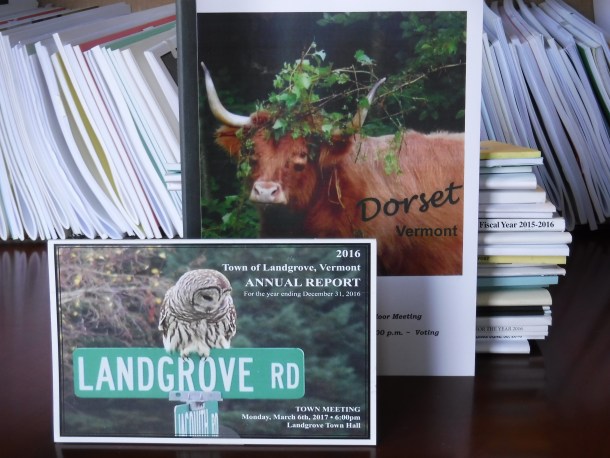
From Alburgh in the northwest to Vernon in the southeast, Vermonters will answer a variety of questions on town meeting ballots, according to a review of more than 150 annual reports on file at the secretary of state’s office.
Some items are small in scope, be it Braintree’s call to relocate its World War II monument from a highway junction to Town Hall or Charleston’s proposal to spend a $23,772 road fund surplus “to pave the apron of Dane Hill Road where it meets VT Route 105.”
But many articles are big. Nearly 60 communities, for example, will vote on 10 proposals to merge into new union school districts as called for by the state’s education governance law Act 46.

The towns of Hartland, Rockingham, Weathersfield and Windsor, worried about erosion along the banks of the Connecticut River, will consider whether to ask the TransCanada Corp., now seeking to relicense hydroelectric dams in Bellows Falls and Wilder, to modify operations and create a mitigation fund.
The towns of Royalton, Sharon, Strafford and Tunbridge will vote on an advisory article by the Alliance for Vermont Communities opposing plans for the 20,000-resident NewVistas development proposed by Utah businessman David Hall, who has purchased more than 1,400 acres in the four small communities.
The city of Barre will consider adding a 1 percent local meals, rooms and alcoholic beverages tax, which would add it to a list of 19 other municipalities with similar local taxes.
The town of Killington, in contrast, will decide whether to drop its 1 percent local option sales tax, which last year generated nearly $500,000 but required the community to give 30 percent of the take to the state.
For the first time, Vermonters who aren’t signed up to vote can do so on Town Meeting Day under a new Election Day registration act — a change that’s drawing at least one critical voice.
“Along the lines of another first,” the Braintree town clerk writes in the annual report, “the state makes it even easier for people to be oblivious to the world around them and have no accountability for their actions — or lack thereof — this comes in the form of same day voter registration.”

Those in Montpelier can consider whether to join the City Council in hailing the late David Budbill as “The People’s Poet of Vermont.”
Those in Marlboro can weigh whether the town should “proclaim the second Monday of October as Indigenous Peoples’ Day in place of Columbus Day.”
Those in Hinesburg can vote on a proposed animal ordinance “that diverges from the procedures in statute by allowing, among other things, the filing of complaints regarding dog bites or attacks by law enforcement officers regardless of the location of the bite or attack.”
And those in Cabot can choose whether to conduct future town meetings on “A. The first Tuesday of March which is the traditional Town Meeting Day; or, B. The Saturday morning preceding the first Tuesday in March; or, C. The Monday night prior to the first Tuesday in March to correlate with the annual school meeting.”
But for those who can’t get enough of town meeting, be warned: “Please vote for not more than one option,” the Cabot ballot declares.
