

The new incarnation of Troop B stretches from Brattleboro and Bennington to Randolph and Vergennes. And the reconfigured Troop A includes all of northern Vermont, from barracks in Williston and St. Albans to stations in St. Johnsbury and Derby.
That means fewer captains are overseeing bigger portions of the state. But state police leaders say the change is a way to free up management manpower for new initiatives while not weakening law enforcement.
“We thought it was just a smarter way to do business,” said state police Maj. Rick Hopkins.
State police spokesman Scott Waterman added: “We haven’t reduced the number of troopers. We haven’t reduced our services.”
Consolidation and reorganization have been themes in recent years for the state police. Officials in 2015 consolidated four emergency call centers into two, now housed at the Williston and Westminster barracks.
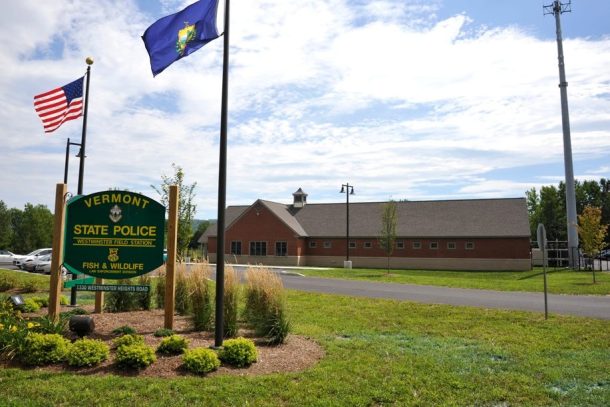
And the overall number of barracks has decreased from 12 to 10. Bradford’s barracks has become an “outpost” of the St. Johnsbury barracks, and last year the Brattleboro and Rockingham barracks were closed and combined into a new, expanded station off Interstate 91 in Westminster.
Those changes provide context for the troop realignment, which officially took effect Jan. 1.
Previously, there had been four state police troops. In the north, Troop A had encompassed the St. Albans, Williston and Middlesex barracks, while Troop B consisted of the Derby and St. Johnsbury barracks.
Troop C encompassed the New Haven, Rutland and Shaftsbury barracks, while Troop D covered the Royalton and Westminster stations.

Waterman characterized it as “essentially an administrative streamlining and a command structure simplification.”
At one point, each of the four former troops was overseen by a captain. So the new structure frees up two captains for other work, Waterman said.
Though the new troop alignment formally was enacted this month, the supervisory shift actually has taken place incrementally over the past year or so, Hopkins said. The two southern troops had been overseen by one captain since late 2015, and the two northern troops followed suit last year.
Officials said the change has helped make state police captains available for new initiatives like a major crimes unit and the appointment of a director of fair and impartial policing and community affairs. The latter post, announced in 2016, is aimed at building better relationships with communities of color, diversifying the state police ranks and “improving cultural awareness.”
Hopkins said the goal is to find command efficiencies while implementing the new policies of Col. Matthew Birmingham, who took over as state police director in 2015.
“We’re trying to be as smart with our limited resources as we can be, and be responsive to the problems of the day,” Hopkins said.
He acknowledged that, at the troop level, there are now two captains – Capt. Robert Cushing in the north and Capt. Michael Manley in the south – who are covering far more territory than they used to.
But Hopkins said the job is doable. He’s drawing on his own experience for that assessment: Hopkins had been serving as a supervisor for the former C and D troops.
For one thing, he said, modern communications technology makes it much easier to oversee such a large area. State police are looking to improve those lines of communication, including ways to make sharing large video files easier.
“We’re looking at software now that will help with that,” Hopkins said.
Also, Hopkins said it’s not necessary for a troop captain to be physically present to do the job.
“They’re managers. So they don’t need to be on the ground,” Hopkins said. “Every one of those stations has a lieutenant. … They’re the operational person who runs the show.”
He added that, at the ground level, state police have sought to bolster management by adding a sergeant position at each barracks. “We’ve actually increased oversight in the past year,” Hopkins said.
