


(“Then Again” is Mark Bushnell’s column on Vermont history.)
Some leaders create profound change in what seems, at least from a historical perspective, the blink of an eye. Whether these changes are for the better or worse depends on one’s perspective. Whether politicians can survive the impacts of these changes is yet another question.
For its first century and a half, the Vermont state government was limited in its size and mission. But during the mid-1900s, two governors – a Republican and a Democrat – wrought major reforms that drastically expanded state government and its role in the everyday lives of Vermonters.
These two governors were in office for only a total of nine years. One resigned midway through his second two-year term to take a federal judgeship; the other left after three terms with his statewide popularity in steep decline.
An unlikely revolutionary
Republican Ernest Gibson Jr. started the revolution that led to our current form of government. At first glance, Gibson might seem an unlikely revolutionary — after all, he was a Republican insider. His father had been a U.S. senator from Vermont, and the younger Gibson had served as Windham County state’s attorney and as secretary of the Vermont Senate.
But Gibson was frustrated with the Old Guard, or the state Republican Party establishment, which was fiscally conservative and saw a limited role for state government. Its policies tended to support business and industry. In contrast, Gibson wanted the state to take a more active role in addressing issues in ways he believed would help average Vermonters.
Gibson took office in 1946 with such ambitious plans to reform public education, health care, law enforcement and welfare that journalists dubbed him “Vermont’s New Dealing Yankee.”
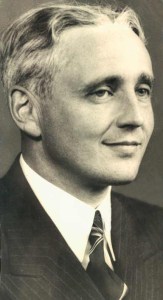
Over the objections of county sheriffs, Gibson pushed through the creation of the Vermont State Police. To address shortcomings in the state’s education system, he called for towns to hire more teachers by attracting them with better pay and helped create a retirement plan to retain them. He also sought to increase the state subsidy for transportation for students in rural areas. At the time, about one-third of Vermont children didn’t stay in school past eighth grade. Gibson believed spending a little would help children in rural areas stay in school, but the Legislature rejected his bus subsidy plan.
Gibson used the government’s power to oppose hydroelectric projects he said would cost the state valuable farmland and profit out-of-state utilities, not Vermont ratepayers.
In health care, Gibson called for children to have annual medical and dental exams and for the state to create mobile medical units, like ones he had seen in the military, that would serve rural areas. When the state Senate divided on the issue, Lt. Gov. Lee Emerson had to break the tie. Emerson, an Old Guard member, voted against the mobile units. Vermont couldn’t afford them, he said.
To pay for his programs, Gibson advocated making the state taxation system more progressive. He was only partly successful in reforming the tax code. An industry trade group persuaded state senators to reject some aspects of his tax reforms.
Gibson served as governor only from 1947 to 1950, when he resigned to accept a federal judgeship after realizing that some of his main proposals had no chance of becoming law. During his brief tenure, Gibson set the course for a greatly expanded state government. Between 1947 and 1958, the government workforce grew from 1,527 to 3,321, and the state’s operating expenses grew from $27.5 million to $75 million.
After Gibson, perhaps in reaction to his aggressive reforms, Vermonters elected a string of Republican governors who took a more conservative approach to governing. It was not until 1962 that the state elected another liberal to serve as governor. And this one was a Democrat, the first from his party elected governor since 1853.
‘A breath of fresh air’
Philip Hoff moved to Vermont from his native Massachusetts in 1951 and began practicing law here. He won election to the Vermont House in 1960, the year Democrat John F. Kennedy won the presidency. Vermont was still devoutly Republican, however. Richard Nixon won the state’s electoral votes, having received 59 percent of Vermonters’ votes.
Hoff became part of a group known as the “Young Turks,” a 10-member bipartisan coalition of freshman House members who worked together to draft policy positions and legislation. Ernest Gibson III, the former governor’s son, was part of the group. The Young Turks soon drew the attention of the press, which helped Hoff’s standing in his party.
Despite Hoff’s inexperience, party officials quickly identified him as a viable candidate for governor. He was charismatic and young, and he reminded people of Kennedy. That the Democrats would take a chance with a political newcomer was not unreasonable. Nothing else the Democrats had tried for the past century had worked.
Hoff faced Gov. F. Ray Keyser Jr. in the general election. Keyser, who had accomplished little in his first term in office, had difficulty healing rifts within the Republican Party.
Still, Hoff faced the challenge of getting Vermonters, who for generations had habitually voted for Republicans, to elect a Democrat. He got help from some disaffected Republicans, who established the Vermont Independent Party and nominated Hoff as their candidate for governor. That did the trick. The new party gave Vermonters a way of supporting Hoff without voting for him as a Democrat.
Hoff won a minority of the vote (46.3 percent) as a Democrat but picked up an additional 2.7 percent as the Vermont Independent Party candidate. That still wasn’t a majority, but when you add in the votes he won under the banner of independent Democrat, Hoff got 50.5 percent. His margin of victory was a scant 1,315 votes.
Liberal Republicans cheered his victory. Ernest Gibson Jr. hoped Hoff’s election would send “a breath of fresh air into the musty tombs of state government.”
Despite his narrow victory, Hoff said Vermonters had “clearly voiced a desire for a departure in meeting the pressing problems that face our state.” But he wasn’t sure yet how to tackle the issues he saw. He secured a $250,000 grant from the U.S. Urban Renewal Administration to establish literally hundreds of task forces to analyze the issues and propose responses. Many of Hoff’s proposals involved centralizing power by removing it from the town level and giving it to a regional governing body or to the state.
Hoff’s administration created a state program to administer federal welfare funds for eligible Vermonters. The program helped end the old town-run model of caring for those in need. To win support, the administration offered state jobs to people who had worked full time as town overseers of the poor.
His administration also successfully promoted fair housing and employment laws, and penal system reform that emphasized the rehabilitation of inmates.
Hoff supported the creation of a state educational public television network; of the Vermont Student Assistance Corp., which provided loans and scholarships to help Vermonters pay for postsecondary education; and of what is now the Vermont Arts Council, which funds and advocates for the arts.
The administration worked to change how Vermont looked as well, proposing regulations on junkyards and dumps, banning billboards and purchasing parkland with federal money. Hoff pushed for state development planning and secured federal funding for urban renewal projects.
Despite his successes — and partly because he took stands on divisive issues that many Vermonters opposed — Hoff left office in 1969 as a much less popular politician. Two years later, he tried once again for statewide office, challenging Winston Prouty, the incumbent Republican U.S. senator, but was trounced.
Hoff and Gibson left behind a changed Vermont, with a much larger, more activist government. When Gibson entered office in 1947, the state employed about 1,500 people. Today that figure is roughly 8,000, making the state the largest employer in Vermont.

