

[T]he Concord Herald of New Hampshire published a spectacular story on Nov. 7, 1793: just days earlier, Isaac Tichenor, a member of the Vermont Supreme court, had been wounded, or perhaps killed, during an altercation in Cornish, N.H.
Tichenor had been shot, or perhaps stabbed. The report was vague on which. But it was clear about who had done the shooting, or perhaps stabbing: none other than Ira Allen, the youngest brother of Ethan Allen and, like Ethan, one of Vermont’s founders. Tichenor and Allen, the paper reported, had had a duel.
Oddly, the Herald dedicated a mere 76 words to the story. It’s not like duels were regular occurrences in late 18th century New England. Dueling was far more common in the South and in Europe — but it was already an outdated mode of settling scores. (Of course there were exceptions – Alexander Hamilton’s dueling death in New Jersey in 1804 comes to mind.)
Perhaps the Concord Herald’s brevity was due to a lack of reliable information. The newspaper cautiously ended its story by noting, “the report of this unhappy circumstance wants confirmation.”
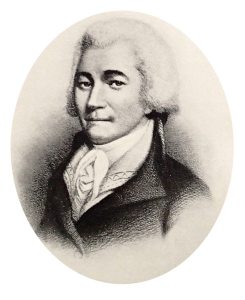
But the report was largely correct. Tichenor and Allen had had an armed confrontation in Cornish the previous Saturday. Where the paper erred was in mentioning swords. The men had chosen to duel with pistols. The Herald also got the ending wrong.
The flashpoint that triggered the duel, as reported by the Farmer’s Library newspaper of Rutland, was almost comical. Allen and Tichenor had been engaged in a long-running dispute, the paper noted, though it didn’t provide specifics. In late October, Tichenor had spread a rumor that during an argument with Allen, Allen had said something particularly vexing, so Tichenor had “wrung his nose.” When Allen heard the rumor, he said that Tichenor was lying, he had never grabbed Allen’s nose. Tichenor replied that even if he didn’t grab Allen’s nose, Allen should be as offended as if he actually had done so. Allen was.
He responded by challenging Tichenor to a duel. Gov. Thomas Chittenden learned of the challenge – he could hardly avoid doing so, since Tichenor had received Allen’s note demanding satisfaction while attending a legislative session in Windsor. Tichenor replied: “(Y)ou can take no measures sir that one gentleman ought to adopt in governing himself towards another that will be disagreeable to me.”
Translation: bring it on.
The men agreed to duel the following day. They chose to meet at the home of Gen. Jonathan Chase in Cornish, directly across the Connecticut River from Windsor. They seemingly chose New Hampshire because Vermont officials would have no authority to stop them.
Whether Tichenor had grabbed Allen’s nose wasn’t, of course, the root cause of their clash. As leaders of rival factions in Vermont, the two had been bitter rivals for a dozen years.
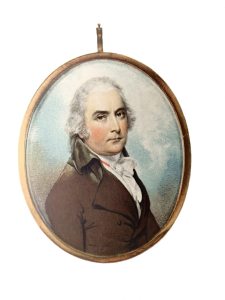
Allen had helped Vermont win independence and eventually statehood. Over the years, he amassed vast acreage across the state. So perhaps naturally Allen saw his interests as inextricably linked with Vermont’s. What benefited him, he believed, would also benefit the state.
“He was upholding the tradition that holding office was a way to make your fortune,” says historian Kevin Graffagnino, who wrote his doctoral dissertation on Allen. A former director of the Vermont Historical Society, Graffagnino now directs the William T. Clements Library at the University of Michigan.
Despite his massive land holdings, Allen was perpetually short of money to pay his taxes and other debts. He was also besieged by lawsuits from other speculators who claimed title to some of what he considered his land.
Because of his influence, Allen had held numerous appointed state offices, including state treasurer and surveyor general. As such, Graffagnino says, Allen was an obvious target for someone like Tichenor, who had arrived in Vermont later and was seeking to make his mark. Tichenor tried to thwart Allen’s ambitions at every turn.
Both men had used their political connections to enrich themselves, but they showed their wealth differently. Whereas Tichenor wanted to look the part of a wealthy aristocrat, Ira “wanted respect more than the big house,” says Graffagnino.
The men also held divergent political beliefs. Tichenor was quite comfortable with the advantages of privilege. He believed the common people needed the political guidance of the educated elite, which included himself — Tichenor was a Princeton man. He was also a Federalist, so he supported a strong federal government. Allen, in contrast, was a Jeffersonian. As such, he believed in the virtue of ordinary people and supported strong local and state governments and a weak federal government.
The clash between Allen and Tichenor came to a head during the fall of 1793 when Allen appealed to the Legislature to settle its accounts with him. As always, Allen needed money to pay his debts. During the Revolution, he said he used his own money to buy gunpowder for the militia and had been trying ever since to have the state repay him. But that fall lawmakers again refused to act on his claim.
The Legislature also rejected his offer to contribute fund to the state university, because it came with strings attached. Several years earlier, Allen had donated land in Burlington for the University of Vermont, but had yet to provide the substantial funds he had also promised. Now he was offering a further contribution, provided that the school, which still existed only on paper, was renamed Allen University.
Allen was enraged by the Legislative defeats. He blamed Tichenor for undermining him and challenged him to a duel.
The two men made unlikely duelists. Neither had a reputation for physical bravery. Allen lacked his brothers’ pugnacity. Ethan was renowned for settling disputes with his bluster and fists; another brother, Levi, challenged several other men, including Ethan, to duels. Levi never had to fight one, however, as his opponents did him the favor of not showing up at the appointed hour. Ira usually preferred to get his way through political maneuvering and scheming.
Tichenor was much the same. A native of New Jersey, Tichenor had spent the Revolution as a commissary officer, dealing with the army’s stores. While he was stationed in Bennington, rumors circulated that he was seducing the wives of local men who were off fighting on the frontier. The rumors helped earn him the nickname “Jersey Slick.”
On the morning of Nov. 2, 1793, Allen and Tichenor found themselves back to back, readying to count off 10 paces, turn and fire. Graffagnino suspects both men regretted being there.
“I see Ira and Tichenor getting revved up and pulled along by their own rhetoric,” he says. “I don’t think either of them thought, ‘I’ll stand 20 paces away from this guy and try to blow his head off.’ ”
A newspaper reported that the men met on the east bank of the Connecticut “to exchange a few shot.”
“Their rules were made, the ground was measured, they placed themselves back to back, marched off, and wheeled at the word,” the story states. “(A)t this instant, a number of spectators who had just then arrived, rushed between them and seized their arms; they then returned, after having given satisfactory proof of their undaunted firmness and courage.”
The timing of the spectators’ arrival seems a little too perfect. Perhaps one or both of the men had arranged this timely intervention. Allen and Tichenor were no doubt relieved to have survived the day, with their honor and lives intact.

