

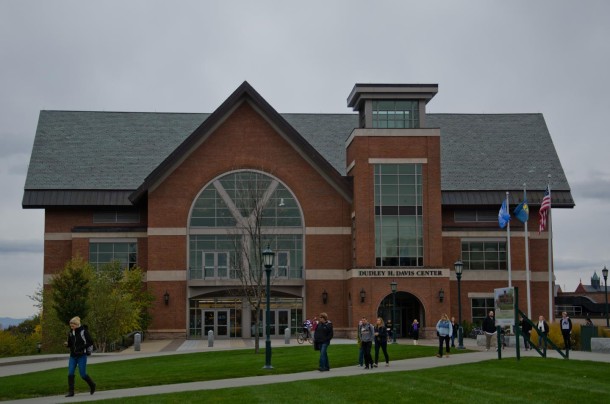
[B]URLINGTON — Mayor Miro Weinberger is asking several major institutions to increase their payments to the city to help pay for his ambitious 10-year infrastructure plan.
The institutions, which are tax-exempt, already pay the city a contribution in lieu of taxes. That began 30 years ago when Bernie Sanders, then mayor of Burlington and now the state’s junior senator, waged what The New York Times described as a “crusade” to get the University of Vermont and Medical Center Hospital of Vermont (now the UVM Medical Center) to help pay for city services.
Sanders told the Times in 1987 that the property tax was regressive and the institutions needed to help reduce the burden citizens felt paying for key city services.
“It is appropriate to ask individuals and institutions to pay their fair share,” Sanders added.
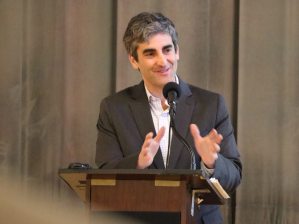
The Sanders administration lost a court battle with the hospital, but it was successful in getting both institutions to start making voluntary payments to the city for basic services such as police and fire.
Weinberger is seeking to have the institutions pay the city more because of increased needs.
“Burlington has a challenge meeting its public needs if it’s not getting a fair level of contributions from its institutions,” Weinberger said. “It’s a challenge for us to make the investment we need to when a very large percentage of our grand list is tax-exempt.”
While property taxes accounted for 77 percent of the $30.5 million Burlington collected in tax last year, 44 percent of property in Burlington, geographically, is owned by entities that don’t pay property tax, according to city budgets and its grand list.
Thirty-one percent of the total assessed property value is property that belongs to those same tax-exempt entities, according to the city’s grand list.
Payment agreements with tax-exempt institutions
Burlington received an additional $5 million in payments in lieu of taxes from the state, utilities and nonprofits such as Howard Center, which paid $54,778, and the Champlain Housing Trust, which paid $52,635.
UVM, the UVM Medical Center and Champlain College make separate payments for city services, which totaled $1.8 million in fiscal 2016. Those agreements are based largely on the benefits the institutions derive from city services.
Weinberger is asking UVM and Champlain College to increase their payments by a combined $1 million annually for the next decade to bolster his infrastructure program.
The mayor has been negotiating with UVM and Champlain College for months, making formal proposals for new payments in March, he said. Weinberger said he expects the $1 million will be split on a 7-to-1 ratio with UVM paying the lion’s share.
The mayor said he’s not asking UVM Medical Center to do so formally, but instead the hospital is making philanthropic gifts to support the program, most recently a $250,000 donation for improving the waterfront bike path.
Neither the city nor the hospital would say if such gifts would be recurring annually during the life of the mayor’s infrastructure program. Weinberger isn’t able to seek an increase to the hospital’s payment for services, because of a 30-year agreement with UVM Medical Center signed in 1999.
At that time, the hospital was building a new outpatient facility and then-Mayor Peter Clavelle disputed its assertion that the new addition would be exempt from property tax.
The city and the hospital again went to court, and a resulting memorandum of understanding set UVM Medical Center’s current payment for services at $325,000, increasing 2 percent annually.
The medical center’s property tax bill this year, if it were not exempt, would total $10.5 million based on the current assessed value of its property. The city’s share of that money would be $3.2 million.
UVM Medical Center’s payment for services was $446,156 last year. Combined with its donation to the city, that’s less than a quarter of what it would have paid in property taxes to the city were it not exempt.
Currently UVM, which is a state tax-exempt entity, makes a $1.3 million payment for services to the city. It also pays $1.2 million in municipal property taxes for non-tax-exempt uses of its property.
If UVM were not exempt from property tax, it would be on the hook for $16.6 million in state education and municipal property tax, with $5 million going to Burlington. Its current payment for services is roughly a quarter of that amount.
UVM’s property in Burlington accounts for 13 percent of the total assessed value of property citywide. The medical center accounts for 7.5 percent of that total. The two combined represent more than a fifth of Burlington’s property value.
The university and the hospital have long argued that their presence in Burlington is a major economic engine that helps fill the city coffers. They are two of the larger employers in the state. The medical center operates an emergency room that is federally required to treat anyone who comes through its doors.
UVM recently released a study estimating its own economic contributions to the region at $1.3 billion.
Champlain College made a $122,218 payment last year for city services. It also paid $536,000 in property taxes. State law gives the college a break on its property taxes, but when the service payment is included, it’s paying essentially its full property tax burden.
“Compared to other nonprofits and other institutions, my assessment is Champlain is paying more than our fair share,” said David Provost, vice president for institutional advancement and finance at Champlain College.
That’s not to say Champlain isn’t willing to pay more toward the mayor’s infrastructure program, Provost said. His institution stands to benefit from the repaved sidewalks and streets, new sewer lines and fire engines that the money would buy.
“We just don’t want to carry a bigger burden than others who will benefit,” Provost said.
Weinberger isn’t only asking big institutions to open their wallets for the infrastructure program, he’s asking city residents to pony up too. Questions 1 and 2 on the Nov. 8 ballot ask voters to approve a combined $36 million in bonds to help pay for the program.
The combined property tax increase in peak repayment years, if both bonds are approved, would be $140 more annually for the owner of a median value Burlington home, approximately $230,000, for which the current tax bill would be about $5,800 based on the homestead rate.
The mayor said he is further along in negotiations for increased payments from Champlain College than he is with UVM. Weinberger said he thought UVM leadership is dragging its feet.
“We’ve been talking about this for some time, and I had hoped we’d have a decision before now,” Weinberger said, adding that he’s made his disappointment clear to UVM President Tom Sullivan.
Weinberger said he is frustrated in part because backing by the institutions would have sent a positive message to voters to back his plan, which has also won City Council support.
“I don’t think we are going to have an answer from (UVM) before the vote,” he added.
UVM officials don’t share the mayor’s urgency to complete a new deal. Thomas Gustafson, UVM vice president for administration and university relations, said the university wants to see how the bonding questions fare on the ballot. He also pointed out that the new payments wouldn’t start until July, leaving plenty of time for negotiations.
Gustafson said UVM wants to make sure the payments don’t take the form of a “head tax,” or payments based on the number of students living on campus.
Weinberger had previously proposed such a methodology, on the grounds that students living off campus already contribute to property taxes in the rents they pay landlords. The mayor says he’s since dropped the idea, because of the university’s opposition.
“Eds and meds” asked to pay up in Burlington, Boston and beyond
In the 30 years since Sanders began the efforts to collect from Burlington’s large institutions, payments in lieu of taxes from institutions have become far more routine.
A 2012 national study, conducted by the Massachusetts-based Lincoln Institute of Land Policy, found that such payments were made to 218 localities in 28 states since 2000.
The study found that 90 percent of payments in lieu of tax made by nonprofits came from “eds and meds,” meaning colleges or universities and hospitals.
Most revenue from such agreements comes from a small number of very wealthy nonprofits that make multimillion-dollar payments to government, despite their tax exemptions. The study found that the average payment was $292,952 — 10 times larger than the median, or middle value, payment of $30,000.
Beginning in 2010, then-Boston Mayor Thomas Menino waged his own campaign to get the myriad tax-exempt nonprofits in Boston to increase voluntary payments to the city. A report released at that time says 52 percent of Boston property was held by tax-exempt nonprofits, a larger percentage than in Burlington.
Boston’s payment in lieu of tax program now asks that its major “eds and meds” pay 25 percent of what they would owe in property tax — though some continue to not provide those voluntary payments.
Weinberger mentioned Boston’s efforts and said they’d provided some guidance in his negotiations with Burlington’s institutions.
Voluntary payments from UVM are close to the 25 percent of municipal property tax threshold sought by Boston, and slightly less for UVM Medical Center.
Correction: An earlier version of this story included UVM’s taxable property in a calculation of what it would pay in property taxes were the rest of the university’s property not exempt. It also misstated the percentage of what UVM Medical Center makes in voluntary payments and gifts compared to what it would pay in property taxes were it not exempt.
