


But theory became reality in 1958. When the almost unimaginable happened, it happened in a particularly unlikely way. The Democrats finally retook a statewide office with the election of a political novice.
William Meyer and his contribution to the Democrats are almost entirely forgotten today. He was hardly better known when he ran for the U.S. House in 1958.
Meyer was raised in Pennsylvania and moved to Vermont in 1940, at the age of 26, after working in the region as a technician for the Civil Conservation Corps. He settled in southern Vermont, where he worked as a forester and conservationist. Entering the race for Congress, his only political experience had been a run to represent the town of Rupert in the state House in 1956. He lost.
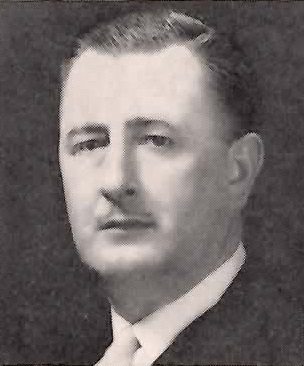
Meyer was an unpolished public speaker, but his background and his work in the state’s forests gave him an easy rapport with rural Vermonters. He had several other things working in his favor. The top of the Democratic ticket featured Frederick Fayette and Bernard Leddy, who were popular and more experienced politicians from Chittenden County. Leddy was running for governor against the GOP candidate Robert Stafford.
Fayette was angling for the U.S. Senate seat left vacant by the retirement of Ralph Flanders. Meyer had considered running for that seat, but Fayette had talked him out of it, reportedly making the point that he had a family to support.
Facing Meyer was Harold Arthur, a veteran politician. Arthur had on his resume two years as lieutenant governor and even a brief stint as governor in 1950 after Ernest Gibson Jr. left office to accept a presidential appointment as a federal district judge.
Despite his experience, Arthur was viewed as a weak candidate. He had won the primary, in which he was one of six GOP candidates, with only 30 percent of the vote. That primary was evidence of dissension in the Republican ranks. The party was divided into liberal and conservative wings that didn’t particularly get along.
Meyer campaigned as the peace candidate. His stances, which included recognizing Red China, banning nuclear weapons testing and ending the military draft, were out of step with Democratic leaders both in Vermont and nationally. The country was in the midst of the Cold War and leaders of both major parties weren’t interested in appearing soft on anything.
“We cannot continue to befriend dictators at the expense of other peoples,” he wrote in one of his campaign brochures. “Nor can we ignore the existence of ‘Red’ China because we prefer a different form of government.”
Meyer worried that fear of war was causing Americans to surrender some of their rights. “We must reclaim our cherished civil liberties and reject those principles and acts which masquerade under the banner of security … but lead only to dictatorship.”
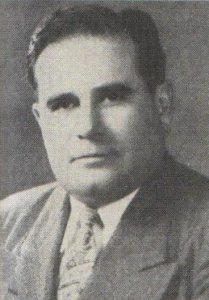
Vermont Democratic leaders worried that Meyer’s outspoken foreign policy positions would cost them any chance of regaining the state’s U.S. House seat.
So the race for the House featured a pair of candidates that neither party was particularly thrilled about.
Meyer won the election with 51.5 percent of the vote. He’d been buoyed by endorsements from three Republican-leaning daily newspapers in southern Vermont (the Rutland Herald, Bennington Banner and Brattleboro Reformer); the support of unions, which contributed $5,200 to the rival candidates — a lot of money in those days; and the voters that Fayette and Leddy attracted to the polls in the Democratic-controlled northwestern corner of the state. Fayette and Leddy ran strong campaigns, but lost.
Walter Smith, chairman of the state Republican Party, reported the unthinkable news of Meyer’s victory to his counterpart in the national party. “We had just one Democratic victory; our congressional seat,” Smith wrote, as if it were a regular occurrence. It was, in fact, the Republicans’ first statewide election loss in Vermont, ever. He blamed the outcome on “a very weak candidate,” Arthur, winning the nomination.
Even Democrats seem to have viewed it as less of an election that their party had won than one that the Republicans had lost. That belief helps explain why Meyer isn’t remembered as the savior of the Vermont Democratic Party. That honor goes to Phil Hoff, who followed Meyer’s success four years later by winning the governor’s race. The difference between Meyer and Hoff is that Hoff managed to hold on to his office. Meyer’s tenure in Congress was brief.
Once in office, Meyer followed through on his campaign promises and spoke out forcefully on peace issues. At a time when much of the country lived in fear of communism and the threat of nuclear war, Meyer found little support among colleagues on issues like disarmament and the admission of Red China to the United Nations.
He worried that Americans were being blinded by fear.
“I am tired of having my liberties confined because the faint of heart say it must be done to contain communism,” he told the Vermont Democratic Convention in Rutland in 1960.
“I am tired of retreating on all internal fronts because of external threats. I say to you that this course of action not only could eventually destroy democratic government in the United States, but that it would also lose the global struggle for freedom and a better life for all humanity.”
Though Meyer was just doing what he had pledged to do, many Vermonters were shocked by his comments. Vermonters were used to having a liberal delegation in Congress, but for them Meyer’s rhetoric was taking things to extremes.
Meyer faced a tougher challenge to defend his seat in the 1960 election. His actions in Congress had rankled many Democrats, and he became the first member in his party ever to face a primary challenge.
He won the primary, but then had to face a more daunting opponent in the general election, Gov. Stafford. During the race, Meyer found himself in the position of having to deny allegations that he was a Quaker and a pacific, and therefore committed to disarmament no matter the risks involved. In contrast, Stafford aired television commercials showing him reviewing troops in his Navy Reserve uniform.
Stafford won the election easily, beginning a 28-year career in Congress. Meyer managed to win just 43 percent of the vote.
He wasn’t through with electoral politics, however. He ran for the U.S. Senate in 1962, but was beaten in the primary. Democratic party leaders, viewing Meyer as a liability, had worked to defeat him.
He tried again in 1964 and 1970 to win his party’s U.S. Senate nomination, but lost both times. In frustration, immediately after the latter defeat, he helped organize the Liberty Union Party and ran unsuccessfully as its Senate candidate that fall. The party failed to reinvigorate Meyer’s career, but it did start the rise of another Vermont politician.
In 1972, in his first run for office, Bernie Sanders was the Liberty Union candidate for U.S. Senate. Eighteen years later, Sanders would win his first statewide election. As an independent, he took the House seat Meyer once occupied. He won election to the U.S. Senate in 2006 and gained a national following during his recent presidential campaign.
William Meyer must have been the forgiving sort. In 1972, he rejoined the Democrats and was their U.S. House candidate, but lost in the general election.
He could do nothing to snap this latest Democratic losing streak. Today, his one term in office is recalled, when it is remembered at all, as the lone exception in more than a century and a half to the rule that Vermonters refused to have Democrats represent them in Congress.

