

Councilors also took the unusual step, at the mayor’s behest, of placing the fate of the zoning district in the hands of city voters on Nov. 8. The combined measures passed on a vote of 8-3, with councilors Max Tracy, P-Ward 2, Selene Colburn, P-East District and Sharon Bushor, I-Ward 1, voting “no.”
Mayor Miro Weinberger said the citywide vote was necessary because opponents of the new zoning, which allows for mixed-use development, were going to force a vote with a petition drive anyway.
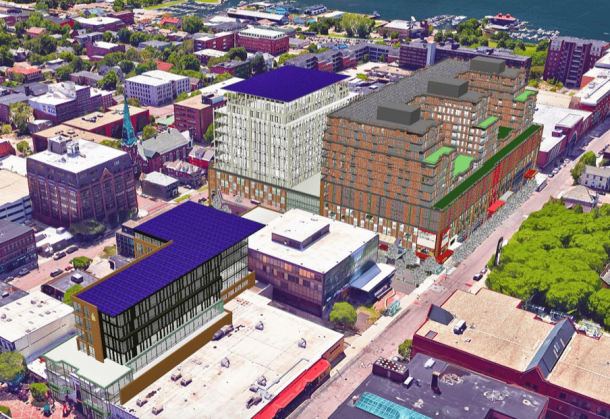
The $220 million proposed redevelopment of the Town Center mall spurred the creation of the district. The mall includes housing, retail space and offices with two 14-story towers that exceed current height limits.
If the measure landed on the ballot via petition, it would likely force a special election, according to Weinberger. To avoid that cost, and to ensure the largest number of city residents weigh in on the zoning change, the mayor said it made sense to place it on the Nov. 8 ballot with the national and statewide election.
“It’s an opportunity to enfranchise the voters. We can be quite certain that many fewer voters would be coming out for a special election than will be coming out on Nov. 8,” Weinberger said.
The delay created by a special election would also put the city well beyond a deadline to approve the zoning that was included in its preliminary agreement with Town Center developer Don Sinex, Weinberger said.
That deadline came and went in mid-September, but in a statement issued earlier this week, Sinex welcomed the vote, saying it would demonstrate public support for the project.
The redevelopment is already contingent on another ballot question. Voters will also be asked to approve a $22 million bond to pay for Pine and St. Paul Streets to be reconnected through the mall property.
The mayor defended the new zoning and the mixed-use proposal for Town Center mall as a way to bring low-income residents downtown.

“The people we’re keeping out when we vote ‘no’ is the poor and disenfranchised,” he said, adding that supporting the project is a “tangible way to make us more inclusive.”
Members of the public who spoke in favor of the zoning district said jobs, retail and housing are crucial to retaining and attracting young people and building up the city’s tax base.
Opponents of the zoning and the redevelopment project urged councilors not to approve it, but praised the decision for a citywide vote.
“This ordinance isn’t all bad … but where it’s bad it’s real bad,” said Steve Goodkind, a former director of Public Works and a former mayoral candidate. Goodkind said he opposes the new height limit and above ground parking.
“The good news is, thanks to the hard work of a lot of people in Burlington, we’re going to get to vote on this. I would just encourage people to pay attention,” Goodkind said.
The new zoning would allow buildings of up to 160 feet, or 14 stories, within an overlay district that covers about 9 acres of downtown, including the Town Center property, several parking garages, L.L. Bean and Macy’s.
Currently, downtown zoning caps building heights at 65 feet — or 105 feet if the developer is granted bonuses for public amenities included in a project.
The new zoning also contains new building design requirements and more stringent environmental building standards that supporters said will bind all new development in the downtown district, not just the Town Center project.
The city council has already approved the ballot measure that will ask voters whether to issue $22 million in tax increment financing bonds, which will be used to reimburse Sinex for reconnecting Pine and St. Paul streets through his property and selling the roadways back to the city.
Both measures are necessary for the project to move forward as conceived, making the November election a make-or-break moment for a proposal hailed by some as necessary to the city’s future and decried by others as a boondoggle in the making.
