


BURLINGTON — When voters go to the polls in November they will be asked whether the city should issue $22 million in bonds to pay for new streets through downtown.
The roadways would connect the bisected Pine and St. Paul streets through the current Town Center mall property. They would be built as part of a massive mixed-use project proposed by the mall’s owner that would bring housing, retail and office space to the property.
Opponents say the project’s proposed 14-story towers are out of scale with downtown, but supporters, including the mayor and a majority of the City Council, say it will bring much-needed housing and jobs into Burlington’s core.
The City Council voted 9 to 1 at a Monday meeting to put the bond question to voters. Max Tracy, P-Ward 2, the most vocal critic of the project, was the lone vote against it. Chip Mason, D-Ward 5, has recused himself from votes relating to the project because his law firm represents Town Center owner Don Sinex in an unrelated matter.
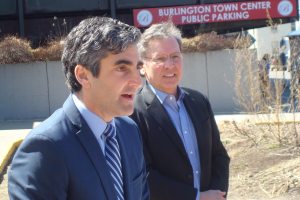
“The strong vote is a reflection of the rare opportunity that the city has to reclaim important public streets and greatly improve the public infrastructure of key blocks of our downtown without increasing property taxes on Burlingtonians,” said Mayor Miro Weinberger in a statement Tuesday.
The $22 million would be used to reimburse Sinex for constructing the new sections of Pine and St. Paul streets through his property and building street-level amenities to go with them.
Burlington would use a mechanism known as tax increment financing, or TIF, to issue the bonds. Tax increment financing pays for public infrastructure that spurs private development.
It works by allowing a municipality to issue bonds to pay for infrastructure. The bonds are repaid with a portion — or increment — of new, additional property tax revenue the city receives based on the increased value of the private development.
Weinberger has said provisions in a predevelopment agreement with Sinex protect the city’s investment. The city says it won’t purchase the new roadways unless they’re completed to its standards, and the bonds won’t be issued until much of the project is complete and assessed at a value that will support the city’s debt service payments.
Before councilors voted to put the TIF bond on the Nov. 8 ballot, they reviewed a market feasibility study performed by Norwich-based Doug Kennedy Advisors. Sinex paid for the review as part of his agreement with the city.
The consulting firm’s report states that “the project’s market is faring well in the current economy,” but at the same time “Burlington and particularly the downtown core has experienced relatively little residential or commercial development in recent years.”
As a result, the report concludes that the rental, retail and office space will be readily absorbed into the market, commanding higher-than-average rental and lease rates. With much of the space pre-leased, the firm said it expects the remaining available space to lease quickly.
The city had its own consulting firm, ECONWest, review the report and its findings. ECONWest said it is in “general agreement with the report’s findings” but said it should have provided greater detail on how Sinex plans to raise the more than $220 million he needs from investors.
Weinberger said the report and review by the city’s consultants “confirm that the proposed largely private redevelopment has a good chance of success” and validate the decision to ask for voter approval of the TIF bond.
The City Council will hold a special meeting Thursday for a final vote on a zoning change that is necessary to accommodate the height of two 14-story towers included in the project.
The vote for final approval comes more than three weeks after a deadline in the agreement with Sinex for passing the new zoning, but the developer has said a delay of a few weeks or a month would not scuttle the project.
