[S]pending by those seeking a Chittenden County Senate seat is approaching the total expended for that entire race in the 2014 election cycle, according to the latest filings.
As of July 15, with three weeks to go before the primary, candidates had spent more than $105,000. In all of 2014, spending topped out at $141,000. The dollars are pouring in partly because two seats are open among the six-person delegation, which is unusual.
Primary spending has been exclusively on the Democratic side in left-leaning Chittenden County, where 11 candidates are vying for six party slots on the November ballot.
The 2014 contest did not have a crowded primary but saw heavy spending in the general election from three candidates: Democrats Michael Sirotkin ($33,729) and Dawn Ellis ($23,080), and Republican Joy Limoge ($33,638).

Sirotkin, who had been appointed to his late wife’s seat earlier that year, edged out Ellis by 1,306 votes for the final seat. Both are on the ballot again this year, while Limoge is forgoing another attempt.
John Gifford, the only Republican candidate this cycle, said he agreed to run after being asked by fellow Milton Republican Don Turner, the House minority leader. Gifford said he plans to start campaigning in mid-August, but he expressed concerns about how expensive the race might prove.
“I’m not very good at asking people for money,” Gifford said, adding that he’s had only limited discussions with the Vermont Republican Party about fundraising.
Gifford said he was shocked when friends told him it might cost more than $30,000 to wage a competitive bid. Several Democrats were already approaching that figure three weeks before the Aug. 9 primary.
“The primary is effectively the whole contest,” said Rep. Chris Pearson, a Burlington Progressive who is running in the Democratic primary to try to make the leap into the Senate.
Pearson is leading all candidates in fundraising with $84,426. Of that, $77,329 has come in donations of $100 or less, with the lion’s share pouring in after his campaign was featured in a fundraising email from Bernie Sanders.

“I won the political lottery,” Pearson acknowledged. “It’s a great relief not to have to call my wealthiest friends and plead for money. It’s something I was prepared to do, but it’s not anyone’s favorite part of campaigning.”
Pearson has channeled that groundswell to become the top spender in the race. After subtracting $7,300 in gifts to fellow Progressives — and one Democrat — Pearson had spent $27,964 on his campaign.
The three-term representative said he may be well-known in his House district, which covers roughly 20 percent of Burlington, but that he “take(s) nothing for granted” outside of that.
All the Democrats who are spending heavily this cycle say they’re doing so to build name recognition in the state’s most populous county. With voters able to select as many as six candidates, building presence of mind is a prerequisite for claiming a seat, they say.
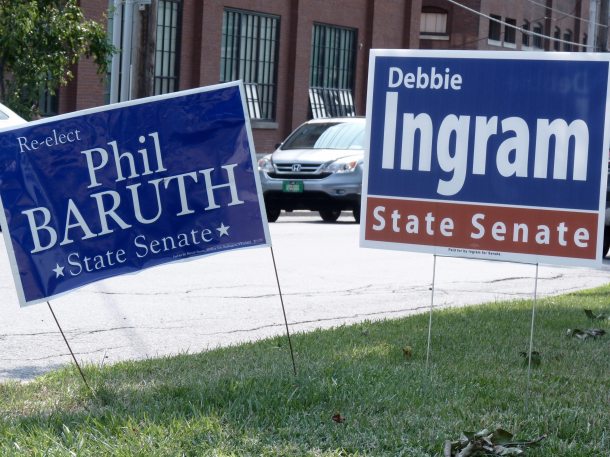
For newcomers, or politicians looking to move to a higher office, building name recognition means spending on things like mailings, lawn signs, print and social media advertising — especially Facebook — and ads on buses.
“The last thing we want on Aug. 10 is to have any money in our (campaign) account,” said Faisal Gill.

Gill, a Winooski business consultant who worked in the George W. Bush administration, is running his first campaign in Vermont. His spending of $20,744 is the second most after Pearson’s. He’s spent more than $12,000 on two direct mailings so far.
Gill, who emigrated to the U.S. from Pakistan as a child, ran for the Virginia House of Delegates as a Republican in 2007 but said he was pilloried for being “soft on immigration.” The experience sparked his Democratic conversion.
“It was just not for me,” Gill said of the GOP, adding that the party’s rhetoric against immigrants and Muslims has only grown more heated since his Virginia campaign.
Gill was thrust briefly into the national spotlight in 2014, when it came out that he was among several prominent American Muslims whose email was monitored by the National Security Agency.
Most candidates are also shelling out for mailing lists from the Vermont Democratic Party to target their mailings. A few are using left-leaning campaign services like ActBlue or NGP VAN to help organize supporters.
Targeting likely voters and keeping supporters engaged is especially important in a primary where turnout is expected to be dismal, according to the candidates.
Vermont moved its primary earlier this year, and several candidates interviewed for this story bemoaned the timing, saying early August is when many families take vacations or are busy enjoying the summer weather — not focusing on local elections.
Democratic gubernatorial candidate Peter Galbraith told Seven Days recently, “If you asked me to pick the worst day possible to hold an election, I probably would pick that date.”
When people aren’t paying attention, it generally favors incumbents, whose names are mentioned frequently in news reports and who are more likely to be invited to speak and participate in local events.

Candidate Debbie Ingram, executive director of Vermont Interfaith Action, said the two open seats made this an attractive cycle to launch another bid for Senate. She was the last one out in her 2012 run in Chittenden County.
“You have to seize the opportunities, because incumbents have such a strong advantage,” said the Williston Selectboard member.
Ingram said she hopes her previous campaign, and her work in the community, have helped her build awareness with voters. But she’s also spending money — $15,880 as of the last filing — on the trappings of a traditional campaign. She spent $14,289 in all of 2012.

“The power of incumbency is enormous, and I think we’re going to see that play out again this year,” said David Scherr, one of the newcomers in the race.
Scherr, a defense and family law attorney, who has chaired the Burlington and the Chittenden County Democratic committees, and has the backing of a number of party stalwarts. He’s spent $18,746 as of the filing deadline, largely in an effort to build name recognition with voters, he said.
Scherr said he doesn’t like having to spend so heavily to be competitive. “I don’t think you should have to rely so much on private dollars to win positions of public trust,” he said.
“That’s just sort of the nature of the beast,” he added. “Definitely everybody spent heavily on their first race. You’ve got to do it at least once to get through.”

Scherr appears to be right about that. Sen. Phil Baruth spent $36,583 when he was first elected in 2010. He’s spent less on each subsequent campaign: $20,770 in 2012 and $13,489 in 2014.
This cycle Baruth is one of three incumbents who hadn’t spent a dime as of the July 15 filing deadline. However, Baruth is organizing an Aug. 4 rally to push for universal background checks on gun sales that is expected to draw a number of statewide candidates.
Baruth has made gun safety a central issue of his time in the Senate, having introduced an assault rifle ban during his second term and worked to help pass firearms legislation this session.

The others with no spending by July 15, Sens. Ginny Lyons and Tim Ashe, are the longest-serving members of the delegation. They were the top vote getters in 2014, spending $8,327 and $6,259.
“Every election that I’ve been involved in with the Senate, the non-incumbents have usually dramatically outspent the incumbents,” Ashe said.

When he was first elected in 2008, he said, the $18,000 he spent in that cycle was the most of any candidate in the race. The secretary of state’s online campaign finance database does not have records prior to 2009 for state Senate contests, so that figure could not immediately be confirmed. Those records are in the state archives.
Sirotkin, the one incumbent who reported spending money, had doled out $9,689. He said he expects the other incumbents are going to spend money on the primary, which would be reflected in their Aug. 15 campaign finance filings.
Recognizing that he had several serious competitors who were spending heavily, Sirotkin said he felt compelled to start campaigning earlier than his fellow incumbents.
“I feel like I have a partial benefit of incumbency. I’ve only been in office for three years, and I’ve only gone through one election, so I feel it’s important to get my name out there,” he said.
When it comes to Chittenden County’s Senate race, voters don’t typically enter the polling booth with six people in mind whom they passionately support, Sirotkin said, leaving them to pick at least a few candidates just because they recognize the name.
“The first hurdle is to make sure people know who you are,” he said.

Dawn Ellis, who was left on the cusp in 2014, said she sees the race differently. She’s focused on building awareness among voters in ways that don’t cost money. That’s reflected in the mere $4,292 she’d spent as of July 15.
“Signs don’t win elections,” Ellis said, paraphrasing research that was presented to her at an Emerge Vermont training. That’s the local chapter of a national group that aims to cultivate Democratic women to run for office.
She pointed to the fact that in the 2014 general election, 47,829 voters cast 186,857 votes for Chittenden County Senate candidates. That means, on average, each voter selected four candidates.
Ellis said her reading of that data is that, while some voters are selecting six candidates, others are casting only one or two votes for candidates whom they feel strongly about. That’s led her to focus on cultivating impassioned supporters.
“We’re running a people-powered campaign. We’re talking to people and getting them energized,” Ellis said, adding that the volunteer hours her supporters put toward getting out the vote won’t show up in campaign finance reports.
Ashe said he too believes building personal connections with voters is important, and it’s part of the reason he attends as many public meetings and events across the county as possible, both as an observer and participant.
Though he said he does plan to start spending before the primary, mostly on small mailings to likely voters, it’s newcomers or those seeking higher office who have a greater need to spend to build name recognition, Ashe said.

Part of what makes incumbents so formidable is they’re working on behalf of constituents throughout much of the year, he said, which, if done effectively, creates goodwill with voters that can’t be bought.
“I work very hard to communicate with constituents the entirety of my term,” he said. “You hope that being returned to office is a reflection of that activity.”
Two other Democrats are on the ballot for Chittenden County Senate. Dr. Louis Meyers, a physician who recently moved to Williston, made an abortive bid for lieutenant governor before switching to the Chittenden Senate race. Meyers has spent $5,921 on his Senate campaign, mostly on radio advertising and advertising on VTDigger.org.
Nick Cook, of Jericho, is also on the secretary of state’s candidate list for the Chittenden County Senate race. He reported spending $129 on “media brochures.”