

[L]egislators may require Vermont’s professional foresters to become licensed by the state, but foresters say the proposal isn’t needed and will raise costs.
State officials say Vermont’s forests are so important that government should ensure they are managed according to sound practices. Supporters of the proposal also say it would protect landowners and their land.
A study last year by the secretary of state found that forestry met the legal criteria for regulation, which involve protecting the public welfare.
The proposed licensing law, H.355, passed the House last year and was referred to the Senate Government Operations Committee in January. That panel took testimony on it last week.
The bill would set forth education requirements that some foresters say their colleagues don’t have and aren’t likely to get.
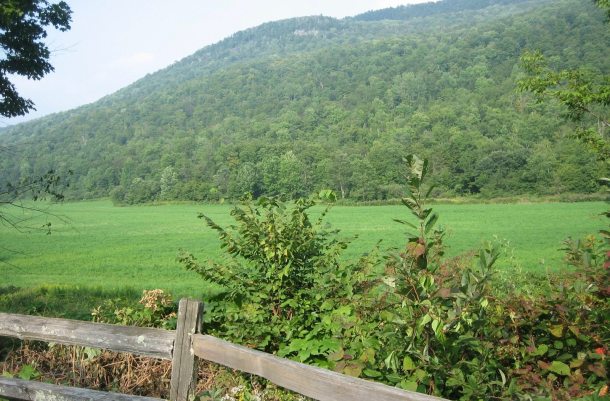
Vermont is the fourth most forested state in the country, with woods covering 78 percent of its area, according to the secretary of state’s report. Around 80 percent of this land is held under private ownership.
About 50 percent of all Vermont’s forests are managed under the state’s “current use” program, said Chester-based forester Robbo Holleran. The program reduces taxes on certain undeveloped land.
Forested acreage in the program must be managed following a land-use plan approved by one of the state’s county foresters, Holleran said. Almost every Vermont logger makes a living according to the terms of these plans, he said — meaning that a state-approved, professional forester already manages most forested land in Vermont.
In fact, Holleran said, this and other components of the state’s current use program have helped improve the quality of Vermont’s foresters, to the point that today they’ve developed a reputation for their ability and professionalism.
Beyond that, he said, many foresters will leave the profession if required to get a license.
Other foresters told legislators that many loggers who know from decades of experience how to manage a forest lack the education the bill would require for a license.
But even among the foresters who’ve studied the craft in college, Holleran said, many of the state’s good ones do it on a semi-retired basis after having led long professional careers in the woods. If required to seek an education to continue practicing, “they’ll say forget it,” Holleran said.
The education requirements aren’t unusual, at least among the few states that require foresters to be licensed, Holleran said. Forty-two states don’t require licensing for foresters.
The requirements include two years of experience for those with a four-year forestry degree; three years of experience for those holding a bachelor’s degree in a forestry-related field; or four years of experience for those with a two-year forestry degree.
Currently the state has no education requirements for those claiming to be a professional forester.
And some take advantage of unsuspecting landowners. The secretary of state’s report describes several instances where people acting under the title of “professional forester” managed lands not for the health of the forests, but for their own enrichment.

That’s what concerns Forests, Parks and Recreation Commissioner Michael Snyder.
“It’s about recognizing the critical importance of forests, and the role foresters play, in protecting, maintaining and managing forests for multiple benefits, and protecting the public — principally Vermont landowners,” Snyder said.
Most of these landowners are families and private individuals, not corporations, Snyder said. For these landowners, their property often makes up their largest and most valuable asset, he said.
It’s the state’s statutory duty to conserve Vermont’s forests, and that’s impossible when the owners of most of that land have no assurance that whomever they’ve hired holds the necessary qualifications, Snyder said.
Many forestry organizations support the move to licensing, Snyder said, naming groups like the Society of American Foresters, the National Association of State Foresters and the Vermont Woodlands Association.
Holleran said other components of the bill trouble him, aside from the education requirements. For instance, one provision would allow the state to revoke a forester’s license for “unprofessional conduct,” which includes being “habitually intemperate or addicted to the use of habit-forming drugs.”
This alone would raise uncertainty for many loggers about their licenses, Holleran said.
“I’m personally addicted to nicotine and caffeine, and according to that, my license will be in jeopardy the first day,” he said.
The National Bureau of Economic Research has published research suggesting that licensure requirements drive up the price of a trade by around 15 percent.
If the bill passes, said Holleran, “I’m absolutely going to get licensed, and immediately raise my rates by 15 percent, and so will everybody else, and that’s bad for forestry in Vermont.”
Correction, April 25, 9:20 a.m. The Society of American Foresters was misidentified as The Society of Professional Foresters in an earlier version of this story.

