

Editor’s note: This story was updated March 22 at 1:43 p.m. and 7:15 p.m. with new information.
[B]URLINGTON — A standoff lasting several hours ended Monday night when police fatally shot a man in his downtown apartment who was threatening to kill himself or his neighbors, officials say.
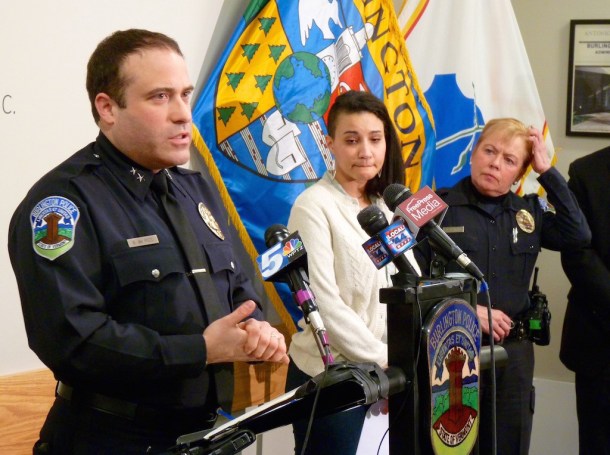
The man was facing eviction from his 101 College St. apartment, suffered from mental illness and was not properly medicated when police confronted him, said Burlington Police Chief Brandon del Pozo during a Tuesday afternoon news conference.
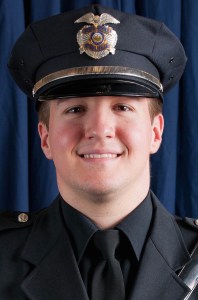
Vermont State Police identified the dead man as 76-year-old Ralph “Phil” Grenon. Police said the officer who shot him was 23-year-old David Bowers, who joined the Burlington Police Department in July 2014. Bowers was placed on administrative leave after the shooting.
Detectives with the state police are investigating the shooting. State police will submit a report on the use of lethal force to the Chittenden County State’s Attorney and the Vermont Attorney General, who will decide whether to file charges.
Del Pozo said officers followed national best practices for de-escalating a standoff situation and used every nonlethal tool available to try to reach another resolution. He said he wished the situation had ended differently but that there was nothing rushed or cavalier about how his officers handled the incident.
The chief said he is confident the state police investigation and body camera footage from the incident will confirm officers’ version of events and illustrate the lengths they went to when trying to take Grenon into custody without harming him.
The body camera video is with state police, del Pozo said, and likely won’t be released until after their investigation, but he added that he would like for it to become public as quickly as possible.
Police said the incident began unfolding after a crisis worker with the Burlington Street Outreach Team requested an officer’s company when checking on Grenon on Monday evening, because the worker no longer felt safe meeting him alone. The outreach team is composed of civilian mental health professionals working for Howard Center, Vermont’s largest social service nonprofit.
The outreach team member and neighbors later interviewed by police said Grenon had been acting menacingly for weeks and had repeatedly threatened his neighbors, according to police.
At roughly the same time as officers were en route to Grenon’s apartment with the crisis worker, the property manager in Grenon’s building called police to say Grenon was making threats to kill his neighbors, police said.
Grenon refused to allow the officers into his apartment when they arrived just after 5 p.m. When they entered the apartment, he was brandishing two large kitchen knives, police said. Grenon ignored officers’ commands to drop the knives, and a Taser fired by one officer did not connect before he closed the door, police said.
Over the next five hours, officers and two crisis negotiators were unable to communicate with Grenon, who did not say a word throughout the entire ordeal, according to del Pozo. The chief returned early from training in Pittsford to take command of the scene, arriving around 8 p.m. Repeated attempts to coax Grenon out of the apartment were also unsuccessful, the chief said.
Police drilled holes in Grenon’s door to see if they could see him with a camera to determine if he was injured, and other officers watched the apartment from the building across the street for signs of movement.
When they became unsure if Grenon was still alive, officers entered the apartment hoping to check on his well-being, according to police. Officers entered with tactical shields, announcing their presence. They discovered Grenon in his bathroom with the shower curtain drawn, still holding at least one knife, police said.
Officers backed away and continued to urge Grenon to come out of the shower. At one point they used “pepper balls” to try to get him out of the bathroom, police said. They retreated from the bathroom at least twice, while urging Grenon to drop the knives and come out, del Pozo said.
When officers approached the shower for a final time, they say, Grenon thrust one of the two knives he was holding at an officer, who struck him with a Taser. Grenon was still able to step out of the shower toward officers leaving the bathroom, police said.
Del Pozo said Grenon appeared “impervious” to the Taser. Body camera footage will show that Grenon was not halted by the Taser, he said.
Bowers shot multiple times as he backed out of the bathroom into an adjoining bedroom, striking Grenon, according to police. Grenon was taken by emergency responders at the scene to the University of Vermont Medical Center and was pronounced dead at 10:02 p.m., police said.
Del Pozo said he was in the apartment but did not see the shooting. He could not say how many times Grenon was struck. Grenon’s body was taken to the medical examiner’s office for an autopsy Tuesday, the results of which should show how many times and where Grenon was hit with gunfire.
Asked by reporters why officers didn’t try to wait Grenon out in order to avoid a confrontation in the cramped apartment, del Pozo said it seemed unlikely that more time would change the situation.
“Waiting is not a plan, it’s part of a plan. Successful waiting is contingent on having some idea of a resolution,” he said.
“Someone who is irrational … you can’t just wait them out to become rational, and it’s a balance: The longer you wait, the longer the risk they may harm themselves,” del Pozo said.
The chief said Grenon’s killing raises larger questions about timely access to mental health treatment and acute psychiatric care, something the state has struggled with for years. Grenon’s mental state and behavior were reportedly devolving over a period of weeks, del Pozo said.
“How long is a person like that allowed to remain on the street without getting inpatient psychiatric care?” del Pozo asked. “I mean, I’d love it to be a shorter amount of time, because the more that happens, the less we’ll be having these press conferences and the less I’ll be sitting here deciding at what point do I send a 23-year-old officer and his team into a tiny apartment to try to save someone.”
In an interview Tuesday afternoon, Burlington Mayor Miro Weinberger said his thoughts were with Grenon’s family and friends and that he wished the incident had ended differently.
Burlington police officers acted deliberately and with patience during a trying situation that put several of them in harm’s way, he said, adding that his thoughts are also with those officers.
“From everything I know at this point, pending the Vermont State Police investigation, I believe the Police Department, led by Chief del Pozo, took many steps to avoid the use of lethal force. Those steps were informed by recent training and awareness of national best practices,” Weinberger said.
In addition to the state police investigation, there will be “considerable internal review” of the body camera footage to assess what, if anything, police could have done to avoid using lethal force Monday and what additional resources might help avoid police killings in the future, the mayor said.
Grenon’s killing is the second time in three months that police have fatally shot a city resident at home. On Dec. 22 officers with a drug task force raided the Elmwood Avenue apartment of a suspected drug dealer. Two officers shot the man after police say he pointed a rifle at them.
In November 2013, Burlington police officers shot and killed a mentally ill man in front of his New North End home after the man wielded a shovel as he approached an officer.

