


[B]y no rational analysis will today, March 1, be in any way superior — one dictionary’s definition of “super” — to Feb. 29, which preceded it; to March 2, which follows it; or for that matter to the previous Tuesday, or the next one.
Like them, it will last 24 hours. It will have a little more daylight (11 hours, 16 minutes in Boston) than the previous days and a little less than the following days, but that’s just the way the Earth revolves.
True, no other date is the anniversary of the adoption of the Articles of Confederation, the creation of Yellowstone National Park, the birth of Frederic Chopin, or the death of English poet Thomas Campion. But the days before and after have their own events, births and deaths to observe.
It’s just another day, no more magnificent or sensational (to use two synonyms an online thesaurus provides for “super”) than any other.
In politics, though, it is “Super Tuesday,” because it is the day on which 13 states and territories — including Vermont — will hold presidential primaries or caucuses for at least one party.
Those events will choose 865 pledged Democratic delegates and 595 pledged delegates to the Republican National Convention. That’s more than 35 percent of the number of delegates a Democrat needs to get nominated (2,383, according to The New York Times) and more than 45 percent of the 1,237 the winning Republican needs.
That would make it a pretty super Tuesday under any circumstances. Under today’s political circumstances, it could be super super. It could be the day Donald Trump and Hillary Clinton effectively win the nominations.
“Effectively,” does not necessarily mean “indelibly.” In politics it is wise to expect the unexpected and to resist the temptation to exaggerate the importance of what just happened. What just happened can be reversed by the next thing that is going to happen, and nobody knows what that will be. There still may be paths for a Republican who is not Donald Trump to win that party’s nomination, for Sen. Bernie Sanders to outscore Clinton.
But those paths are narrow, and likely to become narrower tonight.
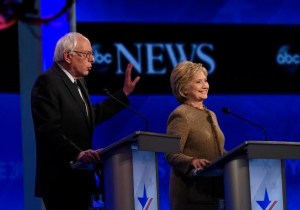
Sanders, for instance, is seriously competing in only five of the 11 states holding Democratic contests Tuesday (the Alaska caucuses are only on the Republican side). For his path to remain minimally passable, he will have to score big victories in all five: the reliable liberal redoubts of Vermont, Massachusetts, Minnesota, Colorado and Oklahoma.
What? Oklahoma is liberal?
No. That was a teaser. Oklahoma is quite conservative. But for two reasons, Sanders has a chance there. The first reason is that most Oklahomans, who used to be conservative Democrats, have become conservative Republicans. A lot of the remaining Democrats — union members, environmentalists, college professors and their students — lean left.
The other reason is that Oklahoma is only 8 percent African-American, and nothing was clearer from the results of Saturday’s South Carolina primary than how overwhelmingly — 86 percent to 14 percent, if the exit polls are correct — black voters supported Hillary Clinton.
That explains why she’s well ahead in pre-primary polls in Alabama (26 percent black), Arkansas (15 percent), Georgia (31 percent), Texas (12 percent) and Virginia (19 percent). In all these states, as in Oklahoma, most white voters now identify themselves as Republican, so the African-American turnout in Democratic primaries probably will be at least twice the percentage of the total population.
Together, these states have just over 500 pledged delegates. Democrats award most of their delegates by proportion of the vote per congressional district, and Sanders should win some delegates in most districts. But not as many. In South Carolina, he won 14 delegates to Clinton’s 39.
Sanders might do better in Texas, with its huge cache of 222 pledged delegates, than in the other Southern states. Texas has far more Hispanics (37 percent of the total population) than the other states, and if the results from Nevada are any guide, Hispanic voters are not as overwhelmingly pro-Clinton as are African-Americans.
But many of those Hispanics in Texas are not eligible to vote, and many who are eligible do not register. According to a nationwide survey taken by the Gallup polling firm in 2013, only 51 percent of eligible Hispanics were registered to vote in 2012, as opposed to 85 percent of eligible whites and 81 percent of eligible blacks.
Worse for Sanders, he’s behind in the polling in those Northern, largely white states — except in his Vermont home. He is only a few points behind and no doubt will get some delegates in all those states. But Clinton is likely to get about as many, perhaps more, and she is already well ahead of him in delegate support: 544 to 85, according to the Times.
This does not mean Sanders has no chance. It does mean that everything has to break right for him over the next few weeks. He is rather in the predicament of the poker player who has to fill an inside straight; unless every card dealt is the right one, he loses.
To stay viable, Sanders will have to score big wins in caucus states (Colorado and Minnesota are the Democratic caucus states today) where the process favors the candidate who attracts the most passionate supporters. Then he will have to score some victories in big states such as Michigan (March 8), Ohio (March 15) and Pennsylvania (April 26).
Right now, he is trailing Clinton in all those states. But he was trailing her in New Hampshire a few months ago and ended up beating her by more than 20 percentage points. So what he needs to do can be done. But it’s hard to see exactly how.
As to the Republicans, the polls show Trump leading in every Super Tuesday state except Texas, the home state of Sen. Ted Cruz. There, as in most of the other Super Tuesday states, Sen. Marco Rubio, of Florida, is running third and Ohio Gov. John Kasich is a distant fourth.
Trump is way ahead even in such traditional citadels of centrist Republicanism as Vermont and Massachusetts. Perhaps there is no more centrist Republicanism. Or perhaps the centrist Republicans can no more control the Trump juggernaut than can the conservative Republicans. Trump is neither a moderate nor a conservative. What he might be — at least until the convention this summer — is unstoppable.
