

[S]en. Dick Sears was stunned. The head of the Vermont chapter of the American Civil Liberties Union was surprised, too.
Sears, a Bennington County Democrat, and Allen Gilbert said they were shocked when prosecutors and public defenders, who are typically at odds over judicial matters, agreed this week on a singular issue: The retention of data from automatic license plate readers (ALPR).
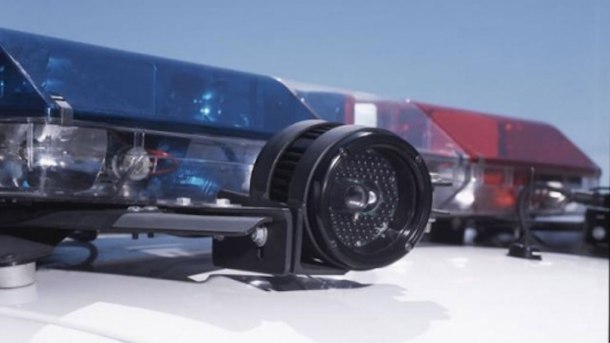
Proposed legislation would tighten regulations for use of the automatic readers. The cruiser-mounted technology alerts police when a car drives by with a license plate that has an offense associated with it.
Police often pick up minor violations, like driving with a suspended license. But because the records are stored in a database for 18 months, investigators can search for information about a particular license plate.
Gilbert of the ACLU opposes the lengthy holding period, and at one point Sens. Tim Ashe and Joe Benning, members of the Senate Judiciary Committee, considered a 24-hour limit on data retention. But after pushback from prosecutors and public defenders, the committee shifted back to the 18 month period.
The decision on the retention period comes at the end of four days of testimony on a privacy bill in front of Sears’ committee. The legislation, which Sears hopes to bring to the floor shortly after lawmakers return to Montpelier in January, tackles privacy issues associated with drones, cell phone data and health information.
This week, David Cahill, executive director of the Department of State’s Attorneys and Sheriffs, told lawmakers that the data can be useful “years down the road.” The information could prove critical in an investigation that has otherwise gone cold, he said.
Cahill found an unlikely ally in Defender General Matt Valerio, who heads Vermont’s public defenders.
Valerio told lawmakers he supports retaining license plate reader data because it can be valuable exonerating evidence.
“It allows us to prove an alibi defense,” Valerio said Wednesday, adding that an ALPR read coupled with cell phone data can be valuable for exoneration. “If you gave conflicting electronic data, you’d at least have reasonable doubt as to where the person was.”
Gilbert told lawmakers that a decision to store license plate reader data indefinitely would open the door for amassing other types of data about citizens, especially as technology makes storage more affordable.
“What you’re basically doing is making a decision that will have broad ramifications far beyond ALPRs,” Gilbert said. “You will be forced to accommodate the increasing collection of more and more data by government about us.”
Sears said he was swayed by Valerio’s argument about exonerating evidence.
“If there’s something that could exonerate somebody that’s in that license plate reader 20 years from now, would you want to destroy that information?” Sears said.
Drones, body cameras and cell phone data
Over the course of four days of testimony the committee heard from law enforcement, state officials and the public.
Burlington’s new police chief, Brandon del Pozo, said that there’s a need to implement laws on the technologies, but that any regulations need to give law enforcement the freedom to use the benefits of the technologies.
Several sections of the bill address law enforcement agencies’ use of technologies that are not widespread in Vermont. It would, for instance, require law enforcement to get a warrant before using a drone. At this time, no state law enforcement agency is using drones.
The committee also discussed adding a section that would regulate use of body cameras, which are in use in some municipalities, like Burlington. Most Vermont law enforcement agencies don’t have body cameras.
Concerns about citizens’ privacy “are real,” del Pozo said, but he cautioned against taking actions that might inadvertently limit law enforcement’s ability to take advantage of new technologies.
“All I ask is that the government and the Legislature consider regulations that address the specific privacy concerns that are at pace with the technology instead of just throwing a blanket over a nebulous fear of the technology,” del Pozo said.
The committee will meet in November to discuss a section of the bill that addresses the ability of law enforcement to access cell phone data without a warrant.
Vermont lawmakers will likely look to a recently passed California law for guidance on crafting a hierarchy of cell phone data, according to Sears. It would require a warrant for the contents of messages or voicemails, and a subpoena for so-called metadata, such as a call log.
A section that would empower individuals with a private right of action if information about their health was disclosed improperly split the committee. By a vote of 3 to 2, the committee Thursday opted to keep the section in the bill.
