

[T]he Obama administration has moved up the filing date for federal student aid applications in an effort to give prospective students a better idea of how much they will receive in grants.
The new procedure for the Free Application for Federal Student Aid (FAFSA) program changes the filing date from Jan. 1 to Oct. 1 of the previous year and allows applicants to submit an earlier year’s income information.
This will allow students to know how much money they are eligible for while they are applying to colleges and universities. Students considering colleges in the fall of 2016 will be able to take advantage of the new rules.
Currently, high school students considering colleges for the fall of 2016 have to wait until Jan. 1, 2016, to apply for federal aid – which includes everything from need-based grants to loans – and the government requires the family to provide income and tax information from 2015. This information isn’t filed until March or April of 2016 and many families wait until April or even May to fill out the financial aid forms.
Having to use the 2015 returns also means families often miss scholarship deadlines set by many states, colleges and organizations. In addition, most colleges expect potential students to make acceptance decisions and provide a deposit by the first week in May. For example, families could use their 2014 tax information under the new rules.
“This is one of the most important financial decisions families will make and many feel very stressed,” by the time crunch, said Scott Giles, president and CEO of the Vermont Student Assistance Corp.
The new system will allow applicants to apply as early as Oct. 1 and use what is called “prior-prior-year” tax information, buying months of additional time for decision-making.
“The group this could have the biggest impact on are those applying for early decision,” Giles said.
If students are pursuing early acceptance to college and they can now use prior-prior tax year, they will no longer have to update their income data after tax season. Colleges also gain precious time because they can eliminate the lengthy process of verifying each applicant’s information.
Giles explained it this way, “I can now, in the fall of my senior year fill out financial aid forms [in October with prior data] and know going into my exploratory and application process how much money I’m entitled to get from the federal government in terms of grants,” Giles said.
This can make a big difference to students applying for college because they can immediately see that they qualify for a set amount that can be applied to the tuition.
This is the latest move to help make filing the 100-plus-question form known as FAFSA more palatable. The clunky questionnaire with 88-pages of instructions has been known to be a stumbling block to potential college students.
A study performed by H&R Block found that when low-income families were offered assistance in filling out the FAFSA, and then given help estimating the cost – after expected aid savings were factored in — of nearby colleges, submissions increased as did the likelihood that students would attend college.
The Obama administration has also simplified the application by moving it online and adding skip logic and IRS data retrieval that prefills answers to questions and allows applicants to bypass many more.
“What used to take an hour now takes 20 minutes,” Giles said.
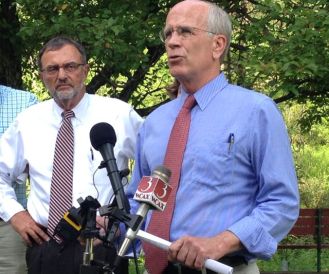
The Higher Education Act is up for reauthorization and Welch has made it clear he will continue to support methods to better access federal aid.
“I will be working to further simplify the application process to remove this bureaucratic roadblock for Vermonters on the path to a college degree,” Welch said.
But there is still more that Vermont can do to help make the grant process smoother, according to Giles. He would like to see the Legislature change the timing of appropriations to make grants more predictable for prospective students.
“In Vermont, we don’t know until the March prior to the coming academic year what our appropriations will look like,” he said.
Because the academic year doesn’t line up with the financial calendar the appropriations are not in place until the spring before an approaching school year.
“I couldn’t make awards until the April-May period,” for students approaching their first year of college, he added.
The federal government appropriates money for the Pell Grant Program a year in advance so that when they are awarding aid for the following academic year they know how much is in the pot. Giles says it would help if Vermont were to move to a similar practice.
