

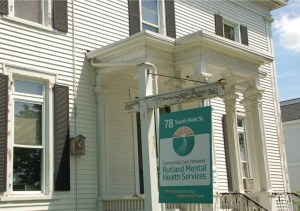
[S]tate officials have accepted a plan from the social service nonprofit serving Rutland County that is expected to improve its management, work culture and the care it provides to people in the region.
Rutland Mental Health Services will have until early February to successfully implement the plan or it could lose its designated agency status — and the state money that comes with it. Designated agencies are nonprofits that are granted exclusive contracts to provide mental health, developmental disability and substance use services for a specified region.
Eleven designated agencies in Vermont receive more than $300 million annually from the state. Ninety-nine percent of Rutland Mental Health’s money comes from the state, either through grants or Medicaid payments, according to a consultant’s report. In fiscal year 2013 that amounted to $28.3 million.
Designated agencies provide crucial services to the state’s most vulnerable, but their dependence on lower-than-cost Medicaid payments and state grants means their workers earn as much as $15,000 less than comparable state employees, according to a trade group that represents them.
That can result in difficulties for any designated agency, but in an interview Wednesday, Department of Mental Health Commissioner Frank Reed said what set the problems at RMH apart from those intrinsic to social work were the “number of shortcomings across their programs.” DMH is working closely with the Department of Aging and Independent Living to help the nonprofit comply with the state standards for care.
State officials began expressing concern with the quality of services at RMH nearly two years ago, but the issue came to a head in December, when then interim Agency of Human Services Secretary Dr. Harry Chen sent a strongly worded letter to the nonprofit’s board of directors.
In June, former CEO Dan Quinn resigned under pressure from the board and state officials. Board members, former employees and others close to the situation said during Quinn’s eight-year tenure the organization’s relationship with the state and staff morale deteriorated.
That contributed to a number of situations in which RMH clients were abused or neglected. A hostile and retaliatory work environment, captured in a staff survey conducted by the state earlier this year, fueled high turnover rates and exacerbated waiting lists for services.
In August 2014, a 13-year-old girl took her life after waiting nearly six months to get into treatment with RMH.
Part of the nonprofit’s plan includes steps to reduce how long young people wait for treatment, better procedures for staying in contact with families while they await treatment and offering crisis services regardless of whether the person has entered treatment.
RMH will also step up monitoring and training of its contractors who care for adults with developmental disabilities. The agency contracts with close to 70 individuals who care for RMH clients in their homes. In the past two years, clients in those settings have experienced neglect and abuse with one person hospitalized after a near fatal overdose.
Other elements of the plan require greater geographic diversity on the RMH board of directors, calling for members outside the city of Rutland; greater access to the board for staff, stakeholders and clients; a formal grievance policy for staff; and greater education for clients as to their rights as a patient. Those steps are meant to address the negative work culture that developed under Quinn’s leadership, and ensure clients have a voice in their treatment.
State officials say they are optimistic that the agency can complete its goals and return to compliance with the terms of its grant agreement.
“The change in leadership has provided a different tone for engagement,” Reed said.
The plan calls for a broad range of data and outcome monitoring as well as new or improved training for much of the organization’s staff. That work will need to be undertaken within RMH’s existing budget, as state officials said they will not be able to offer the agency more money.
The state will provide “enhanced support and technical assistance” during the six-month implementation phase, said Monica Hutt, commissioner of the Department of Aging and Independent Living. Each element of the RMH plan will have a state employee assigned to monitor and assist with its implementation, Reed said.
Starting at the end of September, there will be day-long monthly meetings between state officials and RMH management, as well as separate meetings with staff and clients, to ensure that practices are changing and care is improving, according to the commissioners.
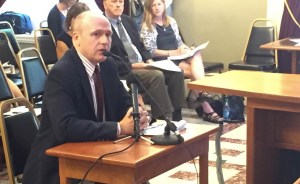
Newly appointed RMH CEO Dick Courcelle, who started when Quinn left in June, acknowledged that making these changes within an already constrained budget will be a challenge, but he added that his organization will be focused on doing things differently and becoming more efficient.
RMH still has “a number of openings,” including some senior leadership positions vacated due to retirements, but understaffing is a “chronic problem” for designated agencies and not unique to Rutland.
“If you open up the newspaper anywhere in the state and look at the job postings you’ll see that many are for work with social service nonprofits,” Courcelle said.
Courcelle said despite the challenges, he looks forward to working with the state to improve the care Rutland Mental Health provides to more than 3,000 people in Rutland County.

