

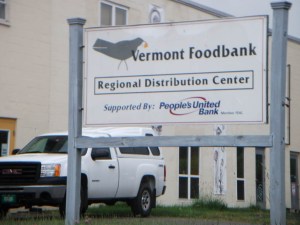
Vermont consistently tops national “healthiest state” rankings, either as No. 1 from 2009 to 2012 or No. 2 (after Hawaii) the past two years, based on such factors as its comparatively low rates of child poverty, physical inactivity and violent crime.
But a healthy state can also be a hungry one. The Great Recession may have officially ended in 2009, but the Foodbank has seen its client totals nearly double in the past three years.
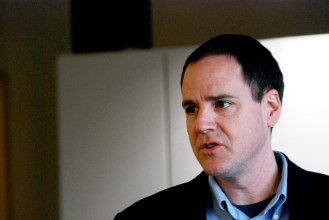
“You think about a homeless guy under a bridge shuffling through a garbage can, but that’s not the face of hunger in Vermont,” says John Sayles, the nonprofit’s chief executive officer.
Many Foodbank clients “have jobs, raise families, work toward education and struggle with health problems, like all of us,” Sayles says. That’s why the state’s largest hunger-relief organization is flummoxed and frustrated that a growing number of policymakers and the public keep citing a 2013 Fox News report about a West Coast surfer who cashed in his food stamps for lobster.
The national Feeding America network’s most recent “Hunger in America” report — available at vtfoodbank.org — shows in Vermont:
• Of the 153,000 people served by the Foodbank, more than 20 percent are children and nearly the same number are seniors, while almost one-fifth of participating households include a military veteran.
• Some 60 percent of Foodbank households report at least one member employed in the past year, although that job was nearly six times more likely to be part-time in a market of less full-time work.
• Some 70 percent of households report purchasing unhealthy food because they can’t afford better options, while more than half have faced a choice between paying for food or housing, related utilities or medical care and a quarter have pawned or sold personal property to eat.
“The results of this study show us that the face of hunger is one we might recognize,” Sayles says. “Too often, our clients have to make difficult tradeoffs to get enough food.”
Enter the Foodbank. The statewide distributor for 225 community cupboards, shelters, senior centers and afterschool programs began in 1986 to boost efficiency by collecting directly from suppliers. The nonprofit negotiates deals with manufacturers and distributors, contracts with local farms to grow and glean produce, and collects meat, dairy and other perishable donations from supermarkets and restaurants.

“Our individual donors are our bread and butter,” Sayles says.
But despite the nonprofit’s productivity — it spends 91 cents of every dollar raised on direct services, as confirmed by a four-star rating from the watchdog website charitynavigator.org — people aren’t donating like they used to.
Foodbank contributions remained steady with the start of the recession in 2008 and swelled in the wake of Tropical Storm Irene in 2011. But the organization has faced budget shortfalls in subsequent years (“Vermont Foodbank Needs To Raise $600,000 By Jan. 1,” one news release began last Dec. 30) even as demand for its services continues unabated.
“This is not just us,” Sayles says. “Foodbanks across the country are seeing changes in giving.”
Obama sparked headlines last month when he criticized Fox News for portraying the poor as “leeches” rather than people who are “doing everything right but still can’t pay the bills.” The Foodbank is facing a similar public relations challenge: How does it spur Vermonters to help when further mention of the problem is sparking an increasingly apathetic or skeptical response?
At the organization’s recent Hunger Action Conference in Killington, several representatives of community cupboards said they were talking less about eliminating “hunger” for a percentage of the population and more about ensuring “healthy access” and “food independence” for all.
The Foodbank also is trying to change the conversation.
“Many Vermonters still need to know there are a lot of people who struggle with hunger,” Sayles began an interview with this website.
The chief executive officer then paused and rephrased that.
“Many Vermonters still need to know there are a lot of people who struggle with not having enough money for food. They’re working very hard but aren’t able to make ends meet.”
For Sayles, income inequality isn’t just about the richest 1 percent and everyone else, but also those who can afford their next meal and those who can’t.
“There can be a real lack of knowledge and empathy about how some of our neighbors are struggling and having to survive. I encourage people to go to a food shelf and ask questions with an open mind. Someone who’s repeating the lobster story doesn’t have conversations with someone who knows differently.”
Sayles hopes Vermont U.S. Sen. Bernie Sanders’ presidential run will expand the dialogue statewide and nationally.
“It’s great to have him talking about poverty,” the chief executive officer said.
The Foodbank intends to add its voice, too.
“People give with their hearts, not because of statistics,” Sayles says. “How do you connect with them? We’ll be looking for all kinds of opportunities, trying to find more platforms to get our message out.”
Kevin O’Connor, a former staffer of the Rutland Herald and Barre-Montpelier Times Argus, is a Brattleboro-based writer. Email: kevinoconnorvt@gmail.com
