


A St. Johnsbury defense attorney wants to stop implementation of the new statewide pretrial services program because he says it violates a person’s constitutional right against self-incrimination.

Lawyer David Sleigh on Dec. 30 filed court documents to halt the roll out of the state’s pretrial services program. He is requesting an injunction against the new system, which was created last year by the Legislature. The program is designed to funnel people from court into substance abuse treatment and other services.
Sleigh asked the court in Orleans County for a temporary restraining order against the pretrial program on behalf of his client, Adam McAllister, whom he believes would be subject to the program. Sleigh filed similar requests in two other counties, he said Friday.
A judge dismissed the request for a temporary restraining order but proceedings on the request for a preliminary injunction moved forward Friday.
Assistant Attorney General Jon Rose represents the state. The parties met Friday for a status conference and scheduled another hearing in a month, they said. Sleigh intends to take the matter to trial. Rose said he believes it can be settled through motions.
Sleigh said he intends to depose the statewide coordinator of the pretrial services program, Annie Ramniceanu, who was hired in September.
Bobby Sand, a former state’s attorney and special assistant to the governor who largely crafted the pretrial program, referred comment to Rose.
Rose said he received the Sleigh’s motions just this week and was not prepared to comment.
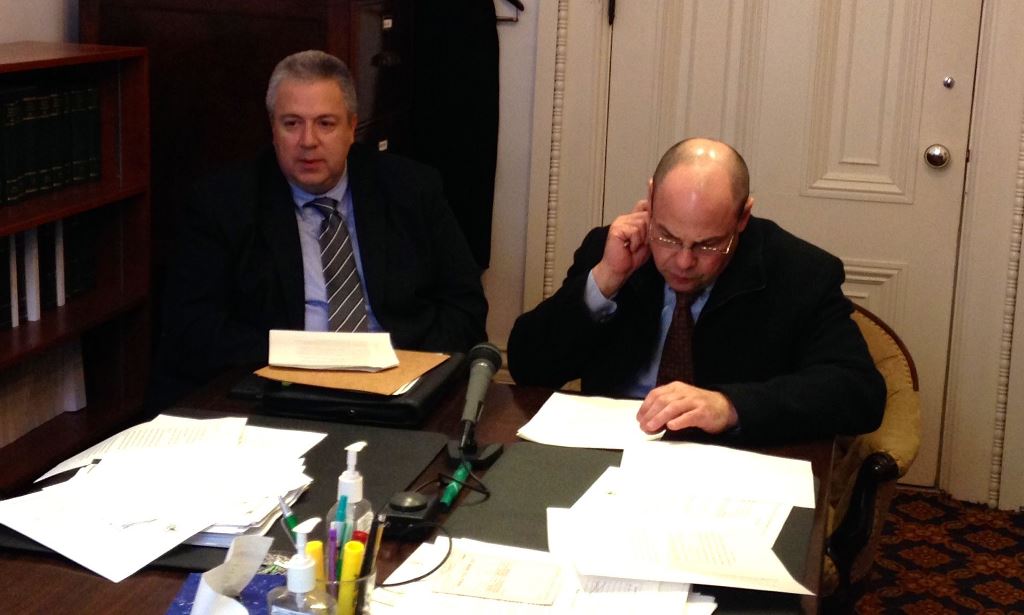
Defender General Matthew Valerio said he supports pretrial services because they are voluntary, the information gathered is confidential, and people who participate are immune from new charges based on information from the assessment.
Roll-out of the program is underway, led by Ramniceanu, but the program is not yet in place statewide.
The pretrial system is set to be implemented in four phases for people who would be eligible, beginning with those charged with so-called “non-listed” felonies, which include theft, fraud, unlawful mischief, some drug charges and DUI as a third offense.
The program involves a series of seven questions asked to a person charged with a crime, often asked before the person is arraigned. The goal is to find out more about the person so the state can refer them to helpful programs.
Sleigh says the attempt to address a “public-health crisis” through the criminal justice system “misguided.”
“Instead they go through the back door and try to use the judicial system as a sort of stick to get involved in people’s lives,” Sleigh said in a phone interview Friday.
The risk assessment’s seven questions focus on a person’s criminal history, employment status, residential situation and substance abuse.
But the score sheet for the risk assessment Vermont is likely to use also includes questions about a person’s language, ethnicity, cultural barriers, anxiety and “other,” Sleigh said.
In court documents, he argued that the pretrial services starts with the presumption that a person is guilty, or has something wrong with him or her.
“In short, these materials raise serious questions about whether, by design or practice, a pretrial inquiry into a person’s ‘criminogenic needs’ will be anything less than an unfettered review of a person’s thoughts, beliefs, relationships, lifestyle and so on,” Sleigh’s complaint says.
The program also presumes an unhealthy level of collaboration between prosecutors, defense attorneys and judges, the complaint argues, he argues. The justice system is designed to create an adversarial relationship between the defense and the prosecution.
“The judges are supposed to be independent magistrates regulating the executive branch’s attempt to limit liberties (of defendants,)” Sleigh said.
Sleigh also argues that the pretrial services program attempts to subject a person to a risk assessment before he or she has an attorney.
Act 195 suggests that arrangements for an attorney for a person be made only if the risk assessment happens after arraignment and it is unclear whether defense attorneys will be notified of pre-arraignment assessments, Sleigh wrote.
He also argued that the risk assessment, while technically voluntary, could violate a person’s constitutional right against self-incrimination. Risk assessments are voluntary unless ordered as a condition of release, according to the law.
A person’s refusal to participate in a “voluntary” assessment could risk a prosecutor seeking harsher conditions of release, Sleigh argued.
“The notion that (Act 195) will start a benevolent project to benefit the public welfare, or that such a thing could be maintained, is a fallacy,” he wrote.
With regard to Sleigh’s argument that courts are not a good place to deal with public health, Valerio said “in an ideal world he’s exactly right, but we don’t live in that world.”
Valerio said the program will likely benefit at least 80 percent of people who participate, even though there is a possibility of misuse.
Valerio said he might file a complaint about the system if he could point to an instance of abuse, but so far the program has not begun, he said, so it doesn’t make sense to stall it.
“I wouldn’t want to throw the baby out with the bathwater here,” Valerio said.
