


After listening to hours of painful personal stories, lawmakers said they need to do more to ensure psychiatric patients receive appropriate care and support services.
Vermonters suffering from mental illness and family members testified at a public hearing Thursday night on the state’s involuntary treatment process. More than 30 people spoke at the hearing on S.287, a bill before the Senate Judiciary and Health and Welfare committees, which seeks to streamline the judicial review process for orders of involuntary medication.
Sen. Dick Sears, D-Bennington, who chairs the Judiciary Committee, was struck by how long it takes for patients to go through the involuntary treatment process.
He said he recognizes that forced medication can be devastating for patients, but said he didn’t believe S.287 would lead to more involuntary medication orders and, if anything, would lead to quicker court rulings.
The committees have heard testimony from clinicians, members of the judiciary and the attorneys involved in the involuntary medication process, but Thursday night was an opportunity for members of the public to share how the process has affected their lives.
Excruciating waits
Family members spoke of the terrifying and sometimes violent episodes of psychosis that precede involuntary commitment, which can involve police, handcuffs and occasionally harm to the patient or others.
They described the waiting period for courts to approve an order for involuntary medication as excruciating, while patients recalled the indignity of being restrained and injected with powerful psychotropic drugs as traumatic and often resulting in long-lasting harm.
Patients and families asked for a greater role in the treatment process.

Ron Powers and his wife, Honoree Fleming, told how their son, 32, suffers from schizophrenia. In September, he suffered a psychotic breakdown and was taken against his will to Rutland Regional Medical Center, Powers said.
Their son was placed in an emergency department bed, in a room with no windows, no television and no books, Powers said. He spent 11 days in the room, waiting for a bed to open up in the psychiatric ward, despite the three-day limit set by law.
“He didn’t believe he was ill so he refused medication,” Powers said. “Our current laws prohibited his doctors from overriding his delusion.”
After being transferred to a psychiatric ward, he continued to refuse treatment and it took 52 days before a judge approved clinicians’ application to have him involuntarily medicated, Powers said.
“When the injections were finally allowed to commence … my son’s psychotic state began to ease,” Powers said. “He is home again, calm but not cured.”
The damage he believes occurred to his son’s brain in that time could have been avoided had he been medically treated, Powers said.
Dr. Jarugumlli Brahmaiah and other family members shared similar stories.
Brahmaiah’s son suffered a mental breakdown, lost his job and went into a downward spiral, eventually refusing to eat before being committed to a psychiatric hospital, he said.
It took 45 days for him to receive involuntary medication, Brahmaiah said.
“You see the bruises, you see the safe rooms, you see the restraints, and it’s heartbreaking,” he said.
Potential for harm
Laura Sisson, a young woman who spent six years in the mental health system, said she was frequently medicated against her will during that period.
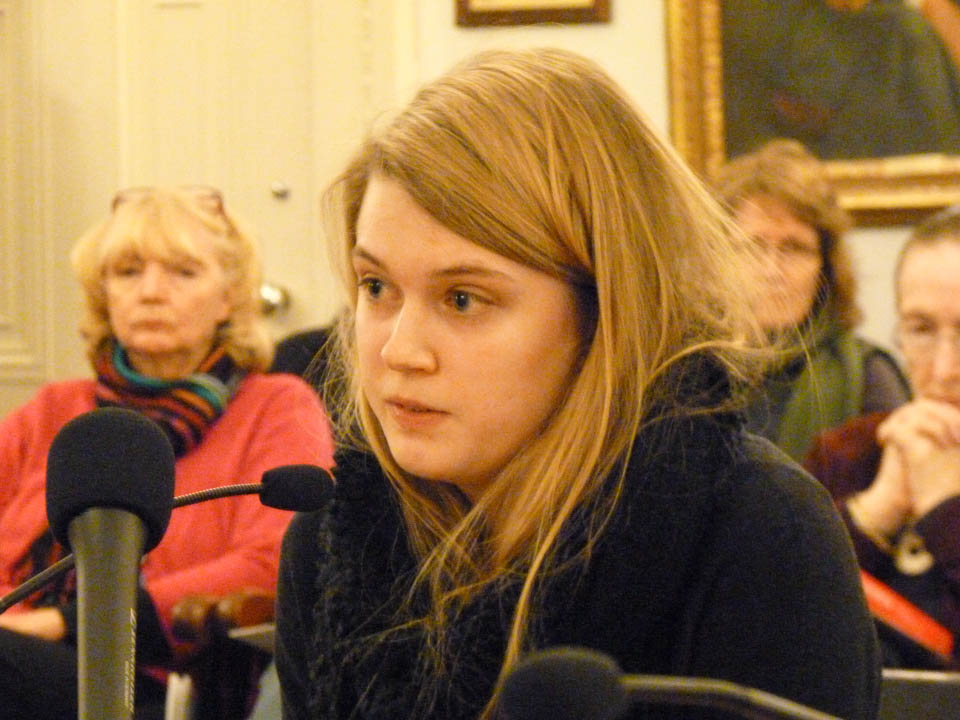
“I am here to talk about the great potential harm for anything that aims to reduce an individual’s voice in actions that are done against their body,” she said.
Sisson said she entered the mental health system at 15 with a diagnosis of a generalized anxiety, which was eventually amended to schizoaffective disorder.
“What none of these diagnoses could tell you is that I had experienced early and repeated sexual trauma that was deeply connected to all the symptoms that the mental health system was insisting be managed by medication,” she said. “Each time I was forced to take that medication against my will, all it served to do was further entrench the message that I had no power or control over my body.”
Sisson said many psychiatric patients have a history of trauma, and removing barriers to medicating them involuntarily runs the risk of causing deep and lasting harm that could outweigh any therapeutic value of medication.

Luke Shalen, 33, said he was diagnosed with schizophrenia eight years ago. He said it was his first time speaking publicly about his condition.
Shalen has had three hospital admissions in that time. In each instance, he said he had no memory of the events that triggered his hospitalizations.
During all three hospitalizations he was medicated involuntarily, he said.
“My experiences with medication, to the extent that I could process them, have been unsuccessful traumatica and a personal violation,” Shalen said.
Upon admission, there was no opportunity for him to participate in developing a coherent treatment plan, and the decisions to medicate him occurred at hearing he was unable to attend, he said.
Afterward he was discharged with no life plan or guidance on a path forward. The hospitalizations left him with no insight into his illness, he said.
“I had been medicated but I had not been treated,” he said. “I had learned nothing from these experiences except that I never wanted to have them again.”
Shalen urged lawmakers to provide alternative mental health treatment options, rather than accommodating hospitals by making it easier to medicate their patients involuntarily.
‘It has been hell’
Christina Schumacher, who was committed to Fletcher Allen Health Care the day after authorities say her estranged husband killed their son before taking his own life, gave a fiery, profanity-laced condemnation of the involuntary treatment process.
Schumacher was recently released following a five and a half week involuntary commitment. She signed up to speak under the pseudonym Nitro, and testified wearing a hat and dark sunglasses.
“The bottom line is no one should have to endure the death of their son, the death of their husband and then put in that situation,” she said.
Schumacher credited an attorney with the Disability Law Project for helping her to understand her rights and empowering her to stand up to the clinicians.
“I fought for my rights and I’m out of there,” she said. “No one should ever have to endure what I’ve gone through, it has been hell.”
Her words drew applause from the audience and disrupted the hearing. Sears immediately called for a five-minute break.
Caregivers concerned about their safety
Vicki Mendick, a psychiatric nurse at a local hospital, said she chose her profession out of love and compassion for the mentally ill, but said recently she’s become concerned about her safety.
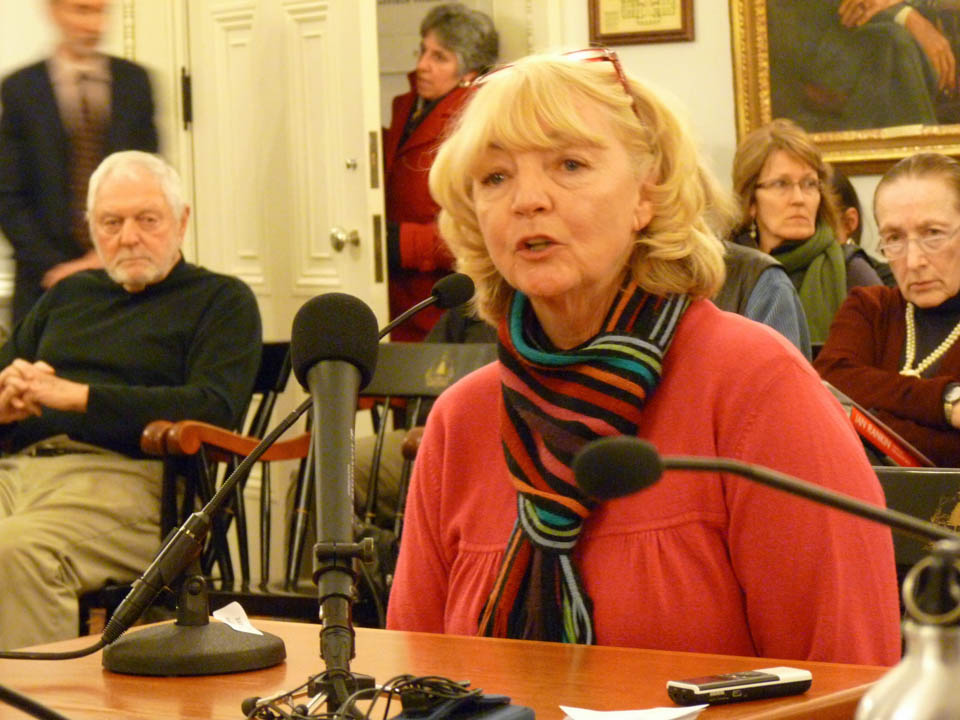
“We’re being hurt as clinicians,” she said. “We’re being injured on the job.”
She had never been hurt by a patient in 17 years, but twice in the past two months Mendick said she was attacked by a patient.
One patient slammed a door on her hand, the other kicked her in the face. The woman who kicked her spent 3½ hours in restraints without medication. When she was released, the patient kicked her again, Mendick said.
“In my experience, a patient who is involuntarily medicated, with the proper medication, will calm down and be allowed to be escorted back to their room within 15 minutes,” she said. “To allow someone to languish in four-point restraints for that amount of time is inhumane in my opinion.”
Federal laws allow patients who present an immediate danger to themselves or others to be chemically sedated. It was unclear if that was an option in the situation Mendick described.
However, she said she believes it is also inhumane to allow someone to languish in a hospital for months at a time.
Streamlining the process so patients with acute psychosis can access inpatient beds, get treatment and be released for continued treatment in the community should be the priority.
“Putting a person in the hospital and then not being able to treat them, among my colleagues and I, is unconscionable,” she said.
Attorney Barry Kade, who testified toward the end of the three-hour hearing, said those who spoke clearly illustrated that the system is broken, he said.
He said the testimony also revealed to him that some patients react well to psychiatric drugs, while others are traumatized and experience lasting harm.
“This bill rearranges the deck chairs on the Titanic,” he said.
He doesn’t see anything in the proposed law that would give a judge the tools to distinguish between the patients who would be helped from those that would be harmed by voluntary medication, he said.
Lyons, who serves on the Health and Welfare Committee, said she understood the urgency from families to get their loved ones through treatment, as well as the patients’ aversion to involuntary medication.
Given that most involuntary medication orders are resolved without a court order, Lyons said she wasn’t sure allowing involuntary treatment and medication applications to be filed at the same time — as S.287 would — is a good idea.
“I think the bill is aggressive in that area,” she said.
