

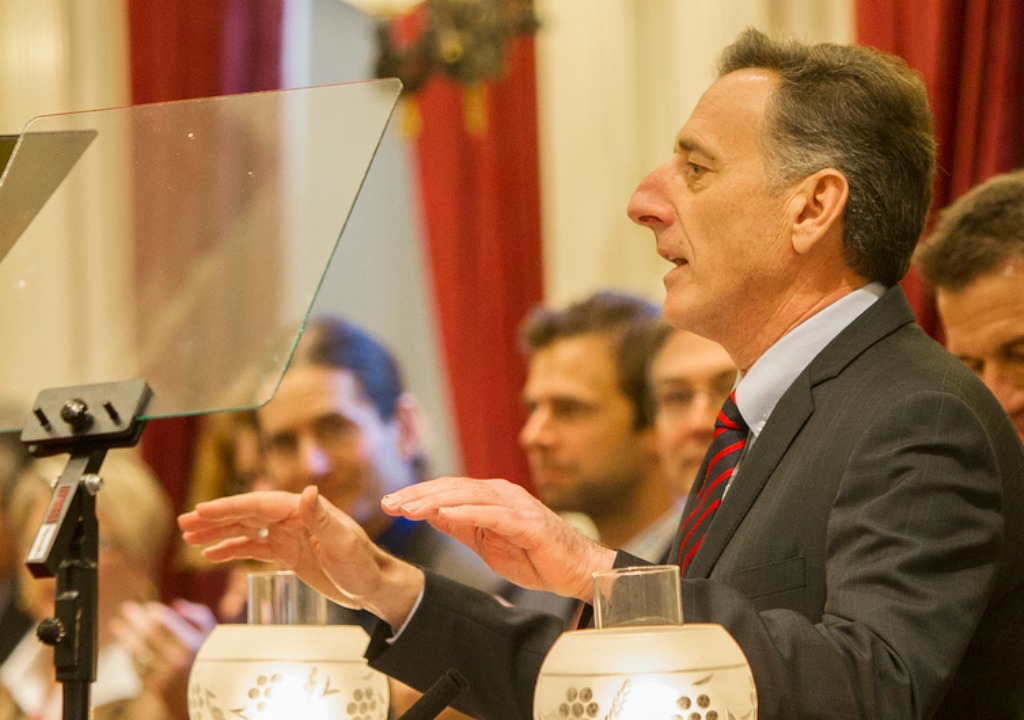
Gov. Peter Shumlin is proposing to spend an extra $10 million next year to treat and prevent opiate addiction in Vermont.
The governor has made opiate addiction a top priority this legislative session and in his annual budget pitch to lawmakers, he said the money will help people who want treatment and also ensure others never become addicted.
Shumlin said his spending plan would mean providing 40 percent more opiate treatment services next fiscal year and 14 percent more prevention services.
After Shumlin’s speech, Republican lawmakers said they like the general thrust of the governor’s proposal but want details on how the money will be spent.
“What I want to see is how this is going to be applied and the details of it,” said Rep. Thomas Koch, R/D-Barre.
On the whole, Koch said, Republicans support the governor’s plan to spend more on opiate addiction services, especially recovery centers such as Turning Point Center in Barre.
“They are really getting the best bang for their buck,” Koch said.
A budget booklet from the governor’s financial experts Wednesday spelled out some specifics on how Shumlin wants to spend the $10 million.
The majority of the funding, $8 million, will go to the state’s new “Hub and Spoke” program, formally known as the Care Alliance for Opiate Treatment program.
That program, a partnership between facilities that dispense methadone and office-based treatment services for buprenorphine, this year received $5 million, officials said, but the governor wants to increase that amount next year to $13 million.
“It’s a matter of ramping it up,” said Harry Chen, commissioner of the Vermont Department of Health.
Most of the money for the governor’s opiate program — $6.7 million — will come from Medicaid funding, according to Jim Reardon, the commissioner of the Department of Finance and Management. Some of that money comes from an accounting shift based on savings in health care costs for emergency services for patients with substance abuse problems.
In addition to next year’s spending, some opiate treatment programs across the state will see extra cash before next fiscal year, because of a re-allocation of unspent money from this year’s budget.
The governor proposed spending an extra $200,000 from this year’s budget to decrease waitlists for treatment and assist efforts at recovery centers, which help people after they exit treatment.
The House Human Services Committee Wednesday morning voted to follow the governor’s direction and spend that money on those two priorities.
In addition to the $8 million for Hub and Spoke, the governor asked for $760,000 to expand “rapid intervention” programs based on a successful model developed in Chittenden County.
That program will help state’s attorneys and courts assess who may be eligible for immediate treatment and services and hire staff to monitor their recovery, according to the governor’s budget booklet.
Finally, Shumlin’s proposal includes an unspecified amount of money for addiction prevention efforts by showing “The Hungry Heart” documentary about opiate addiction to students around the state.
His budget proposal also includes $650,000 more next year for substance abuse and mental health treatment services for Reach Up recipients. Reach Up is a Vermont welfare-to-work program that provides cash assistance to families whose breadwinners are trying to get back into the workforce.
Koch, during a post-budget press conference, said that request may hint at issues with the welfare program.
“That reveals a problem that we have not previously acknowledged,” he said.
