



Editor’s note: In This State is a syndicated weekly column about Vermont’s innovators, people, ideas and places. Nancy Price Graff is a Montpelier freelance writer and editor.
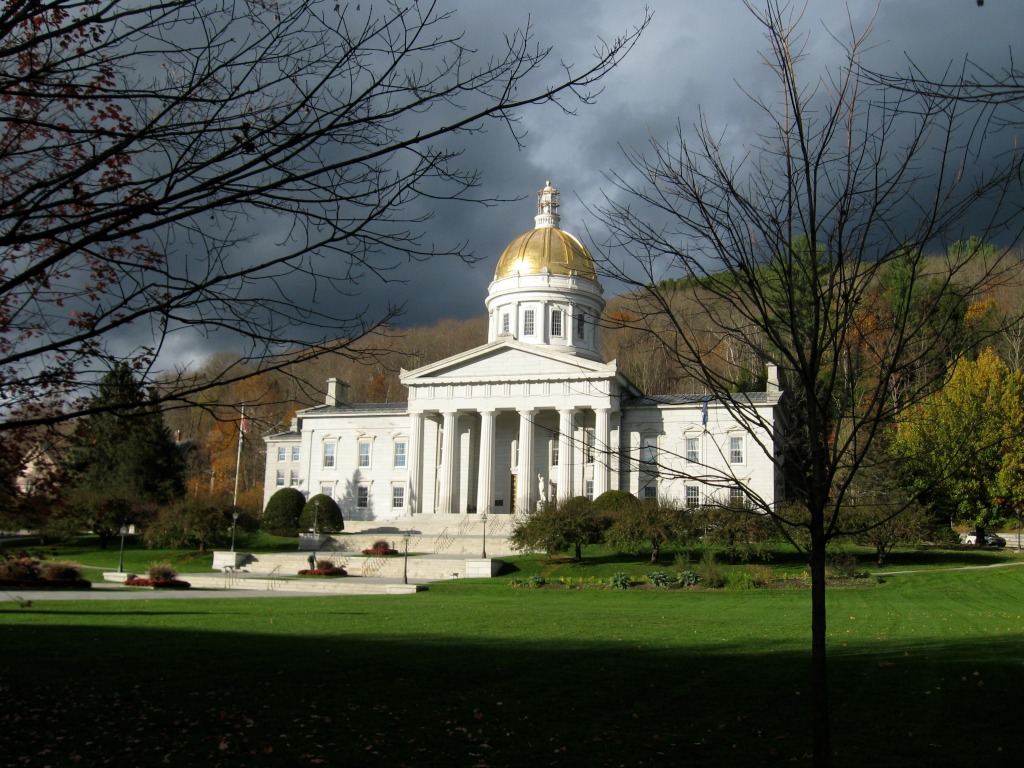
Rot happens. But sometimes that’s not such a bad thing. In 2002 curator of state buildings David Schutz hired Paul Liszt of Liszt Historical Restoration in Essex to examine the wooden figure atop the dome of the Statehouse in Montpelier for signs of deterioration. Liszt was concerned enough by what he found to dismantle the statue and bring it down piece by piece, where he could perform life-saving measures by replacing the rotten parts, reinforcing the soft spots, and painting it with three coats of white paint.
This version of Ceres, as the statue is popularly known, Agriculture as she is formally known, had crowned the Statehouse since 1938. Before that, between 1858 and 1938, another version of Agriculture occupied the same spot, although this earlier version had been designed by sculptor Larkin Mead, a Brattleboro artist of national renown. Unfortunately, Mead’s earlier version of Agriculture had also succumbed to the weather. It was taken down in 1938 when it threatened to collapse from its own rot and plummet spectacularly 120 feet to the Statehouse lawn.
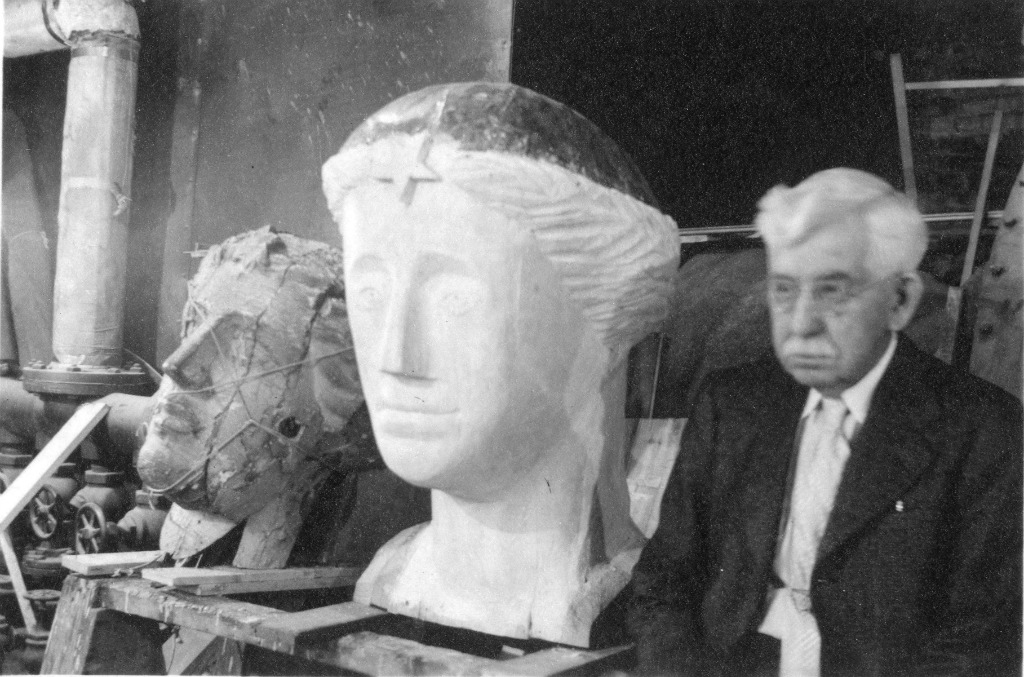
The later version, the one carved in 1938 to replace Mead’s original, is closer to folk art than fine art. Composed of more than 200 individual pieces of painted, carved Ponderosa pine, the statue had withstood 64 years of Vermont’s grueling weather. But by 2002 Liszt could put his hand through the wood of this beloved symbol of Vermont’s agricultural roots.
He approached the dismantling of the head carefully. First he removed the spikes or lightning rods that encircle the crown. Underneath those he found a waterproof copper skullcap. Under the copper cap, Liszt found a framework of metal bracing.
“As soon as I saw the bracing,” he says now, “I knew there had to be a time capsule in there.”

And so there was. When he poked around inside the statue’s skull, he found a small copper box that had been soldered closed with lead. He told Schutz, who in turn told Gov. Howard Dean, who wanted to open it.
“It was a Geraldo Rivera moment,” says Schutz, who remembers how terrified he was that the governor would be disappointed. “You remember how Rivera arranged this huge public opening of a safe on live TV? Everyone was watching. We all tuned in. And the safe was empty!”
Vermont staged the opening of the time capsule in the Cedar Creek Room. Journalists turned out to cover the event in word and print. Members of the public crowded into the room. Schutz held his breath. Someone pried off the solder, bent back the thin layer of copper, and shook the box to empty it.
As he tells the story, Schutz wipes his hand across his forehead as if he can still feel how close he came 11 years ago to sharing Rivera’s humiliation. However, inside the time capsule was a typewritten manuscript by Dorman Kent, a self-appointed city historian, about the history of the statue from 1858, when it was first placed atop the dome, to 1938, when Dwight Dwinell, the capitol’s 87-year-old sergeant-at-arms, and two of his assistants hand carved the replacement figure. Also included were photographs of Dwinell carving the 1938 head and his assistants working on the toga-clad body. Finally, the capsule contained a yellowing newspaper article about the statue, one that included the date the piece was published, which created a timeframe for the other contents.
Coincidentally, the term “time capsule” dates from 1938, the year the second Ceres was installed atop the Statehouse. In that year the Westinghouse Corp. buried a well-publicized time capsule at the New York World’s Fair that contained a Sears & Roebuck catalog, a Mickey Mouse cup, and a slide rule, among other things.
The concept of time capsules, however, dates back thousands of years. Strictly speaking, a time capsule contains artifacts from the era, protects the contents from disintegration, and has a designated opening date.
The most ambitious modern time capsule may well be the Crypt of Civilization, a swimming pool-sized capsule sealed in 1940 in Atlanta, Ga., at Oglethorpe University, and intended to be opened in 8113. It contains everything from a rubber Donald Duck to the writings of Hitler and Shakespeare to 640,000 pages of microfilmed documents to a device that can teach English in case the language has been lost.
“I’m just guessing, of course, because you don’t know what you don’t know,” says D. Gregory Sanford, Vermont’s former state archivist, “but I’d guess that about 90 percent of time capsules never get opened because people lose track of where they’re buried.”
Sanford was archivist in 2002 when the contents of Agriculture’s unexpected time capsule came to him to be cataloged for the State Archives. “There might be another one kicking around,” he says. “I heard rumors that a time capsule was buried beneath a maple tree behind the Statehouse when Madeleine Kunin was governor. Then the tree was cut down so the Statehouse cafeteria could be built, and now there’s a building over where there may or may not be a time capsule.”
In fact, the International Time Capsule Society at Oglethorpe University estimates that Sanford’s guess is off by magnitudes of 10. According to its research, only one in 1,000 time capsules is ever retrieved, although the society now provides a registry for time capsules where anyone can post the location and proposed opening date. The society even has a most-wanted list of time capsules. Among the lost capsules is the M*A*S*H time capsule containing props from the popular television show and one reportedly laid by George Washington in a cornerstone of the U.S. Capitol. Surprisingly, ninth on the list is one buried in Lyndon, Vt., in 1891 containing proceedings of the town’s centenary.
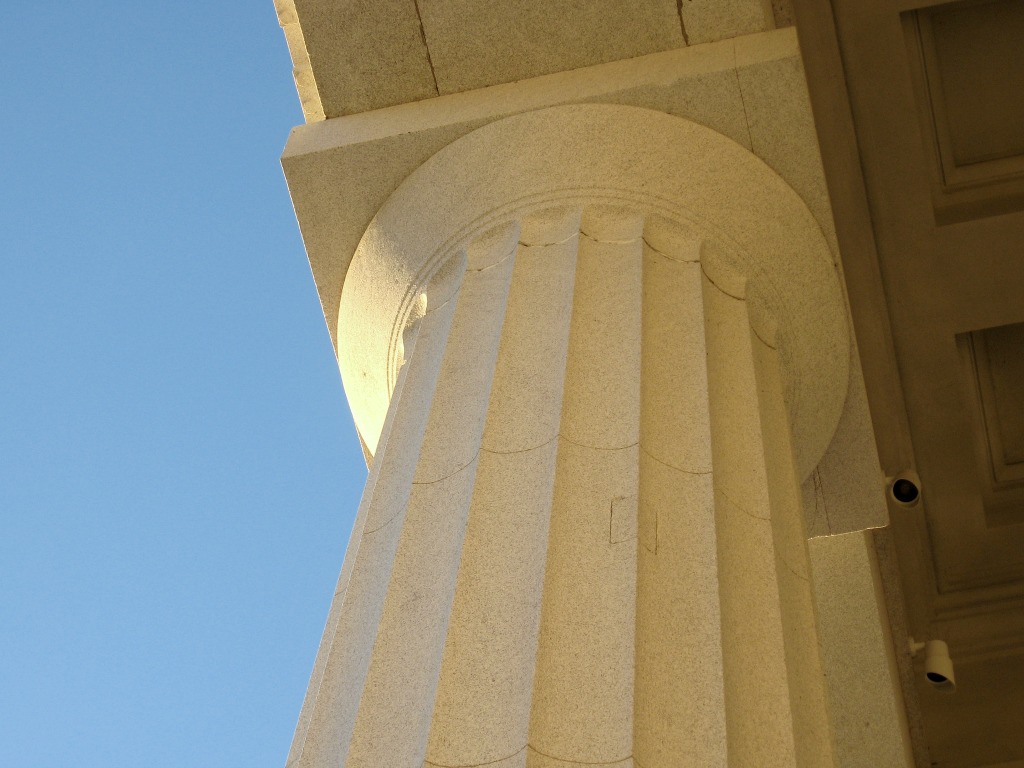
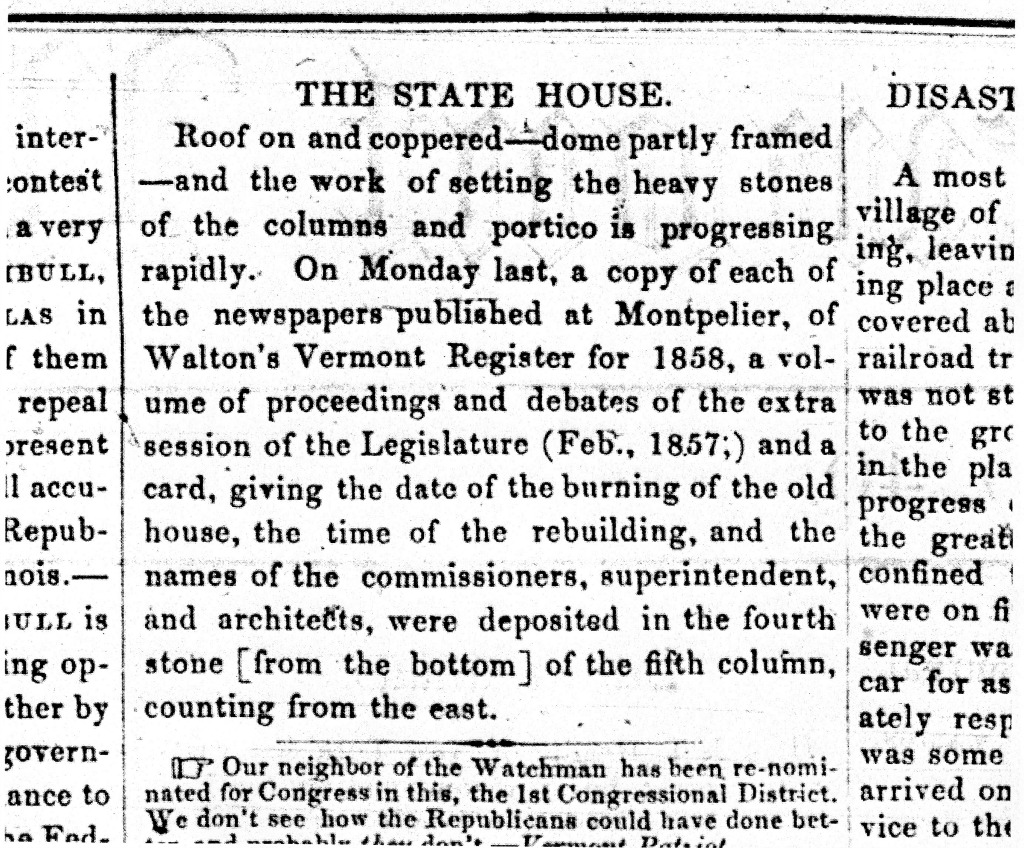
There is at least one more time capsule in the Vermont Statehouse that was lost for more than a century. Three years ago a researcher writing a history of the Statehouse came across a story in the Aug. 27, 1858, edition of the “Vermont Watchman.” According to the author of the piece, a time capsule was being deposited in the fifth column from the east in the portico, fourth tier up from the bottom. Schutz, who has spent 30 years taking care of the Statehouse, and who knows the building intimately, was shocked.
He immediately bolted for the door to take a look.
Alas, nothing was visible from the floor of the portico. However, a stone patch is visible on the fourth column from the east, in the fifth tier up. In either event, the time capsule is accessible only through some exterior portal. The columns themselves have not been open from the top since 1836, when the second Statehouse was built. When a fire consumed the building in 1857, the portico remained standing, and the third Statehouse was built around it. For the time being, Schutz has not elected to retrieve the time capsule.
As Agriculture undergoes more restoration this fall by Liszt Historical Restoration, the time capsule put in its head in 2002 remains there, unopened. Reflecting as they should the tenor of the era, the contents include a credit card.
