

When Gov. Peter Shumlin announced a delay in the health care exchange rollout Thursday, he turned to Lt. Gov. Phil Scott, who stood to his right, and thanked him for his “words of wisdom” and his “patience.”
After the press conference was over and reporters and state officials had dispersed, a Republican operative with considerably less patience — Darcie Johnston — was downstairs telling a TV camera that the governor hadn’t gone far enough. By the following morning, she’d issued a press release urging Shumlin to purge his team of its top health care officials.

Therein lies a key difference that’s split the Vermont Republican Party: The Scott faction that pursues moderate policies and cooperation with the Democrats; and another group led by Johnston and Mark Snelling, the son of Gov. Richard Snelling, that leans further right, has more contentious, conservative views and aligns itself with the national party.
These fissures in the Vermont GOP will be on full display at the Elks Club in Montpelier on Nov. 9, when the party elects its chair for the next two years.
The candidate pool is still nebulous — the current chair, Jack Lindley, has yet to say whether he’ll run again. But it’s shaping up to be a proxy war between two blocs within the party who have conflicting ideas about how to stage a comeback.
Both groups see the chairmanship as the linchpin of their efforts.
The Republican Party holds 52 of 180 seats in the Statehouse and boasts just one statewide officer — Scott.
The lieutenant governor and a cadre of like-minded lawmakers, including House Minority Leader Don Turner and Senate Minority Leader Joe Benning, belong to the camp that is creating its own brand of rock-ribbed Vermont Republicanism that harkens back to the model that kept the GOP in office for more than 100 years before Democrat Phil Hoff swept the governor’s office in 1963 and began to sway the political tide in Vermont to the left. Turner, Benning and others say Vermont Republicans need to create some distance from the national party and focus on building a “Vermont brand.” They point to their own electoral success as proof of their credentials, and they say the current party leadership is tone-deaf to the electorate.
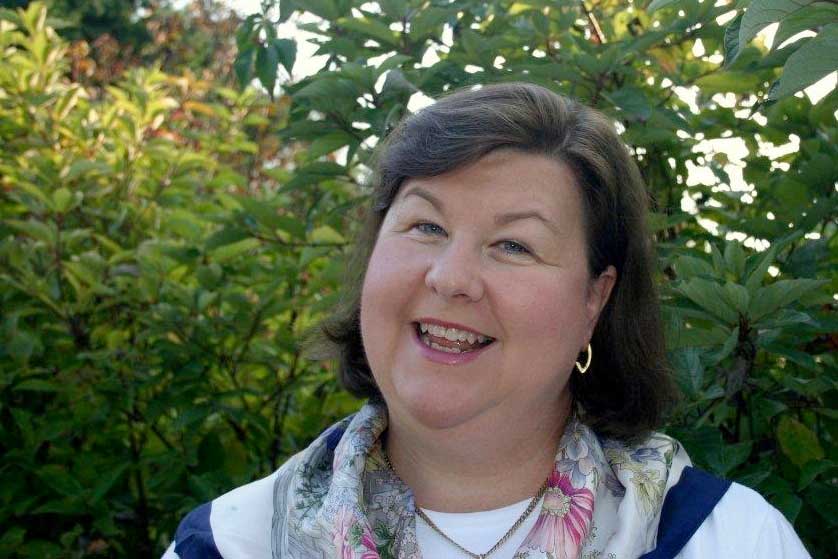
Rep. Heidi Scheuermann, R-Stowe, is among Scott’s supporters. She has worked with the lieutenant governor to find a middle way. “I think the frustration that has evolved, from my perspective and from other elected officials, is the disconnect between the state party and those who actually wear the party label as elected people,” Scheuermann said. “We know the communities, we know what we are hearing, we know the concerns.”
Mark Snelling, Jack Lindley and Darcie Johnston are members of the opposing camp. Scott and Snelling faced off during the lieutenant governor primary in 2010. Johnston, who now runs Vermonters for Health Care Freedom, served as Randy Brock’s campaign manager during his unsuccessful attempt to unseat Shumlin in 2012.
Snelling didn’t disagree with Scheuermann’s assessment, but he said that the disconnect exists by design, and it’s dangerous to give lawmakers control of the party apparatus.
“I’m very concerned about the independence of the office [of chair],” Snelling said in an interview. “Anyone elected as a Republican has a right to speak for their constituency, and I think the chair has an obligation to speak for the people who elect him or her. Certainly the chair needs to listen to and communicate with the elected official, but it’s critically important that they understand they each have a different constituency.”
Snelling also argues that the party’s financial health is tied to the Republican National Committee (RNC). “The Republican Party would have a very hard time existing right now without the support we’ve received from the national party over the last two years,” Snelling said.

In the last election cycle, the RNC financially floated the operations of the Vermont GOP, while the Democrats successfully raised money independently to wage a much broader ground campaign based on technology and a large grassroots volunteer organization driven by field representatives. The Republicans didn’t have a paid executive director; the Democrats had a half-dozen staffers.
Lindley, who has returned home after a month-long hospitalization, did not return calls for comment, but Snelling suggested that if he doesn’t run, someone else will instead.
A former state legislator, David Sunderland, is running with encouragement from Scott.
John MacGovern, who has run unsuccessfully for a Vermont seat three times, is best known for losing to U.S. Sen. Bernie Sanders in 2012. MacGovern is running to stymie Scott’s efforts, but he’s also convinced he could do a better job than Lindley.
“I’ve never met David, but the people who back him I am strongly opposed to,” MacGovern said. “They are all about compromise and dumping principle overboard to gain a few votes. I don’t want those people taking over the party.”
Although the chairmanship is the most prominent position up for grabs, it’s not the only one. As Scott puts it: “You need a whole team to tilt the boat.”
So while Johnston is calling for a Department of Vermont Health Access purge, Scott and his cohort have quietly been pursuing a similar goal among Republican leadership ranks. During the last six months, they’ve recruited candidates for every other leadership post within the party — vice chair, treasurer, assistant treasurer, secretary and two at-large delegates.
Snelling, as party treasurer, is among those targeted for displacement.
The two groups disagree on a tactical level, too. Scott thinks the best way to make inroads into Democratic territory is by picking up legislative seats, whereas people like Johnston say its imperative to put resources into the gubernatorial race.
Scott, who steadfastly avoids dipping his toes into partisan feuds, says Republicans need to model what he calls a “compromise” approach to campaigning and policymaking.
But Scott’s diplomatic overtures towards Democrats have turned into a source of discord within his own party.
Some Republicans describe this an effort at self-preservation, which might work for an elected official, but dilutes the party’s core principles.

“The instinct of incumbents is to stop talking about issues that are difficult,” MacGovern said. “It’s just the nature of the beast that incumbents can go silent on issues that are controversial. Those issues can activate the base, which is essential to winning the election, if those principles are important ones, you shouldn’t be watering them down.”
Referring to Scott, MacGovern had this to say — “If he is uncomfortable in the Republican Party, that’s a problem he has. Don’t try to mold the party to make it look like you.”
The party’s disparate responses to the rollout of the Shumlin administration’s health care exchange is a perfect example of how the dispute plays out in disconnected messaging from the two factions.
The Shumlin administration is on the hook for the state’s health care transition, and its sputtering start has presented a slate of opportunities for partisan criticism.
Johnston has capitalized on each and every setback and is frequently quoted in news stories, predicting the system’s doom. Randy Brock has also been active on this front, writing disparaging commentaries about the system’s IT woes that compare Shumlin to the Wizard of Oz.
Scott, meanwhile, says his priority is making sure Vermonters have health insurance; in his view criticizing Shumlin’s every move won’t accomplish that. Last Friday, he offered a mild critique, suggesting that mandatory enrollment should be delayed if website problems couldn’t be resolved by December.

Some of his fellow Republicans were galled by the lieutenant governor’s presence at Shumlin’s press conference on Thursday.
“No Republican needed to be there,” Johnston said. “This isn’t our mess.”
And Scott’s reluctance to be a forceful critic of the Shumlin administration’s handling of the exchange strikes some as a squandered opportunity.
“Quite frankly, Phil Scott hasn’t been a participant in what’s been happening in health care,” Snelling said. He points to the fact that Scott didn’t come out in support of delaying mandatory enrollment in the exchange until several days after other Republican lawmakers had issued that request.
“They [Don Turner and Joe Benning] did it on Tuesday. He expressed support on Friday. The leadership was happening on Tuesday,” Snelling said.
Johnston, who was calling for a delay before the exchange had even opened, described it differently: “Get out of the Cabinet, Phil.”
Asked if he’s taken flak for staying apolitical during the health care rollout, Scott responded, “All the time. From all stripes.”
But he’s not second-guessing the decision. “We literally have the lives of Vermonters in our hands, and I don’t take that lightly. I think it’s much too important to turn it into a partisan issue,” Scott said. “There is going to be plenty of time for that in the next election,” he added.
Both sides acknowledge there’s a conflict, but they chafe at it being characterized as a moderate versus conservative showdown, and both cite Sunderland’s conservative voting record as proof it’s not.

At the same time, they accuse one another of blundering in pursuit of an ill-defined mission.
“I don’t think they understand what they are looking for. I think they are very confused politically,” Johnston said.
“I don’t know of anything specific they are unhappy with,” Snelling said. “They’ve used general platitudes to criticize Jack.”
“If Phil Scott wants to recreate a new coalition, I think that’s pretty foolhardy,” MacGovern predicted. “Franklin Roosevelt could do it in the Democratic Party and Ronald Reagan could do it for the Republican Party, but these are people with amazing abilities but Phil Scott, he’s not in that class.”
State Sen. Peg Flory, R-Rutland, who supports Scott, paused when asked what the party’s message is. “I’m not sure. I think that may be part of my problem, that I can’t give you an honest answer. I don’t know that it’s been defined well enough for me.”
The Nov. 9 elections will be decided by the Republican State Committee, which is composed of roughly 140 delegates. Candidates are allowed three minutes to make their case, so much of the vote-soliciting will take place before Saturday.
Members of Scott’s camp seem convinced they have the backing of most state legislators, but few of them are in a position to cast ballots. Most of the delegates are drawn from the county committees, and neither side seems sure how much traction Scott’s campaign has had with them.
“If they want to go knock on doors, we’ll see how successful they’ve been on Saturday,” Snelling said.
Scott said it would be “disappointing” to see his efforts fail next Saturday, but he’s committed to staying Republican, regardless of his disagreements with current party leaders.
Although Scott has consistently said he plans to run for lieutenant governor again in 2014, he is widely considered a potential gubernatorial candidate when that seat opens. In the meantime, he’s got his work cut out for him, mending bridges and battling skeptics within his own party.
