

Editor’s note: This op-ed is by award-winning journalist Telly Halkias. It first appeared in the Portland Daily Sun.
On this Memorial Day, I can’t shake Myra Strachner and Bernie Staller from my heart.
At 10:30 p.m. on April 18, 1945, Myra, of 1510 Unionport Road, Bronx, N.Y., settled in to write the nightly letter. Her window shades were down for a civil defense drill. This wartime restriction hid the steady drizzle from her view, but its rhythmic patter guided her pen.
Completing the note, Myra sealed it into an envelope, then scripted the recipient’s address: “Private Bernard Staller, Company B, 255th Infantry Regiment, European Theater of Operations.”
The next morning, under a springtime sun, Myra walked to the nearest post office and dispatched her intimacy halfway around a perilous world.
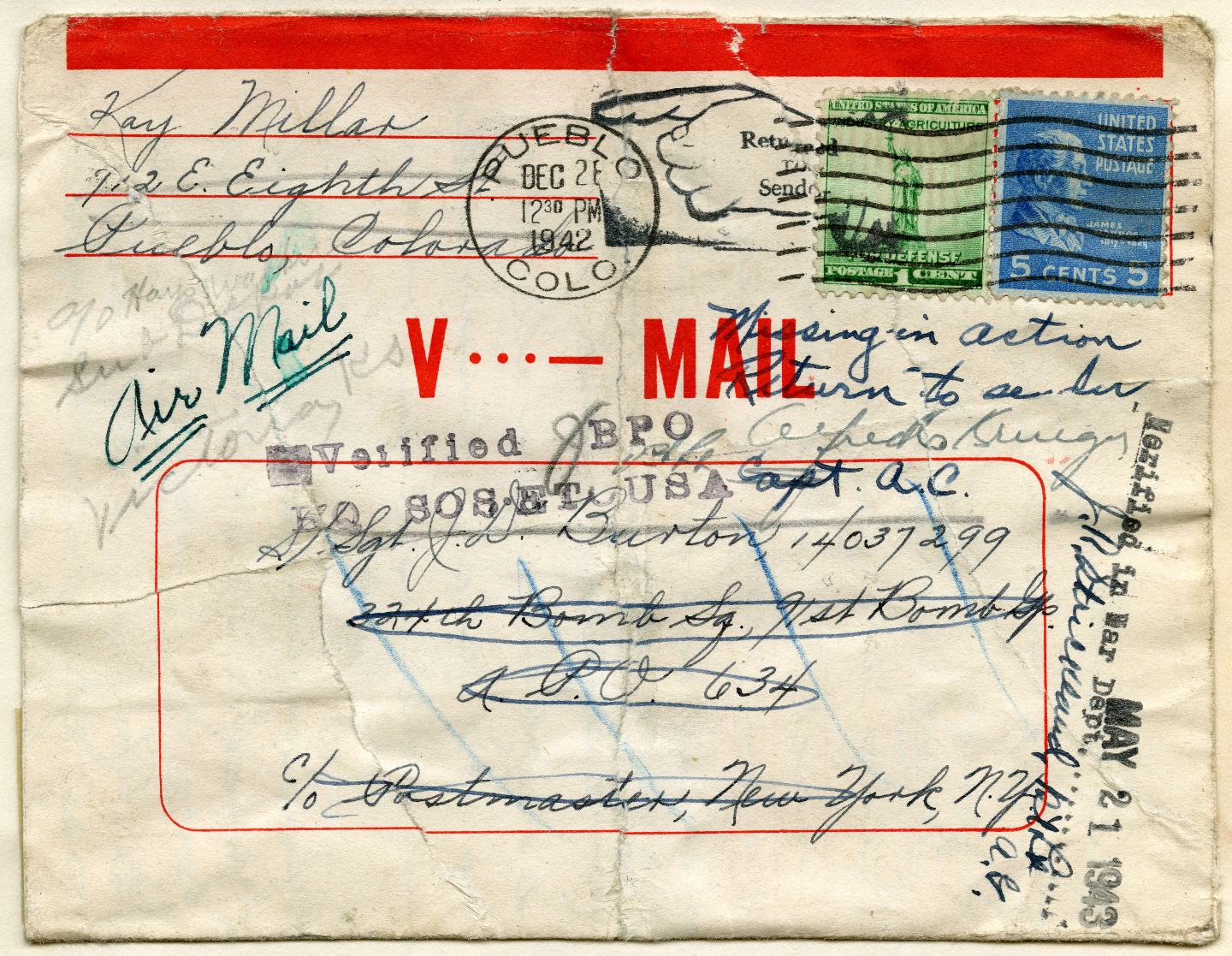
In love since the early days of the war at age 15, nearly 700 letters had passed between her and Bernie, many while they were city neighbors. In February 1944, when drafted, he left college at CCNY. Myra remained at NYU, and the correspondence intensified. On that April day, Bernie had been missing in action for almost a month.
In the fall of 2006, with mid-term elections approaching, Myra’s drizzle pelted me as I walked along Massachusetts Avenue in our nation’s capital. The Iraq war was faltering, Americans were restless, and military coffins arrived stateside daily.
One of the casualties included my college roommate, Dominic, who died in Iraq 10 years ago this week.
Visiting Washington, D.C., for the first time in years, the air was charged with negative electricity. Off work that morning, I set out for our seat of government to forsake the campaign’s malice in search of my own answers. Also, on my way to Congress, I tried to beat the raindrops.
As Lynn Heidelbaugh, the exhibition’s curator, wrote to me recently: “Strachner’s words of love and longing are heartbreaking when you learn her sweetheart had died before ever seeing them. Letters have the power to connect people in tangible and personal ways that can carry into history.”
Failing at the latter, I ducked into the National Postal Museum, and drip-dried in its lobby. Waiting out the showers, I entered a dimly lit exhibit hall named “War Letters: Lost and Found,” and sought a nearby bench. Leaning against the cool marble wall, my gaze fell onto the closest showcase.
There, Myra’s letter found its way home.
“Darling — I was at your house tonight. They showed me some pictures of you … That hair is cropped close, but still it curled around my finger as if it were grasping it. I’ve kissed those lips. Those legs were pressed against mine. I’ve held those wrists with my fingers. My hands have been in those hands. My fingers have touched those sides and both touched lightly and dug into those shoulders. My lips have kissed that throat. And I knew you had to be alive, because you’re so alive! Do you know what I mean? Someday when we have long night hours before us, I’ll tell you all about this — how I felt, and what people said … Until then, love, your Myra.”
Neatly displayed next to her letter was the envelope. Huddled to the left of Myra’s handwriting, an official stamp heralded the unthinkable: “Deceased 4/28: Returned Unopened.”
At another time in my life, I might have dismissed this curating as thinly veiled romanticizing. After all, my own time as a young soldier didn’t register much introspection when quick action was the order of the day.
But as a civilian, the exhibit also made me consider those outside the battlefield who are scoured in the cauldron of war. The blunt verdict to Myra’s appeal punctuated a centuries-old reality, urging me to finish that day’s journey. Bernie’s and Dominic’s weathered headstones, along with a million others facing homeward, silently concurred.
Later, my research showed that Myra went on to have a family of her own as Myra Strachner Gershkoff, and died in 1997 at age 71. Bernie had been killed in an artillery barrage just two months before the war in Europe ended, and remained forever a teenager, left to the ages.
As Lynn Heidelbaugh, the exhibition’s curator, wrote to me recently: “Strachner’s words of love and longing are heartbreaking when you learn her sweetheart had died before ever seeing them. Letters have the power to connect people in tangible and personal ways that can carry into history.”
Indeed. And the history of human conflict has a way of dismantling innocence forever.
Back at the museum, and feeling disturbingly voyeuristic, I left the two young lovers to the long night hours before them.
The rain quickly passed during this reprieve. I ventured out into the September morning, Myra’s hopeful sunshine beckoning. Capitol Hill loomed ahead, and I resumed my cynical advance unfazed.
Behind me, however, Thanksgiving had come early. Not even the foreign mud in which a 19-year-old GI fell could sully his lover’s faith. And their lost letter, once returned unopened, was delivered to me after 61 years, just when I needed it most.
You may e-mail Telly Halkias at tchalkias@aol.com.

